













Build Trust and Social Proof: Reducing Risk Before the Ask
Most websites focus heavily on persuasion.
Very few focus enough on reassurance.
Visitors don’t arrive assuming your business is credible. They arrive assuming risk. Your website’s job is not to hype, it’s to quietly remove doubt.
Trust and social proof are not “nice-to-haves.”
They are the foundation of conversion.
If visitors don’t feel safe, understood, and validated, no headline, offer, or CTA will save the experience.
Every Conversion Is a Risk Assessment
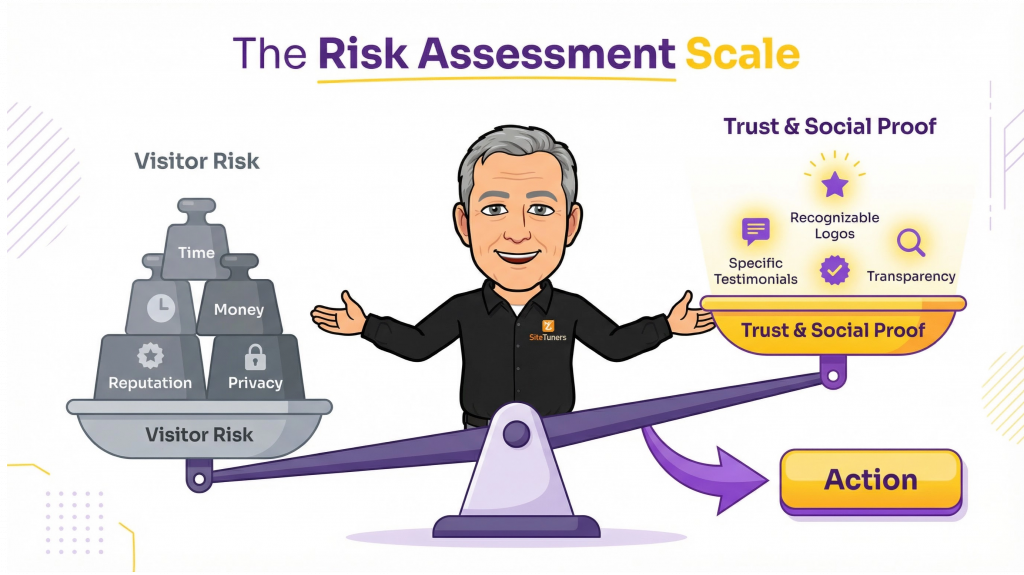
Whether it’s a purchase, a form fill, or a demo request, every conversion asks the visitor to take a risk.
They’re risking:
- Time
- Money
- Reputation
- Privacy
- Being wrong
Your website either increases that perceived risk or reduces it.
High-converting sites don’t pressure visitors into action.
They make action feel reasonable.
That’s what trust does. It lowers the emotional cost of saying “yes.”
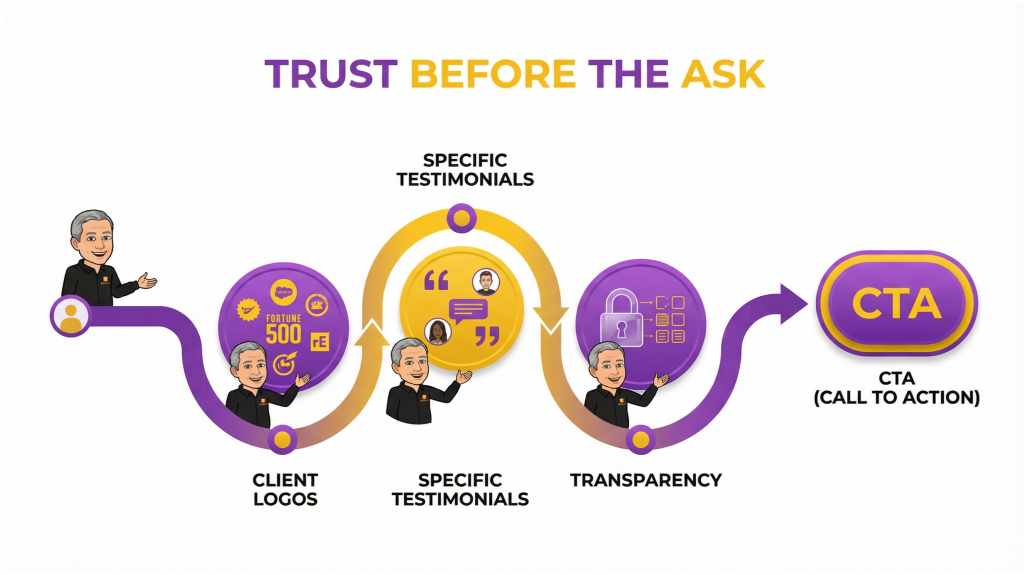
Trust Is Built Before the Call to Action
One of the most common mistakes websites make is placing trust elements after the ask.
Testimonials buried at the bottom of the page.
Certifications hidden on an About page.
Logos stuck in a footer no one reaches.
That’s too late.
Trust must be established before visitors are asked to commit. Otherwise, the CTA feels premature and pushy.
Before someone clicks, submits, or buys, they want silent reassurance:
- “Others have done this.”
- “This company feels legitimate.”
- “This isn’t risky.”
If your page doesn’t provide that, hesitation fills the gap.
Social Proof Works Because Humans Copy Humans
People look to others when making decisions, especially under uncertainty.
That’s not weakness. It’s wiring.
Social proof answers questions visitors won’t ask out loud:
- “Is this company for people like me?”
- “Has this worked before?”
- “Am I the only one considering this?”
The most effective social proof doesn’t brag.
It normalizes the decision.
It quietly says: You’re not alone.
Specificity Beats Volume Every Time
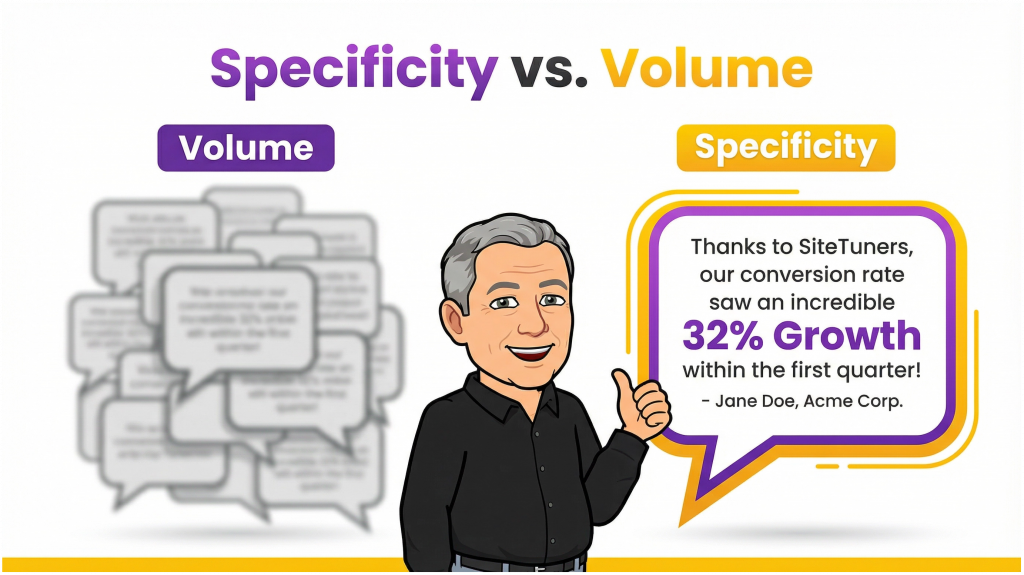
More testimonials do not automatically create more trust.
Specific testimonials create trust.
Compare:
- “Great service, highly recommend!”
vs. - “We increased qualified leads by 32% within three months without increasing ad spend.”
The second feels real. The first feels like marketing.
Effective social proof includes:
- Real names and roles
- Real outcomes
- Real context
Generic praise rarely moves the needle. Specific proof does.
Match the Proof to the Moment
Different stages of the journey require different reassurance.
Early-stage visitors want to know:
- “Is this company legitimate?”
- “Do they work with businesses like mine?”
Later-stage visitors want to know:
- “Will this work for my specific situation?”
- “What happens after I say yes?”
Trust is not one-size-fits-all.
It should evolve as intent increases.
That means:
- Broad credibility signals early
- Deeper proof closer to conversion
The more someone is asked to commit, the more reassurance they need.
Familiarity Creates Comfort
Recognition builds trust faster than explanation.
Logos of known clients.
Media mentions.
Industry affiliations.
These work because they reduce uncertainty instantly.
Visitors may not read case studies, but they recognize names. That recognition creates a shortcut to trust.
Used well, these elements say:
- “Others already trust us.”
- “This company isn’t new or risky.”
Used poorly, they feel decorative or irrelevant.
Context matters.
Trust Is Also About What You Don’t Hide
Transparency builds credibility.
Clear pricing ranges.
Clear explanations of process.
Clear expectations about timelines and outcomes.
When sites avoid clarity, visitors assume the worst.
Trust erodes when visitors feel:
- Information is being withheld
- Details are intentionally vague
- Answers require a sales call
Clarity signals confidence.
Evasion signals risk.
Design Communicates Trust Faster Than Words
Before visitors read a single sentence, design is already shaping perception.
Trust is influenced by:
- Clean layout
- Readable typography
- Consistent spacing
- Professional imagery
- Error-free content
Messy design creates subconscious doubt:
- “If this is sloppy, what else is?”
Trust doesn’t require flashy design.
It requires care.
Objections Are Trust Opportunities
Most websites avoid objections. High-performing sites address them head-on.
Visitors are wondering:
- “Will this be worth the cost?”
- “Is this too good to be true?”
- “What happens if it doesn’t work?”
Ignoring these questions doesn’t make them disappear. It makes them louder.
Trust increases when visitors feel their concerns are anticipated and respected.
The Cost of Missing Trust Signals
When trust is weak:
- Bounce rates increase
- Conversion rates drop
- Leads become less qualified
- Sales cycles lengthen
Sales teams feel it as skepticism.
Marketing feels it as underperformance.
But the root cause often lives on the page.
How to Audit Trust on Your Website
Ask these questions honestly:
- What proof appears right near the first CTA?
- Are testimonials specific and believable?
- Do trust signals match the visitor’s intent?
- Is anything intentionally vague?
Then ask a harder one:
- If this weren’t my company, would I trust this site?
The answer is usually obvious.
Final Thought: Trust Accelerates Everything
Trust doesn’t just increase conversions.
It improves lead quality, sales conversations, and long-term relationships.
When visitors trust you, they:
- Move faster
- Ask better questions
- Commit with confidence
You don’t need louder claims.
You need stronger reassurance.
That’s how social proof turns hesitation into action.
Action Item
Choose one high-traffic page this week.
Add one piece of trust before the main call to action:
- A relevant testimonial
- A recognizable logo
- A clear reassurance statement
Then measure the difference.
Small signals of trust often create disproportionately large gains because they reduce the emotional risk of saying “yes.”