










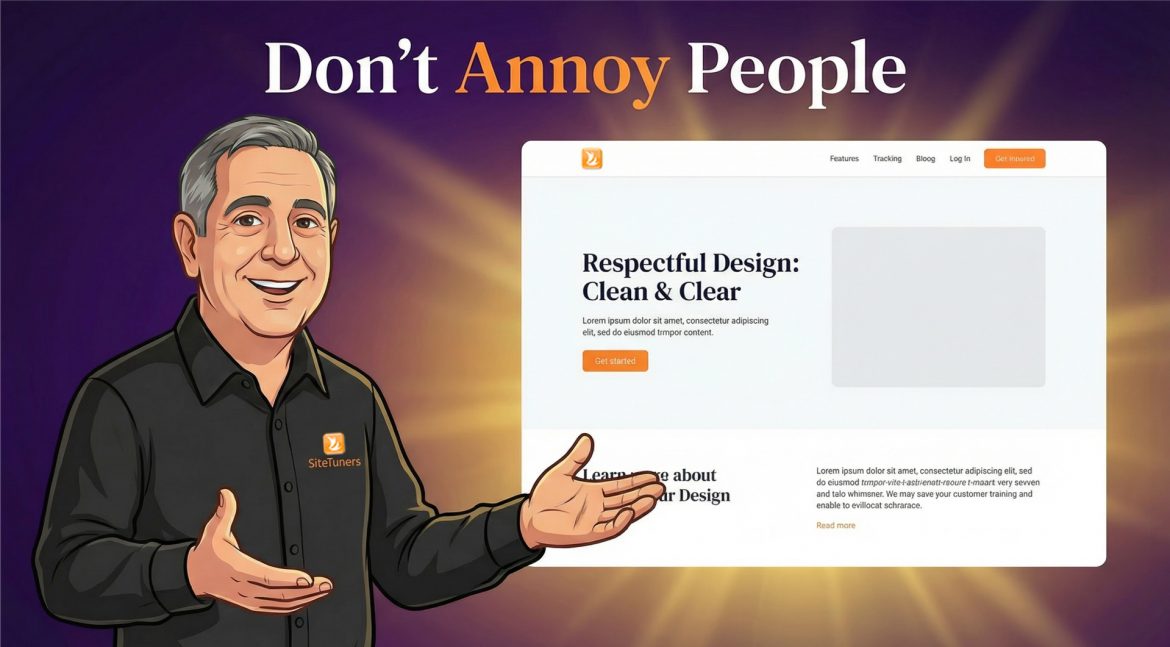
Don’t Annoy People: Removing Friction Before It Becomes Resistance
Conversion optimization is often framed as a game of persuasion.
More urgency. More CTAs. More messaging.
But many websites don’t have a persuasion problem.
They have an irritation problem.
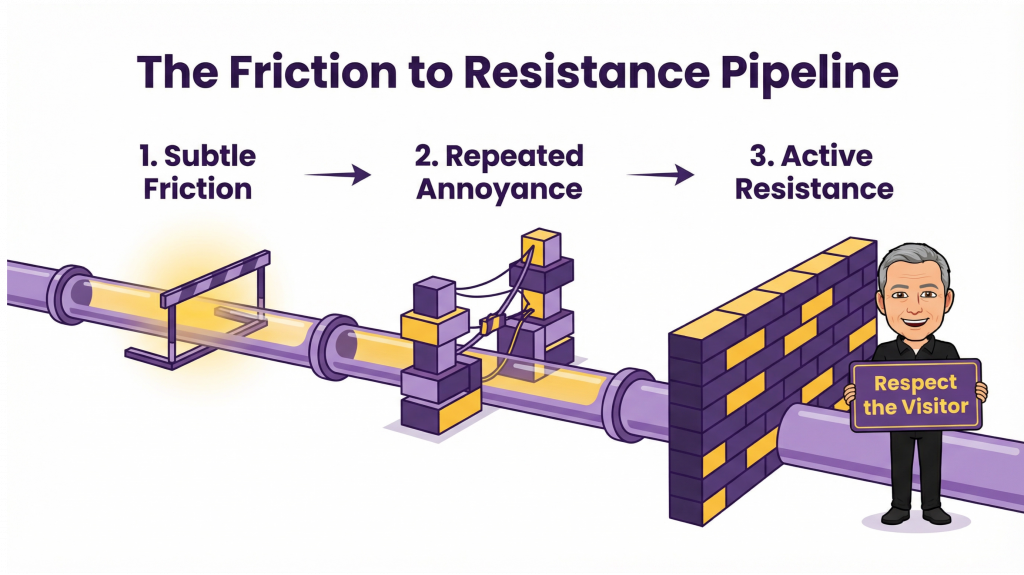
Visitors arrive with a goal. Anything that distracts, delays, or derails that goal creates friction. And friction, when repeated, turns into resistance.
Annoyance doesn’t always feel dramatic. It’s subtle. Accumulative. And deadly to conversion.
Annoyance Is the Fastest Way to Lose Trust
Every interruption sends a signal.
A poorly timed pop-up says: “Our needs come before yours.”
An aggressive chat prompt says: “We don’t trust you to navigate on your own.”
An overly long form says: “Your time doesn’t matter.”
None of these are intentional. But visitors don’t judge intent, they judge experience.
Trust erodes when the site feels pushy, needy, or self-centered.
The Visitor Is Not Here for Your Funnel
Funnels are internal constructs.
Visitors don’t care about them.
They care about:
- Solving a problem
- Getting an answer
- Completing a task
When funnel mechanics interrupt progress, frustration follows.
Examples:
- Email pop-ups before visitors understand value
- Discount offers before intent is established
- Forced account creation before usefulness is proven
Human-centered websites earn attention before asking for commitment.
Timing Matters More Than Tactics
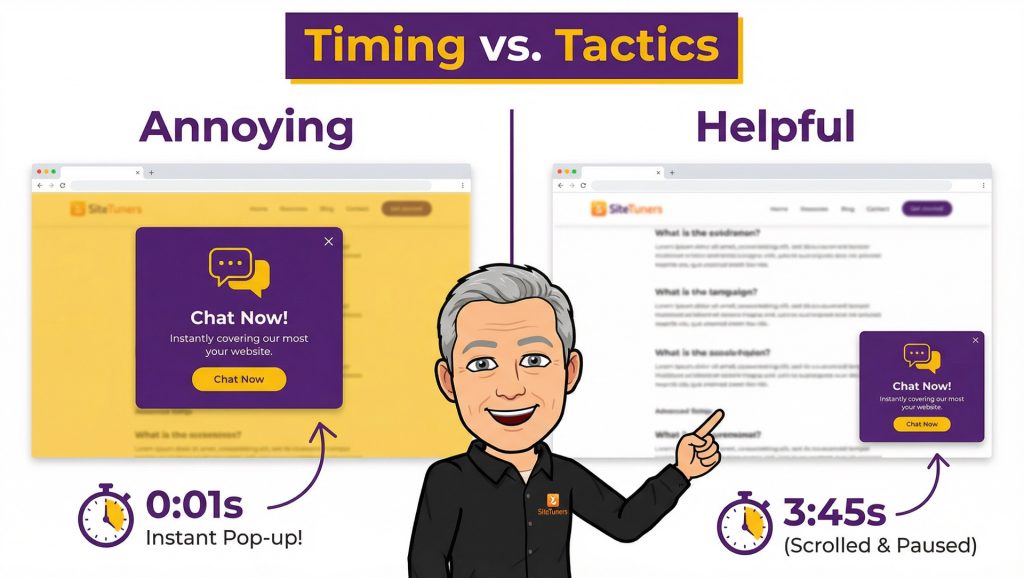
The same element can be helpful, or annoying, depending on timing.
A chat prompt after someone scrolls and hesitates can be supportive.
A chat prompt two seconds after arrival is invasive.
A form at the right moment feels natural.
The same form too early feels demanding.
Annoyance isn’t about what you show.
It’s about when you show it.
Repetition Feels Like Nagging
Websites often repeat messages to increase emphasis. The effect is usually the opposite.
Repeated CTAs.
Repeated headlines.
Repeated reminders.
Instead of reinforcing value, repetition can feel like pressure.
Visitors don’t need to be told the same thing louder.
They need to be told the next most helpful thing.
Friction Disguised as “Best Practice”
Many annoying elements exist because “everyone does it.”
- Mandatory cookie banners that dominate the screen
- Auto-playing videos
- Sliders that move before content is read
- Overlapping pop-ups
Best practice without context becomes bad experience.
Just because something is common doesn’t mean it’s effective.
Forms Are One of the Biggest Offenders
Forms ask for effort. Effort must be justified.
Annoyance creeps in when forms:
- Ask for information too early
- Ask for information that isn’t necessary
- Hide how long they’ll take
- Provide unclear value in return
Every field is a tax on motivation.
Respect motivation, and visitors will give more. Abuse it, and they disappear.
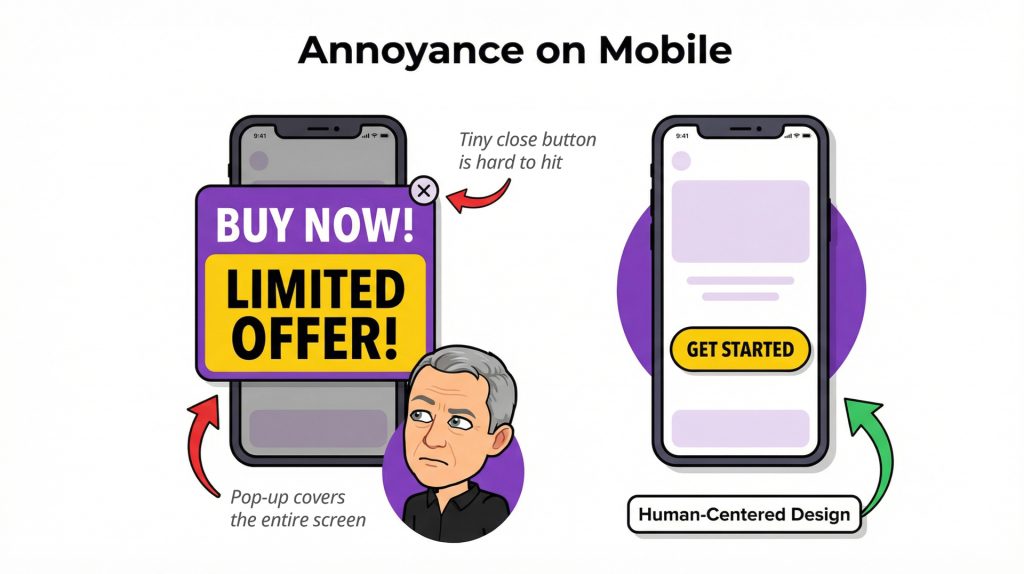
Annoyance Feels Different on Mobile
What’s tolerable on desktop can be unbearable on mobile.
Pop-ups cover entire screens.
Close buttons are hard to reach.
Scrolling becomes difficult.
Mobile visitors have less patience and less precision. Annoyance compounds faster.
If something feels slightly irritating on desktop, it’s probably infuriating on a phone.
“Helpful” Can Still Be Annoying
Intentions don’t matter to the user.
Helpful hints.
Guided tours.
Tooltips.
If they appear uninvited, they interrupt flow.
Human-centered design lets visitors pull help when they need it rather than pushing it when they don’t.
Annoyance Signals Desperation
Desperation repels.
Too many CTAs feel needy.
Too much urgency feels manipulative.
Too much messaging feels insecure.
Calm websites convert better because they project confidence.
Confidence says: “Take your time. We’ll still be here.”
How to Spot Annoyance on Your Site
Annoyance hides in plain sight.
To find it:
- Watch session recordings with sound off
- Navigate your site as if you’re in a hurry
- Use your site one-handed on your phone
- Ask someone new to narrate their experience
Where they sigh, hesitate, or complain, that’s where conversions leak.
Final Thought: Respect Is a Conversion Strategy
The most human websites share one trait: they respect the visitor.
They don’t interrupt unnecessarily.
They don’t demand prematurely.
They don’t pressure relentlessly.
They guide. They support. They wait.
When visitors feel respected, they stay longer, trust more, and convert more easily.
Action Item
Pick one annoying element on your site this week.
Remove it, delay it, or make it optional.
Then measure what happens. Often, the biggest conversion gains come not from adding persuasion, but from subtracting irritation.