









Behind the Print: The Monster Kid Who Never Grew Up
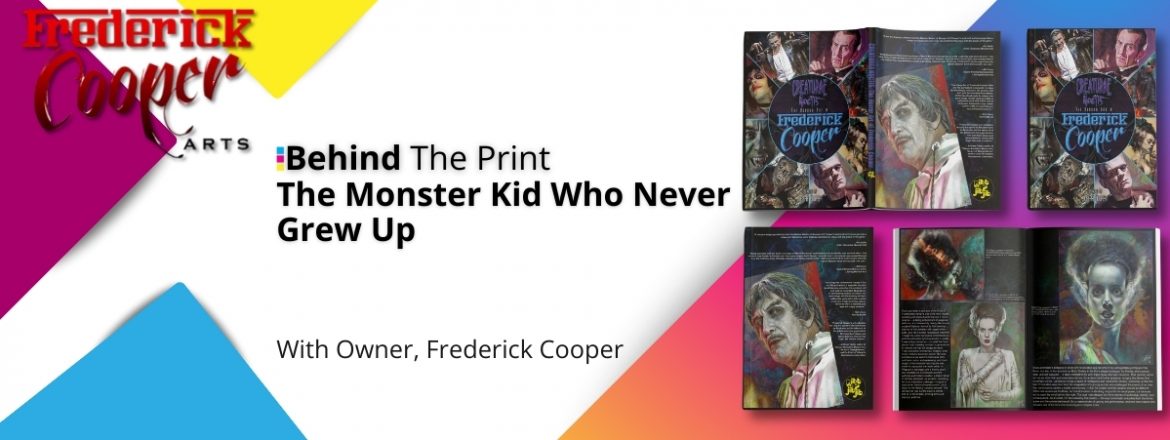
In this episode of Behind the Print, we’re joined by Fredrick Cooper (a.k.a. The Monster Kid Who Never Grew Up) of Fredrick Cooper Arts. With a lifelong passion for movie monsters, Fredrick tells us how he uses PrintingCenterUSA to print high quality art of horror classics.
Below, you’ll find the transcript of our conversation, edited for clarity to ensure easy reading. If you want the full, authentic experience, make sure to check out the video attached below.
Connor: Welcome back to the Behind the Print Podcast, where we feature industry leaders and uncover the creative minds and their businesses within the world of professional printing. Our mission is to provide you with inspiring, actionable resources that elevate your business projects and accelerate your journey to excellence and profit in print.
Today’s episode is The Monster Kid Who Never Grew Up, and joining me is the owner and artist of Frederick Cooper Fine Arts, Frederick Cooper. How are you doing today?
Frederick: I’m doing quite well, Connor. How are you?
Connor: I’m doing great. If you’re ready, let’s just dive right in. Sound good?
Frederick: Sounds great.
Connor: So tell me a little bit about yourself and what you do.
Frederick: I’ve been a professional artist for about forty years. I started when I was fourteen as an apprentice at a print shop, and then I moved into more commercial art. I worked with Universal Studios and Disney, and did a huge amount of apparel-related work for companies like Nike, Guess Jeans, and others.
But my real love was always horror art and monster art. I’ve been drawing monsters since I was three or four years old. I got to a point where I felt burned out on commercial art and I was actually considering retiring. My son, in his infinite wisdom, said, “Before you do that, why don’t you try doing more of the art that you love on a large-scale basis?”
I’m very glad I took him up on that suggestion, because it has been a lot of fun. Since 2018, it has been quite the ride.
“I’ve been a professional artist for about forty years. I started when I was fourteen as an apprentice at a print shop, and then I moved into more commercial art. I worked with Universal Studios and Disney, and did a huge amount of apparel-related work for companies like Nike, Guess Jeans, and others.”
Connor: You mentioned you did some work with Universal and Disney. Care to go into a little detail?
Frederick: Most of it was apparel related. Occasionally there were tags to be done, like apparel tags, but it wasn’t actually for the movies themselves or their properties directly. I did get to work a little on some of the monster imagery for Universal, but again, it was usually apparel.
A lot of it was things like Fast & Furious and many properties from the past forty years. I stuck mostly with the apparel companies. I also did work for the U.S. Olympic Team and NFL Properties. It was rare to have something that was just pure fun. Usually it meant going through a lot of committees, trying to figure out exactly what they wanted. It paid the bills for many years, but I can’t tell you how happy I am to be doing what I’m doing now.
Connor: Glad to hear it. You’ve been doing this for over forty years. How did you get into monster and creature art in the first place?
Frederick: My brothers got me into it when I was a wee lad. Some of my earliest memories are watching the Universal Monsters and the Hammer films: Frankenstein, Dracula, the Wolf Man, all the traditional classic monsters.
I remember my older brother putting a pencil in my hand and saying, “Draw what you see there.” I distinctly remember drawing the Frankenstein Monster for the very first time. I think I was four. I could have been a little younger or older, but it has been part of my life for as long as I can remember.
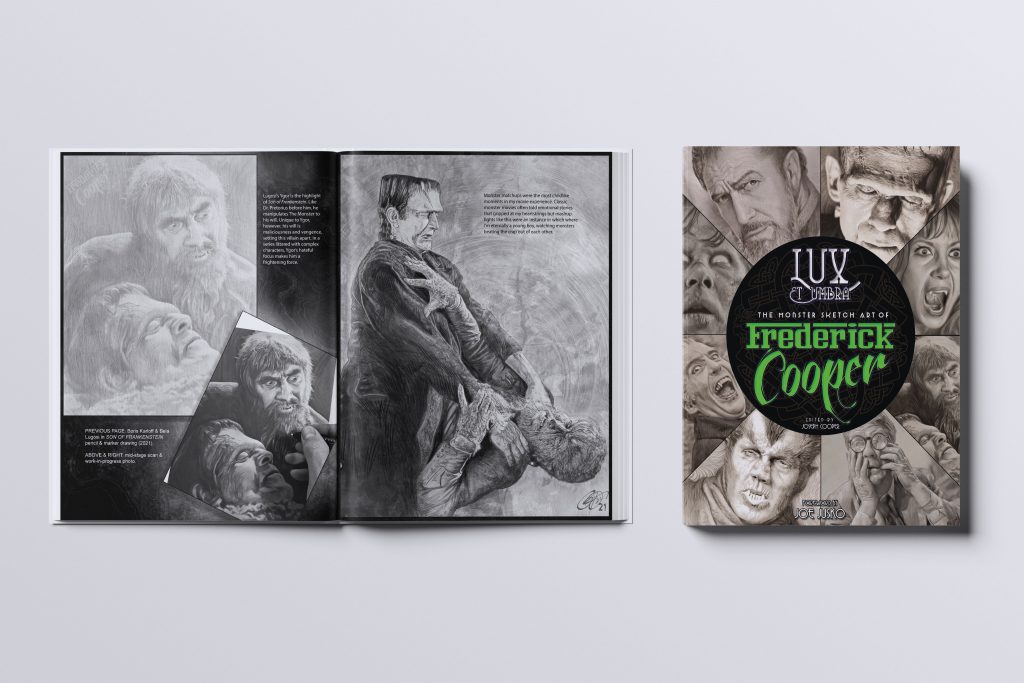
Connor: You already touched on this, but when your son encouraged you to start drawing more monster art for your own business, is that when you decided to take the big leap and start selling your artwork directly?
Frederick: Yeah, that’s when I opened Frederick Cooper Arts, my website, and decided to go full tilt into it.
The timing actually couldn’t have worked out better. I use everything I learned as a commercial artist in what I do now. I’m starting to branch out into movie posters, Blu-ray covers, and various related projects. But the majority of what I sell on my website is limited edition prints, original art, and some posters and similar items.
I haven’t really gone into things like stickers yet. Everybody keeps wanting me to do stickers, and that will come soon. It has been fantastic. I can’t tell you how much it means to me to embrace my first love, which is the classic monsters and monster art.
Connor: It sounds like you’ve been on quite the journey.
Frederick: Yeah. The last few years have been fantastic. There have been some frustrations, mostly pandemic related. I had a huge 2020 planned, and it didn’t work out that way. That was when my first book came out, and I really wasn’t able to publicize it properly.
Hopefully, with this new book, I’ll be able to make up for that.
Connor: What can you tell me about your target audience?
Frederick: Classic monster lovers. I get a lot of requests for more recent horror-based art, but I tell people I really don’t do much based on the new horror films. I’m starting to dabble a bit. I think the most recent thing I’ve done is Bram Stoker’s Dracula from 1993.
The majority of my artwork is based on characters and movies that are at least fifty years old. That’s what I love. That’s essentially what my son told me: draw exactly what you love the best. That is the stuff I grew up on. It has been wonderful.
“I get a lot of requests for more recent horror-based art, but I tell people I really don’t do much based on the new horror films. I’m starting to dabble a bit. I think the most recent thing I’ve done is Bram Stoker’s Dracula from 1993.”
Connor: As I was thumbing through your art books, there are lots of Frankensteins and Draculas and Bride of Frankenstein, but I also came across a piece of Snake Plissken from Escape from New York. Do you branch out into any other movies aside from horror?
Frederick: Oh yes, absolutely. That was a commission piece. I get requests for commissions on non-horror subjects, and I’ll usually accept them if it is something I really like. Escape from New York is a particular favorite. I think I saw it twice in a row the night it came out, back when you could stay in the theater and not get kicked out after a showing.
Every time I do something like that, it definitely brings back memories. It is almost like a Rolodex of memories when I’m drawing. I usually play the soundtrack while I’m working and just immerse myself in it. I don’t wear an eyepatch though. That would complicate things just a little too much.
Connor: Classic horror obviously has the biggest impact on your art. What else can you tell me about your creative process?
Frederick: I use the grid technique when I’m working from photos. It goes back to Da Vinci. It makes it easier to transfer images accurately.
A lot of the stuff I do from my imagination requires more planning. It usually takes several tries, at least ten, before I land on a concept that really works. Every once in a while, I get lucky and hit it the first time out of the gate, but it is a daily struggle.
It is also quite rewarding and fun to bat ideas around. If it works, it works. If it does not, you try again. From experience, that is the only way you can do it. It is very rewarding when I finally hit upon something and say, “This is it. We’re doing it that way.”
The process can be very different depending on the medium. If I am doing a lot of movie posters, I typically work digitally, and that is a bit different in terms of rendering and time. You can do things digitally a lot quicker than traditionally, but there is something about the traditional process that I love. That goes back to when I first started, pulling out the pencil and the pencil sharpener and going to town.
Both digital and traditional are rewarding. When digital painting came out, I jumped on it pretty early, so I have a lot of experience there as well. It is actually nice to get away from the drawing board occasionally and go to the computer. It feels like a little vacation. And then the opposite happens too. When I have been on the computer for a while, I jump back to the drawing board.
That back and forth is especially helpful when I am on a tight deadline and trying to keep myself entertained between projects. I’ll jump to one or the other to vary things a bit.
Connor: Do you feel you stand out from other artists?
Frederick: Well, I’m very fast at what I do. I’ve been doing this for forty-five years or so. I know there are other artists who are very fast too, but for me the big difference is dedication. I’m pretty persistent, and I keep showing up.
As far as standing out, I really leave that up to the viewer. All I can do is keep doing what I do, and be very conscious about doing things differently. For example, I just did a Bride of Frankenstein poster, and I felt obligated to look at other artists’ Bride of Frankenstein posters. There are lots of them. I wanted to do something different, but I also didn’t want to be too inspired by those posters because once that imagery is in your head, it is hard to avoid similarities.
We use the same materials essentially. We are all basing work on the same classic horror movies. It is very challenging, especially on a title like Bride of Frankenstein. It is one of the top classic monster movies of all time. Maybe in the top five. Whether it is number one, I leave to the viewer. And I leave it to the viewer as far as how I stand out too.
“As far as standing out, I really leave that up to the viewer. All I can do is keep doing what I do, and be very conscious about doing things differently. For example, I just did a Bride of Frankenstein poster, and I felt obligated to look at other artists’ Bride of Frankenstein posters. There are lots of them. I wanted to do something different, but I also didn’t want to be too inspired by those posters because once that imagery is in your head, it is hard to avoid similarities.”
Connor: Nicely put. Speaking of challenges, what are some of the obstacles holding you or your business back right now?
Frederick: I’m getting older. I can’t do all-nighters like I used to. I used to work thirty-six hours straight to make deadlines. I just can’t do that anymore.
Arthritis is kicking in. I’m constantly trying to stay on top of my fitness and keep myself going. I’m sixty-four, so it is not easy doing what I do in terms of manual dexterity. My hands are somewhat arthritic, but my brain is working better than ever. My ability to envision concepts is as strong as it has ever been. My body is not quite ready anymore.
There are good and bad days. I try to limit myself to a nine-hour workday, but occasionally I go to twelve, and I can really tell the difference afterward. I just have to keep active. I’ll be drawing and then say, “I’d better go for a run.” I’ll run around the block a few times and come back.
That is the most frustrating aspect, trying to overcome something you really can’t overcome. I just have to manage it.
Connor: Can you tell me about any major milestones or accomplishments you’ve had as an artist?
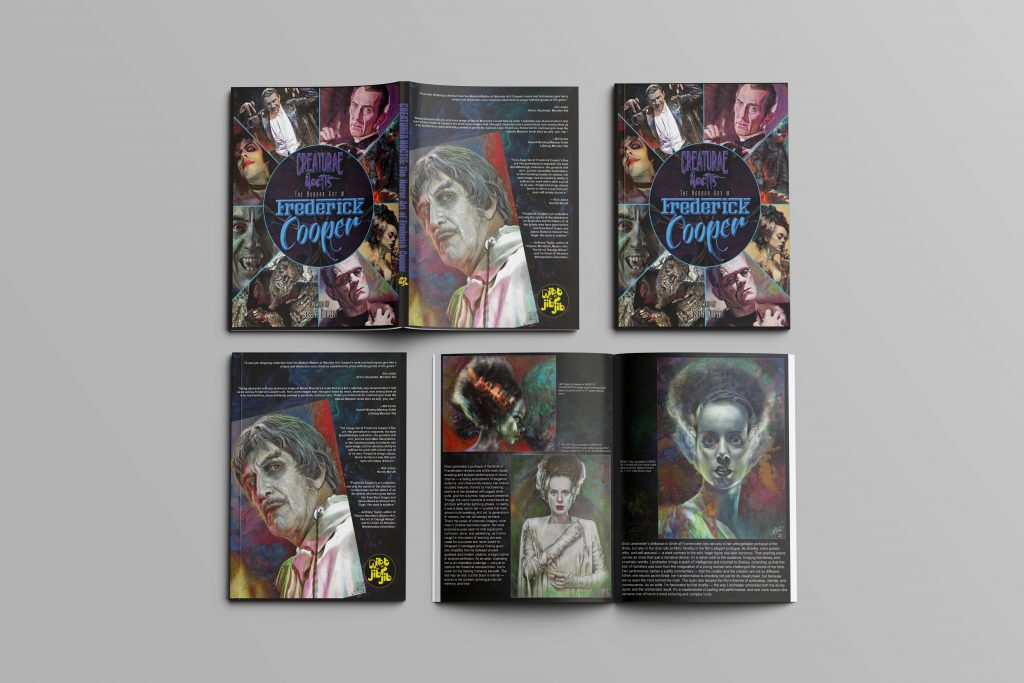
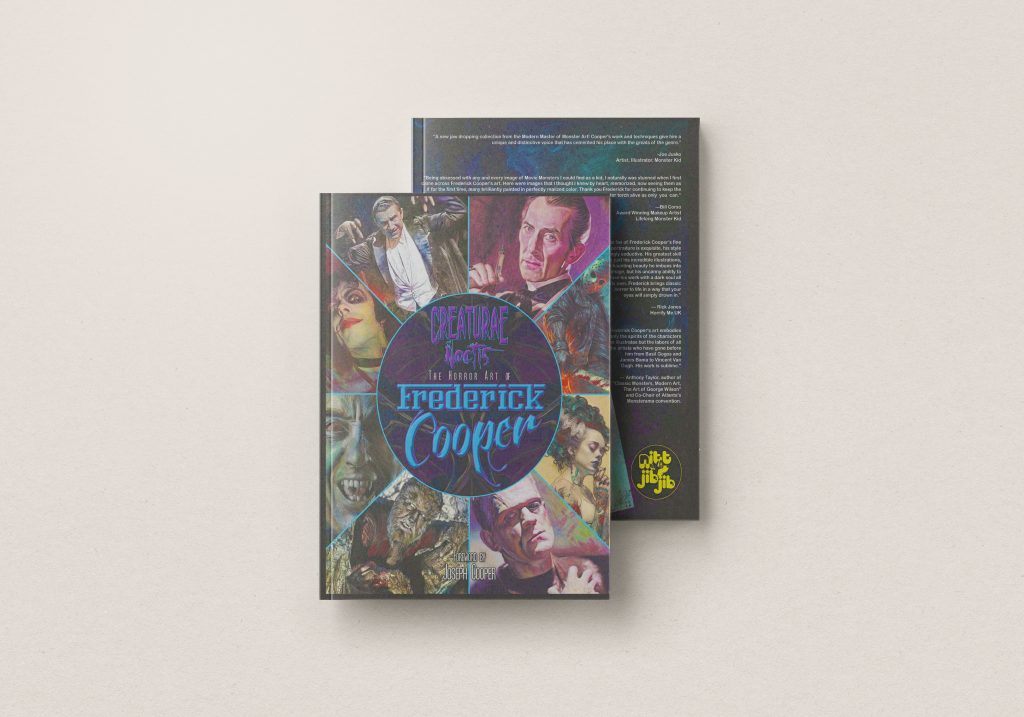
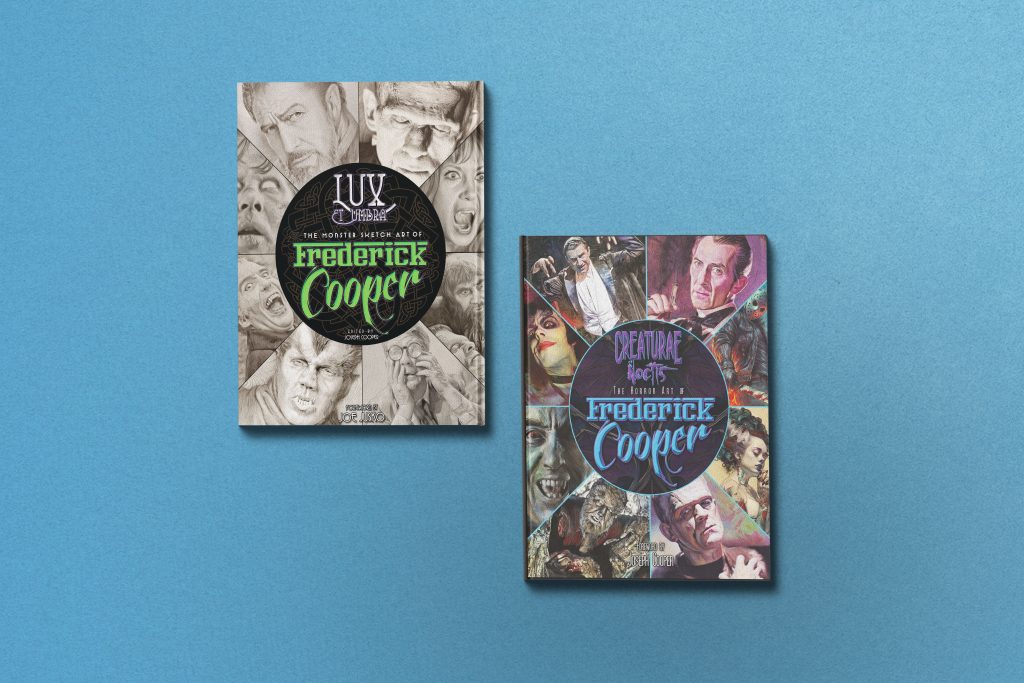
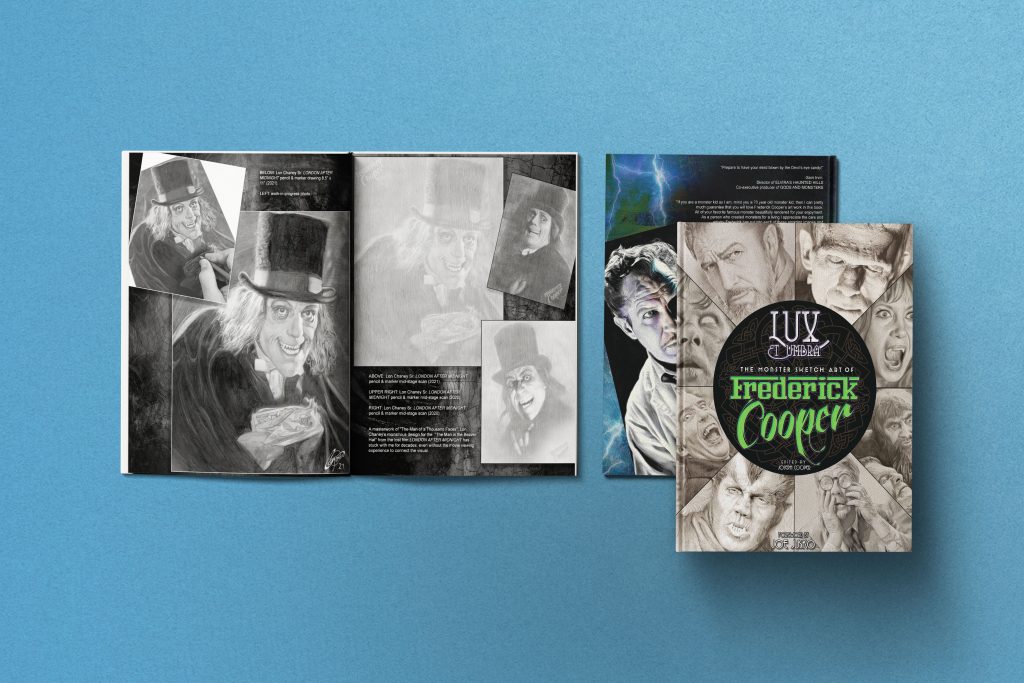
Frederick: Honestly, the biggest milestone has been working with my son on these three books, all of which were printed by PrintingCenterUSA.
Connor: We appreciate that.
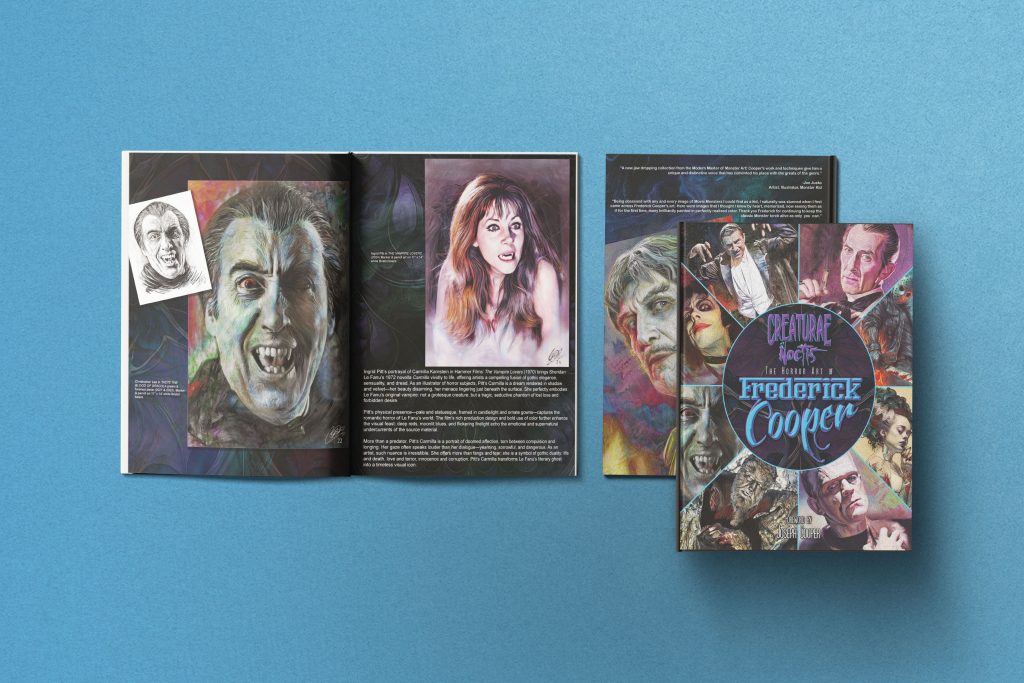
Frederick: My son has his own life, and he is getting up there. He will be thirty-six soon. The fact that he is willing to participate with me on these projects really means a lot. It has essentially become a family business.
Hopefully I instilled in him what I loved about monster movies early on, or movies in general. We were just discussing some of the Akira Kurosawa films the other day and how much we would like to do something based on those. That collaboration with my son is by far the most rewarding aspect of this entire thing.
Connor: It sounds rewarding. It is a very nice story. What strategies do you use to avoid burnout and maintain your creativity?
Frederick: Physical fitness is a big one. I rarely take days off, but when I do, it is usually something physical. I’ll walk an incredible number of miles that day or take a trip to the mountains. That is always good.
It is a delicate balancing act. I actually like Mondays, unlike most people. I will usually take Sunday off, but I feel a comfort in returning to the studio on Monday. It did not used to be that way, but now I will get up at five a.m. on Monday and try to make that the day where I do the lion’s share of the work, then carry that momentum into Tuesday and Wednesday. I guess that habit was ingrained in me over the years of being an apprentice many times.
Connor: I am the opposite. I don’t do Mondays well.
Frederick: Most people don’t. I can see why. But Monday is where I get the majority of my work done, which is a bit unusual.
Connor: What advice would you give to someone who is just starting out as an artist?
Frederick: Persistence. You have to do something you love. If you do something you love, you’re essentially not working, you’re creating. No matter what kind of setbacks you have, stay persistent. It will come in time.
There will be occasions where projects fall through, which is discouraging, but you just have to keep moving. That is it.
“Persistence. You have to do something you love. If you do something you love, you’re essentially not working, you’re creating. No matter what kind of setbacks you have, stay persistent. It will come in time.”
Connor: Next question: what is your favorite monster movie?
Frederick: I have two answers. Frankenstein and Bride of Frankenstein are the two I relate to most from a pure Halloween standpoint. But there is another monster movie that I have seen hundreds of times, and that is King Kong.
If you look back at what they did in King Kong, it is a testament to doing something that has never been done before, doing it well, and not knowing that you “shouldn’t” do it. A lot of movies will try to hide certain things. They will not show you everything. They will use darkness or tricks. But in King Kong, everything is on the screen. It is right in your face. They are showing you everything.
Even today, and it is nearly a hundred years old, it is impressive. I cannot imagine what it was like in 1933 to see that film. It was so far ahead of its time. The special effects, the stop-motion effects, are incredible.
Stop-motion really did not fall out of favor until the 1990s, with films like Jurassic Park and The Abyss. That is a good sixty years where stop-motion was the king for bringing things to life that do not exist and making them look great. Maybe I love it so much because I have seen it so many times, but I consider it right up there with the two Frankenstein films. There are so many others too. I love the Hammer films. I love the Universal Wolf Man. I love the original Mummy.
Over the years I have flip-flopped the order of my favorites.
Connor: My personal favorite is John Carpenter’s The Thing. I love that movie.
Frederick: I love that movie. I saw it on opening night to a totally empty audience.
Connor: I heard it bombed.
Frederick: Yes, it did, which is amazing. I told everyone I knew how great it was, and half the people who saw it said, “What are you talking about? This is not good at all.”
Just like King Kong, they were showing you things that had never been seen before. As far as practical effects go, there is no better movie. Top notch.
Connor: Absolutely. I saw the sequel, and I do not know, just the fact that they used CGI instead of practical effects kind of killed it for me.
Frederick: Yeah, that was frustrating because they actually did practical effects and then decided to go back and cover them with CGI. It makes no sense.
It is a shame that Rob Bottin has retired from movies. I guess he could not handle the stress of everyone wanting to add CGI into his effects. Unfortunately, the same thing happened to Rick Baker from An American Werewolf in London, who was his mentor. Once they started adding CGI to Rick Baker’s work, which I think culminated with the 2010 Wolfman remake, that kind of closed the door for him. I am sure it was very stressful to create practical effects no one had ever seen, do it better than anyone, and then have it replaced by CGI. It is sad.
Connor: It is very sad. So, how has print helped elevate your business? I actually have one of your most recent works right here, and it turned out great.
Frederick: It turned out very well, from what I can tell. It turned out exactly the way I wanted it. I have worked with a lot of printers over the years, and I can truly say that PrintingCenterUSA has probably been the best as far as reproducing my artwork.
Once I saw that first book, I said, “I’m going to be sticking with you guys as long as I can.” I printed three books with you: one in 2020, one in 2021, and the one that is coming up in October 2025. I could not be happier with the work you do.
Printing is everything as far as I am concerned. You do not make it difficult at all. Every decision seems to come easy when I am working with you. It is a real advantage to work with pros. And you guys have been around for quite a while, right?
Connor: Somewhere around that time, yeah.
Frederick: That was one of my first considerations. You had already been around for forty-something years. If you have been around that long, you know what you are doing.
I cannot tell you how many times I have gone to printers and it did not quite work out. Unfortunately, that is just a fact of life. You’re going to find the good, the bad, and the ugly.
“Printing is everything as far as I am concerned. You do not make it difficult at all. Every decision seems to come easy when I am working with you. It is a real advantage to work with pros. And you guys have been around for quite a while, right?”
Connor: Well, we appreciate you printing with us. It is an absolute pleasure, especially with a book like this. It is such unique artwork, page to page. Very impressive.
Frederick: Oh, thank you. That book was unlike the other two. I had about twice as much artwork to fit into that one, and I still wanted to keep the page counts consistent across all three books. I had to leave out a lot, which I guess is a good problem to have. Maybe I will do a supplement at some point soon.
Connor: Sort of a different question for you here. If you had a day completely free to spend however you like, how would you spend it?
Frederick: That is a really good question. I really do need a relaxing day. I have not had one in quite a while. Probably either the mountains or the beach.
I used to live in Florida, usually around beaches, but I love the mountains as well. Where I am now, it would probably be the mountains. Just taking in nature and trying to clear my mind.
Connor: I am the same way. I love hiking in the mountains. We are out here in Montana, so there is plenty to choose from.
Frederick: You have some good stuff out there. The scenery is amazing.
Connor: One last question for you. How can our listeners get in touch with you to learn more or maybe place a commission? What is the best way?
Frederick: Go to frederickcooperarts.com. There is an “s” on “arts.” You can find me there. I am also on Instagram and Facebook as Frederick Cooper Arts. I also have another account, I think it is FrederickCooper56. You should be able to find me pretty easily, but the website, frederickcooperarts.com, is the best way to reach me.
Connor: Very good. Well, did you have any questions for me?
Frederick: What’s your favorite color?
Connor: Blue.
Frederick: Hey, we have something in common.
Connor: All right, I’d say that is a wrap on another episode of Behind the Print. Thank you to our listeners for joining us as we explore the artistry and innovation of the printing world. Remember, having a strong vision, building the right strategy, and using tools like print to amplify your message will make your brand stand out from the crowd.
If you enjoyed today’s episode, be sure to get your sample pack today from printingcenterusa.com and share it with your fellow business enthusiasts. Until next time, keep those creative sparks flying, and remember, there is always more to discover behind the print.