



















Touch Points: Before, During, and After the Conversion
Many companies treat their website like the entire customer journey.
It isn’t.
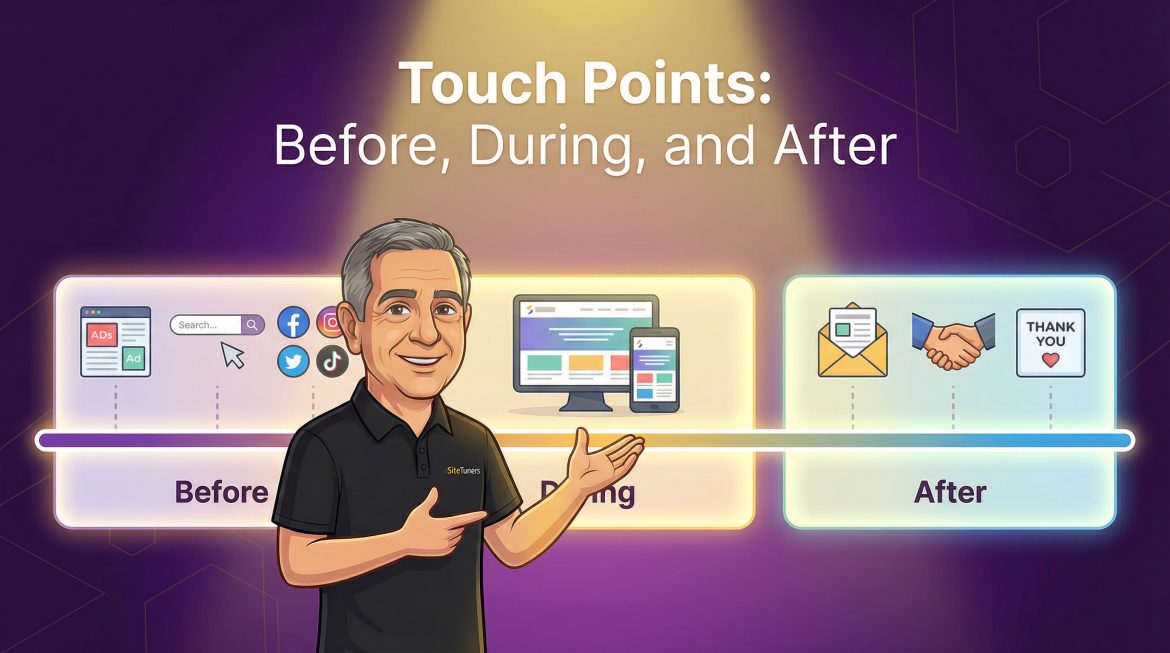
Your website is one moment inside a larger sequence of interactions; each of which shapes trust, expectations, and decision-making.
When those touch points align, conversion feels natural.
When they don’t, friction appears.
Optimization doesn’t just happen on pages.
It happens across the journey.
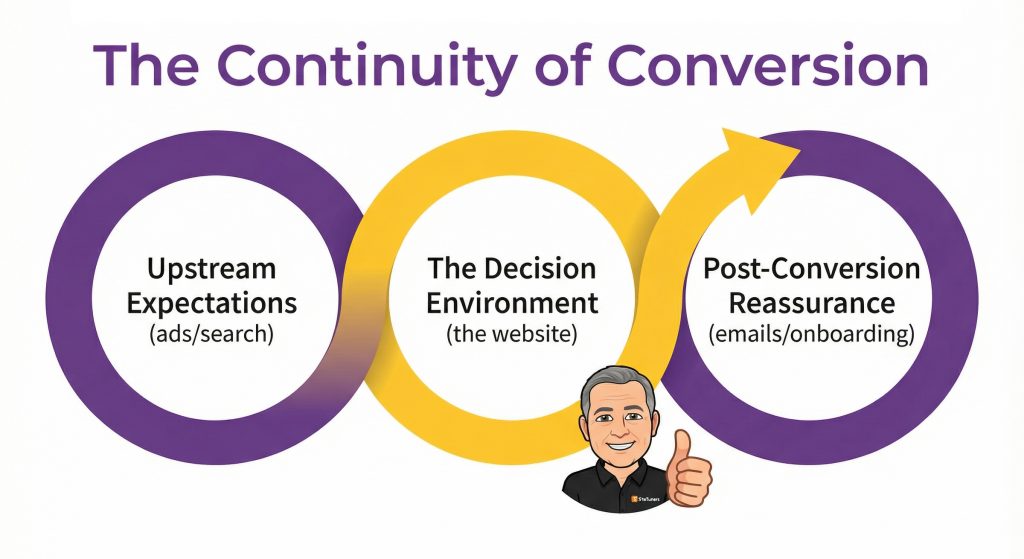
The Customer Journey Begins Before the Website
Visitors rarely arrive without context.
They may have:
- Seen an ad
- Read a blog article
- Heard about you from a colleague
- Watched a video
- Received an email
Each of those experiences shapes expectations.
If the website reinforces what they were told, trust grows.
If the website contradicts it, confusion follows.
The goal is continuity.
Expectations Are Created Upstream
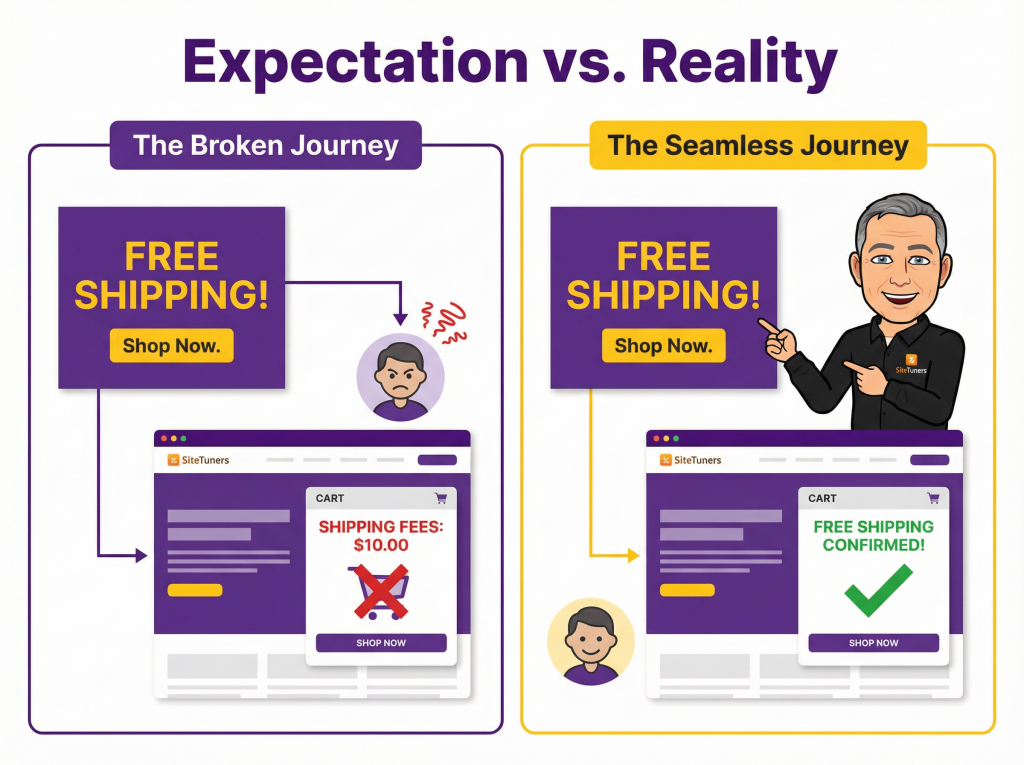
Many conversion problems begin before visitors even reach the site.
Examples:
- Ads promising something the page doesn’t deliver
- Social content that oversimplifies the offer
- Search snippets that create the wrong impression
When expectations and reality misalign, visitors feel misled, even if no one intended to mislead them.
Consistency across touch points prevents this.
The Website Is the Decision Environment
Once visitors arrive, the website becomes the central place where evaluation happens.
This is where they decide:
- Whether they’re in the right place
- Whether the company understands their problem
- Whether the next step feels safe
All the principles we’ve discussed: clarity, trust, ease, and respect come into play here.
But the website doesn’t operate in isolation.
Every earlier interaction influences how visitors interpret what they see.
Conversion Is Not the End of the Journey
One of the biggest mistakes companies make is treating conversion as the finish line.
In reality, it’s the beginning of the next phase.
After someone converts, they immediately ask new questions:
- “Did I make the right decision?”
- “What happens next?”
- “Was this worth it?”
The post-conversion experience determines whether trust deepens or erodes.
The First Post-Conversion Moments Matter Most
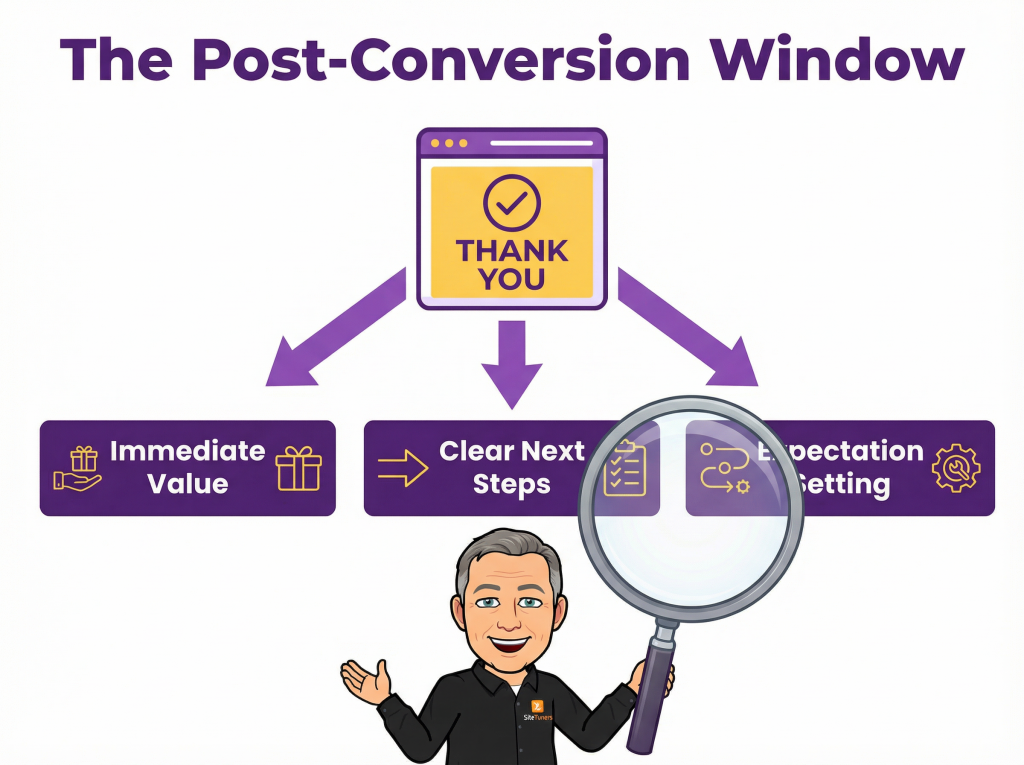
Right after someone converts is when their attention is highest.
Confirmation pages, follow-up emails, and onboarding experiences should reassure visitors that they made the right choice.
Good post-conversion touch points:
- Confirm the action clearly
- Set expectations about what happens next
- Provide immediate value
Silence creates anxiety.
Clarity creates confidence.
Follow-Up Is Part of the Conversion Experience
Many organizations focus heavily on acquiring leads but neglect the follow-up process.
Slow responses.
Generic emails.
Unclear next steps.
These gaps waste the trust built during the website experience.
Speed and relevance after conversion often determine whether leads become customers.
The Experience Must Feel Continuous
Visitors shouldn’t feel like they’ve entered a completely different world after converting.
Consistent tone, messaging, and expectations help create a seamless experience.
When the experience changes dramatically with a different voice, different promises, different pacing, that’s when trust weakens.
Consistency signals professionalism.
Every Interaction Reinforces the Brand
Touch points include more than marketing.
They include:
- Sales conversations
- Customer support
- Product onboarding
- Billing interactions
Each interaction either strengthens or weakens the overall perception of the company.
The best companies design these interactions intentionally.
Mapping Touch Points Reveals Hidden Friction
Most businesses have never fully mapped their customer journey.
When they do, surprises appear:
- Gaps between marketing and sales
- Delays between inquiry and response
- Messaging inconsistencies
These disconnects often explain why otherwise strong websites underperform.
Conversion problems frequently originate outside the page.
The Most Powerful Touch Points Are Human
Automation can help scale communication, but genuine human interaction still carries the most weight.
Helpful responses.
Thoughtful follow-ups.
Personalized communication.
These moments build trust faster than any design element.
Technology should support human connection, not replace it.
How to Evaluate Your Touch Points
Start by mapping the journey:
Before the website
- How do people first hear about you?
- What expectations are created?
During the website experience
- Does the site reinforce those expectations?
- Are decisions easy to make?
After conversion
- What happens immediately?
- What happens next?
Look for disconnects between these stages.
Where expectations break, trust breaks.
Final Thought: The Website Is Only One Chapter
Conversion doesn’t happen because one page is persuasive.
It happens because every interaction supports the decision.
When touch points align:
- Visitors feel understood
- Decisions feel safer
- Relationships begin stronger
Optimization isn’t just about improving pages.
It’s about improving the entire experience.
Action Item
Draw a simple journey map for your customers.
List the five most important interactions:
- First discovery
- First visit
- Evaluation
- Conversion
- Follow-up
Then ask:
Does each step make the next step easier? If it doesn’t, that’s where improvement begins.