










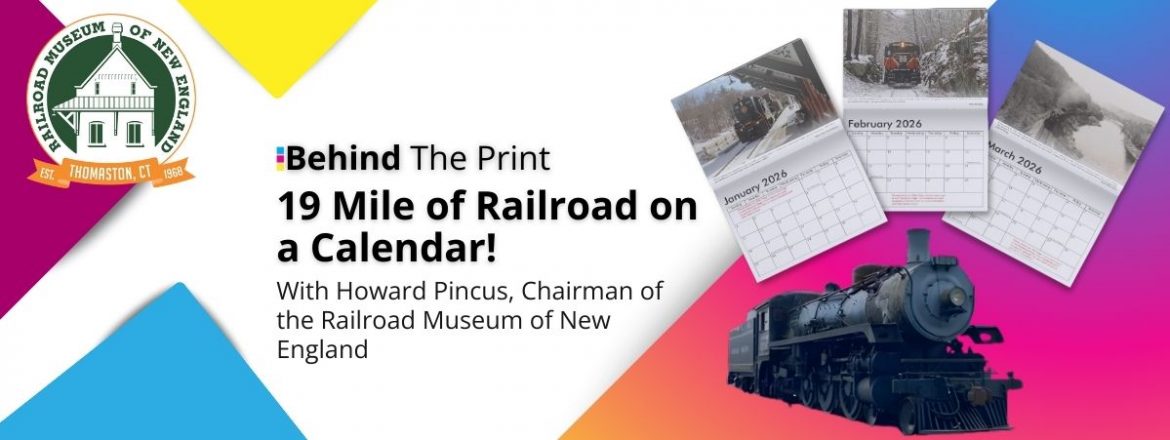
Behind The Print: 19 Miles Of Railroad On A Calendar
In this episode of Behind The Print, we step into the world of heritage railroading with Howard Pincus, Chairman of the Railroad Museum of New England. From restoring century old steam locomotives to operating a 19 mile railroad in northwestern Connecticut, Howard and his team are preserving living history while building a sustainable, community supported nonprofit.
What began decades ago as a passion for old trains has grown into a dynamic organization that blends restoration, tourism, freight service, and thoughtful print marketing. For marketing professionals, small business owners, graphic designers, and print enthusiasts, this conversation offers a unique look at how tradition and innovation can work side by side. Whether it is a 13 month full color calendar hanging in homes all year long or a carefully restored 1881 station welcoming families during the holidays, the Railroad Museum of New England proves that tangible experiences, both in print and in person, still matter deeply in a digital age.
Below, you’ll find the transcript of our conversation, edited for clarity to ensure easy reading. If you want the full, authentic experience, make sure to check out the video attached below.
14 min read
Connor: Welcome back to the Behind the Print Podcast, where we feature industry leaders and uncover the creative minds and their businesses within the world of professional printing. Our mission is to provide inspiring, actionable resources that elevate your business projects and accelerate your journey to excellence in profit and in print.
Today’s episode is 19 Miles of Railroad on a Calendar, and I’m joined by Howard Pincus, Chairman of the Railroad Museum of New England. Howard, welcome to the podcast.
Howard: Hi Connor. Thanks for having us on today.
Connor: If you’re ready, let’s dive right in. Tell me a little about yourself and what you do.
Howard: I’ve been involved in heritage railroads, what some people call old trains, for more than 50 years. I started when I was 17 years old. Over the decades, I’ve worked on restoring locomotives and rail cars, maintaining track, operating trains, raising money, and coordinating with volunteers, employees, and state and federal agencies. There is a lot that goes into it, but most of the time it is a lot of fun.
For the past 30 years, our group has been operating a 19 mile railroad in northwestern Connecticut called the Naugatuck Railroad. That was the original name of the line when it opened in 1849, and our current company name is a nod to that history.
Connor: I saw on your website that the Railroad Museum of New England is restoring a vintage Baldwin steam locomotive. How is that project going?
“For the past 30 years, our group has been operating a 19 mile railroad in northwestern Connecticut called the Naugatuck Railroad. That was the original name of the line when it opened in 1849, and our current company name is a nod to that history.”
Howard: That engine is 100 years old this month. It was finished in November 1925 and last operated in 1977. We began the restoration process a couple of years ago with a detailed survey to determine the condition of all the components.
Even with a survey, you never fully know what you have until the project is complete. People ask how much it will cost or how long it will take. The honest answer is that we will know when it is done. We estimate the cost will be a few hundred thousand dollars, and we are working to raise at least half to two thirds of that before we begin major disassembly.
We have learned from experience that you do not want a locomotive sitting in pieces without enough funding to finish the job. Other groups have faced that situation, and we have had projects in our own past that taught us to be careful.
Connor: How do you find replacement parts for something that old?
Howard: In most cases, we have to manufacture them. There are a few boutique suppliers in the heritage rail industry that can produce certain standardized components, but much of it is custom fabrication.
Fortunately, our restoration shop is staffed by an incredibly talented and resourceful group of young mechanics, welders, fabricators, and electricians. The oldest recently turned 26. One of the challenges in the heritage rail world has been the aging of the generation that revived steam locomotives in the 1960s. We learned from the last of the old timers who actually worked on steam engines in regular service.
Now, it is critical that we pass that knowledge on. Across the country, young people are stepping up. Fifteen or twenty years ago, we worried about attracting them. Today, that is not a problem. These young professionals are eager, hardworking, and highly capable.
There is something deeply satisfying about taking steel, iron, bronze, and brass, shaping it into a new part, installing it, and hearing a 100 year old engine boil water, blow its whistle, and move under its own power again.
Connor: You also run popular Christmas trains. Can you tell me about those?
Howard: About 15 or 16 years ago, we started the Northern Lights Limited. We offer two daytime and two evening trips. The train is decorated and illuminated inside and out, and the ride lasts about an hour and 20 minutes.
We offer standard coach seating in classic 1920s heavyweight cars with riveted exteriors and opening windows, as well as premium seating in newer equipment. This year, we are introducing three high level cars that once operated on the Santa Fe Railway between Chicago and California. These feature upper level seating and expansive windows, even into the ceiling.
We have Santa, Mrs. Claus, and elves who move throughout the train. We now have families riding with us who first came as children and are now bringing their own kids. Some families have joined us six or seven years in a row.
Our job is to put smiles on people’s faces. That is what we are about.
“About 15 or 16 years ago, we started the Northern Lights Limited. We offer two daytime and two evening trips. The train is decorated and illuminated inside and out, and the ride lasts about an hour and 20 minutes.”
Connor: The Railroad Museum of New England also operate freight service. What does that look like?
Howard: Our 19 mile railroad is owned by the Connecticut Department of Transportation. Under our long term agreement, we provide both excursion passenger service and commercial freight service.
Since 2016, we have worked with a customer that moves construction and demolition debris to landfills in the Midwest. We operate two or three times a week as needed. Another customer, a recycling company, ships scrap steel to mills. These are modern freight cars and locomotives. We do not use our vintage equipment for freight.
Freight development can take time. Our major customer took nine years from the first conversation to the first rail car moving. Patience is part of the railroad business.
Connor: Let’s talk about print. I have your most recent calendar here, and it turned out beautifully. How has print elevated your organization?
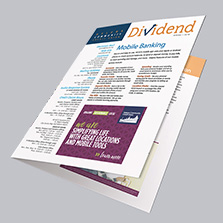
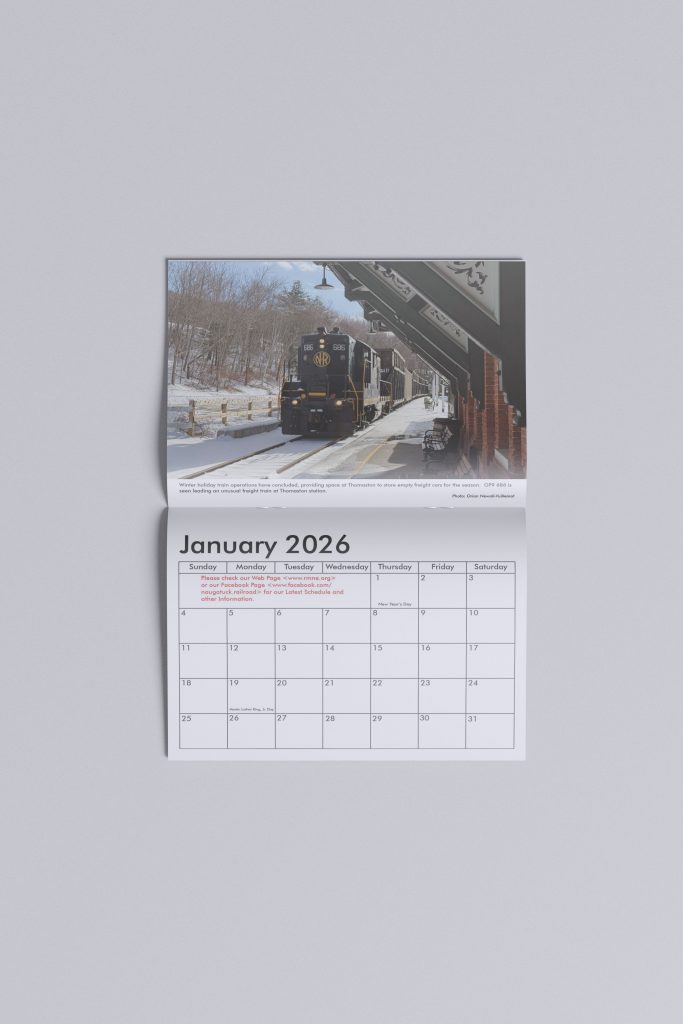
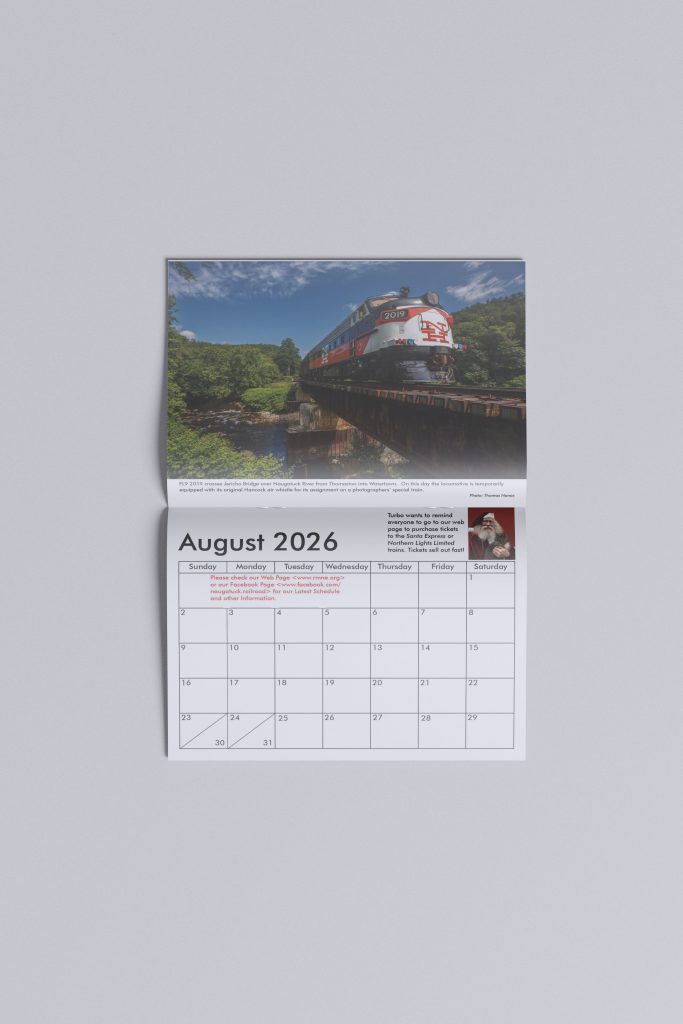
Howard: We have always relied on print, including newsletters, though those were on hiatus for a while and are now returning. In 2019, we began producing a full color 13 month calendar. Initially, we used a local printer who did good work but at a high cost. After researching options, we partnered with PrintingCenterUSA last year and were extremely pleased with both the quality and the price.
Doing it again this year was an easy decision.
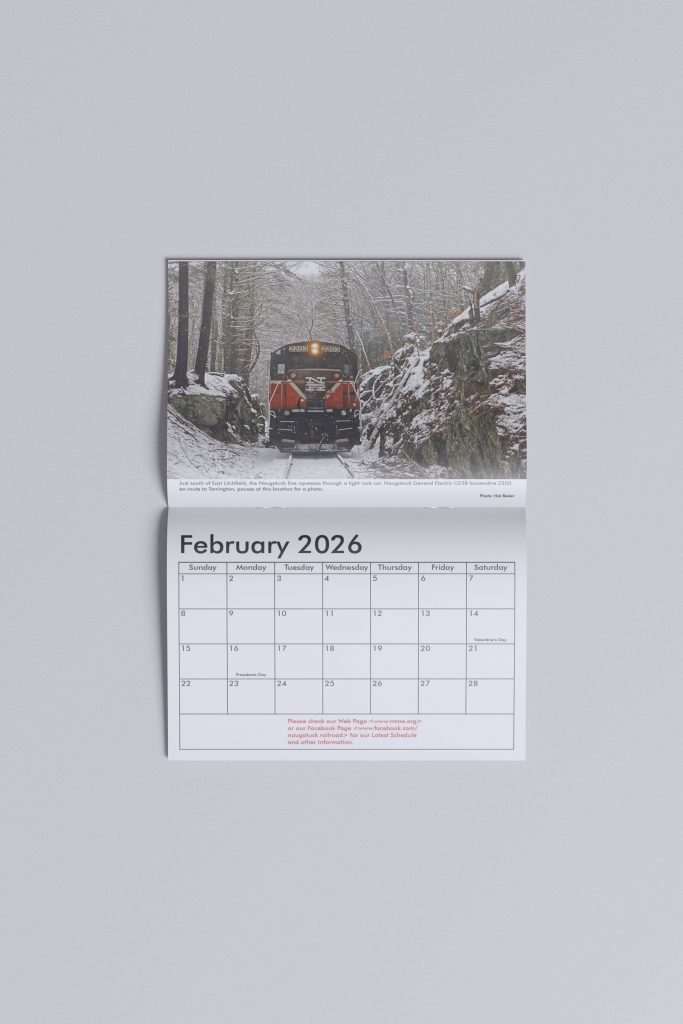
Print is real. It is tactile. A calendar hangs on someone’s wall for an entire year. It keeps our railroad and museum visible in homes and offices. We feature scenes along our line, and the photography is consistently excellent thanks to talented volunteers and staff.
Each year, we also include at least one vintage photo from my personal collection of historical images taken along our railroad. That blend of past and present connects people to our story in a meaningful way.
We are also exploring a printed guidebook that visitors can use to learn about the history of the railroad and our collection. Print allows people to hold that history in their hands.
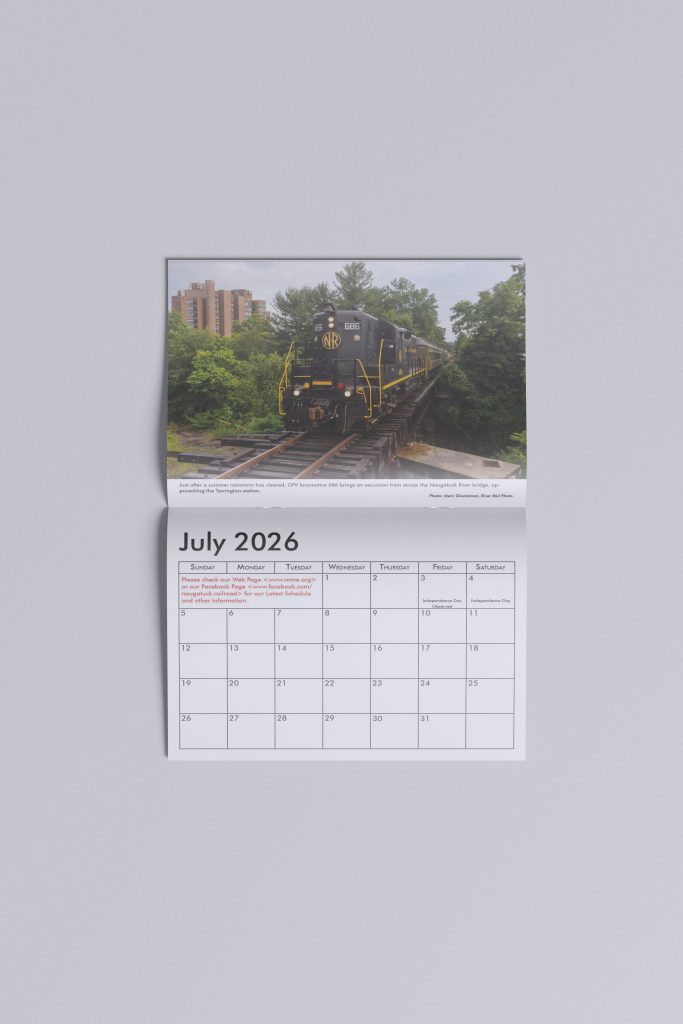
“Print is real. It is tactile. A calendar hangs on someone’s wall for an entire year. It keeps our railroad and museum visible in homes and offices. We feature scenes along our line, and the photography is consistently excellent thanks to talented volunteers and staff.”
Connor: How do you stand out among other heritage railroads?
Howard: There are perhaps 100 to 125 heritage railroads and museums across North America. We are all similar, but each is slightly different.
A friend once told me that we are not in the old train business, we are in the allocation of scarce resources business. There is never enough time, money, or people. The key is to use those resources wisely and to build strong community support.
We are located in Thomaston, Connecticut, a town of about 6,000 or 7,000 people. During our fall foliage trains and especially at Christmas, you cannot get a seat in a restaurant on a Friday or Saturday night. Our passengers are dining locally. We have a positive economic impact, and the community recognizes that.
We also run a Torrington Twilight Special during the summer. Passengers travel to Torrington, enjoy two and a half hours downtown visiting galleries, restaurants, and a restored theater, then return by train. About 125 people on a train make a noticeable difference for a local economy.
Community support has been essential to our survival and growth.
“A friend once told me that we are not in the old train business, we are in the allocation of scarce resources business. There is never enough time, money, or people. The key is to use those resources wisely and to build strong community support.”
Connor: What major milestones have defined your organization?
Howard: One of the earliest was saving our 1881 brick passenger station in Thomaston. When we arrived in the mid 1980s, the roof had burned off in an arson fire, and the building was about to be demolished. We stepped in, and Thomaston Savings Bank immediately committed to putting a new roof on the structure.
That began a 30 year relationship. With grants and thousands of volunteer hours, the station is now about 85 percent restored and a true showpiece.
Another milestone was opening our 11,000 square foot restoration shop in 2007. It has two tracks, insulation, heat, and a concrete floor. We no longer have to work outside in the mud or rush to cover projects before it rains. That facility dramatically increased what we can accomplish.
When new volunteers see old photos of what is now our shop and realize it was once a forest that we cleared and blasted through granite, they understand that progress happens one step at a time.
Connor: If you had a completely free day, how would you spend it?
Howard: I might sign up as engineer for one of our excursion trains and take it out over the line. After that, I would sit on a bench at the station and watch trains arrive and depart. Watching children light up when the whistle blows never gets old.
That would be a good day.
Connor: How can listeners get involved?
Howard: Visit us at the Railroad Museum of New England website. We are located in Thomaston, Connecticut, about an hour and a half from New York City. You can also find us on Facebook. Look us up, book a ride, and come see us.
Connor: That’s a wrap on another episode of Behind the Print. Remember, having a strong vision, building the right strategy, and using tools like print to amplify your message will make your brand stand out. Until next time, keep those creative sparks flying. There is always more to discover behind the print.