




















Behind the Print: Macro On the Wing
Welcome to the latest episode of Behind The Print, where we bring you the creative stories of industry leaders shaping the world of professional printing. In this episode of Behind The Print, we’re joined by Jose Madrigal, owner of Pollinator Portraits. In 2018, Jose discovered a niche in nature photography: close ups of pollinators.
Below, you’ll find the transcript of our conversation, edited for clarity to ensure easy reading. If you want the full, authentic experience, make sure to check out the video attached below.
Connor: Welcome back to Behind the Print Podcast, where we feature industry leaders and uncover the creative minds and their businesses within the world of professional printing. Our mission is to provide you with inspiring, actionable resources that elevate your business projects and accelerate your journey to excellence in profit and in print. Today’s episode is Macro On the Wing, and joining me is the owner of Pollinator Portraits, Jose Madrigal. Welcome to the podcast!
Jose: Thank you. Excited to be here.
Connor: We’re happy to have you. Let’s dive right in. Tell me a little about yourself and what you do.

Jose: I’ve been a personal trainer for about 25 years. I had my own gym for a while. Then I hit a burnout point, sold my half of the business to my partner, and dove more full time into photography. After a couple of years I realized it was starting to feel like a business rather than a passion. I was working to make a sale instead of creating from a place of passion. Over the last year I shifted back into training clients part time, about 20 to 25 hours a week, so I still have time to be a photographer. Now I can shoot and create from a place of pure art and what excites me, not what I think might sell. I feel the difference, and I see the difference in how people react to the work.
I got into photography in 2017. I’ve been an artist most of my life. As a kid I was a sketch artist and could draw photorealistically by middle school. In my teens I got into guitar and music took over. More recently photography took over. Because of my art background, once I learned the camera settings and technical parts, composition, light, balance, and color made sense right away. It was easy to start using the camera as a tool to create art.
As for macro, I have my wife to thank. She is an avid gardener and kept asking when I would start taking pictures of her flowers and butterflies. I told her if she got me a nice macro lens for Christmas, I would. I figured I would shoot a few pictures for her and end up with a lens I would use now and then. I had no idea that was where I would discover my niche.
“I got into photography in 2017. I’ve been an artist most of my life. As a kid I was a sketch artist and could draw photorealistically by middle school. In my teens I got into guitar and music took over. More recently photography took over. Because of my art background, once I learned the camera settings and technical parts, composition, light, balance, and color made sense right away. It was easy to start using the camera as a tool to create art.”
As soon as I put the macro lens on my camera, I started experimenting. It was Christmas time, and even in Texas there is not much to shoot outside in the way of bugs. I wandered around the house and played with the camera, changing settings and seeing what would happen. A light bulb went off. For the first time I felt like I was being an artist with a camera. I was creating from a pure place. When the insects started coming out, I explored the small world in our garden as her flowers bloomed. I was fascinated by the details. I learned things I never knew. Some were small lessons, but a few images even excited entomologists.
“As for macro, I have my wife to thank. She is an avid gardener and kept asking when I would start taking pictures of her flowers and butterflies. I told her if she got me a nice macro lens for Christmas, I would. I figured I would shoot a few pictures for her and end up with a lens I would use now and then. I had no idea that was where I would discover my niche.”
Connor: Can you go into more detail? What did they see in your photos?
Jose: I really got into photographing flying insects. One image that stands out involved scarab beetles. I photographed a beetle in flight, and there were little flies riding on its back. The entomologists were blown away. They assumed the flies discovered the same dung piles and crawled on while feeding. They did not realize the flies would hitchhike in flight from point A to point B. It was cool to realize I had captured something they had not documented.
Connor: Are those little flies parasitic, or are they just hitching a ride?
Jose: I believe they are just hitching a ride. They also feed on the dung. Opportunistic rather than parasitic.

Connor: Tell me about your typical clients. Who is most interested in your photography?
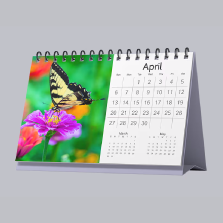
Jose: I found a strong community within beekeeping. I do an annual honeybee calendar. Early on I tried general pollinators, then I did a pollinator festival art show. A beekeeper who was a board member of the Texas Beekeeping Association came into my tent, bought some work, and invited me to their annual conference in San Antonio. I’m from Houston, and I said yes. At the shows I had been doing, I might sell a thousand to fifteen hundred in prints, which was okay but a little disappointing given the effort and inventory costs. At the 2019 beekeeping conference I did over six thousand in sales. I said, okay, I found my mothership. I’ve continued doing that each year. By default I focused more on honeybees, although I still love other pollinators. In my heart I probably prefer native pollinators, but for business I focus more on honeybees.
Connor: You also photograph butterflies, hummingbirds, and dragonflies. Are honeybees your favorite?
Jose: They are one of my favorites. My top three are dragonflies, honeybees, and hummingbirds. Those subjects have done best for me in selling art. You have to be true to who you are. Passion shows in the work. I once spoke with a painter at that conference who made new pieces just for the crowd and had a disappointing show. I asked what she normally painted. She said seascapes and landscapes. I told her to make the art she is passionate about and find shows for that. With photography I capture thousands of moments that never sell. I keep the ones that make me say wow, then I put my artistic touch into post processing and cropping. I have dabbled in other genres and I like landscape and larger wildlife, but time is limited. Landscapes and big animals require a lot of travel. With pollinators I can go to my backyard or a botanical garden and find a unique world. Early on that mattered because I was still a gym owner, working 60 hours a week. Specializing fit my life, and I started to be known for it. It became a brand, and I wanted to build that brand.
I also teach workshops. I do about three per year at a private ranch in Central Texas. I have one scheduled for the last weekend of September, two days focused on dragonflies. Certain migratory species spend time in the air and perform in ways that make it better to capture them in flight. I teach people how to photograph insects in flight.
“Landscapes and big animals require a lot of travel. With pollinators I can go to my backyard or a botanical garden and find a unique world.”
Connor: That must be challenging. You are trying to capture a very small and very fast subject. Do you wear some kind of harness, or is it all freehand?
Jose: Freehand. I use a neck strap for safety. With dragonflies I put on waders and get into the water, chest deep. That angle is great, and it lets me shoot with a nice background. Enough distance between the subject and the cattails gives you a smooth bokeh and isolates the insect. Even shooting from the shore, it is less about being fast and more about learning behavior. Most flying insects have moments when they hover. Some hover for one or two seconds. Some dragonflies will hover for 20 or 30 seconds. You can lock focus and rattle off hundreds of shots with fast shutters. You learn to anticipate those moments and to pick subjects and species that hover more often. You pre-focus in the general area. If the hover is only two or three seconds, you might get three or four good frames in a burst.
With bees I watch foraging behavior. When they gather pollen they get so covered that they clean off in the air next to the flower. Those hovers are brief but repeated on certain flowers. In workshops I teach which flowers to look for and what seasons matter. Some bees move more slowly. There may be an age component. Older bees seem slower. With honeybees getting ready to return to the hive, they hover longer, often making one extra long hover, almost like getting their bearings, then they rotate up and take off.
When I first started I followed a photographer on Instagram who had great in-flight images. I had no idea how he was doing it. It felt impossible. My aha moment came with a male carpenter bee. When they are ready to mate they set up a small territory and hover in one spot, zigzagging across it. If anything flies through, they chase it and then come back to the same spot. That predictable hover taught me the timing.

Connor: Most people never think about the flight patterns of insects. Do you ever get stung when you are around honeybees?
Jose: I’ve been stung twice, both times near hives. Beekeepers invited me to shoot around their hives, and bees get protective there. In both cases it was my arrogance. They offered a suit and I said I would be fine. I was wearing a black T-shirt, which was a bad idea. They don’t like black. They see it as a bear or a skunk. Beekeeper suits are white for a reason. Bees are color blind to red, which looks gray to them. Some flowers even shift color to signal when they are past pollination. White and yellow are their favorite colors. I tell workshop guests to wear white or yellow. Bees might be curious if you wear yellow and hover to check you out. They see into the ultraviolet, so white glows for them. Think about the yellow centers of many flowers. To them it is like a neon sign.
Connor: Do you keep bees yourself?
“Beekeeper suits are white for a reason. Bees are color blind to red, which looks gray to them. Some flowers even shift color to signal when they are past pollination. White and yellow are their favorite colors. I tell workshop guests to wear white or yellow. Bees might be curious if you wear yellow and hover to check you out. They see into the ultraviolet, so white glows for them. Think about the yellow centers of many flowers. To them it is like a neon sign.”
Jose: Yes and no. We have a couple of hive boxes at our ranch, but I have someone who helps manage them. The ranch is almost two hours from Houston, so my time is limited. I keep them as a resource for photography. Most beekeepers I know do not make money from honey. The ones who do well lease bees to commercial farms, like the almond orchards in California. They move hives by truck and lease them to different farmers. In Texas, some people keep hives for agricultural tax exemptions. It has become trendy, but many do not realize how much work it is. Then they hire someone to manage the bees.
Connor: How do you stand out from other nature photographers?
Jose: The niche of pollinators and, in particular, in-flight work. I use flash in-flight, which is what other photographers ask me about. Some of my calendar images have a dark, almost black background. That is not Photoshop. It is how the image is captured. They are flying in daytime. I choose cloudy days to control ambient light and use a good diffuser that creates an umbrella around the subject. With a macro lens I’m a few inches from the bee. It all goes back to knowing behaviors and timing and learning which flowers work at which time of year. That first year I wasted a lot of time trying every flower. Now I can tell quickly whether a flower is good for this style. Photographing insects in flight is what people pay to learn at my workshops. Many attendees are nature photographers around retirement age, often birders. If you can photograph an insect in flight, you will have no problem with a bird. Birds move more slowly and less erratically, and their paths are easier to predict. Hummingbirds are the next step up. They move like insects. They are the only birds that can truly hover and can fly backward because their wings move in a figure eight pattern that creates a vortex rather than lift from flapping. That makes them impressive and more challenging.

Connor: How has print helped elevate your business?
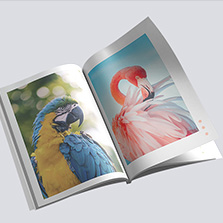
Jose: Print is nearly all of my business. Teaching workshops is separate, but many people discover me through printed work at art festivals. Images have a much bigger impact when you see them in print rather than on a small screen. I sell large canvas prints, like 36 by 36 or 30 by 40, and those sell for hundreds of dollars at festivals, even to non-beekeepers. I have seen people moved almost to tears. I had a buyer ask if I sell much online. I told him my website needs updating and I do not sell much there. Seeing the image in print has a different impact. He agreed. Walking past a large canvas grabbed him. Seeing it on a phone would not have had the same effect. Printed art feels more permanent. On a screen it disappears when you close it. In print it becomes a fixture. People connect more with printed art. It has more wow.
“Print is nearly all of my business. Teaching workshops is separate, but many people discover me through printed work at art festivals. Images have a much bigger impact when you see them in print rather than on a small screen. I sell large canvas prints, like 36 by 36 or 30 by 40, and those sell for hundreds of dollars at festivals, even to non-beekeepers. I have seen people moved almost to. tears.”
Connor: What major milestones or accomplishments have you achieved with Pollinator Portraits?
Jose: Early on, within a month of sharing pollinator images, the editor of Texas Parks and Wildlife Magazine contacted me to use some photos for a story. That had never happened with other work. It told me I had discovered my niche. I have been published in a couple of European magazines and won a few photo contests. The Native Plant Society of Texas awarded me photo of the year three years ago, and I have had several regional wins. I enter a few contests I respect, like Close-up Photographer of the Year. I support it whether I win or not. I prefer being in the space of publishing and selling prints rather than creating to impress judges. When I focused on what sold, I started thinking from the wrong place. The same can happen with contests. You end up creating to standards and rules rather than feeling. I do not care about impressing photographers as much as creating from a pure place. I would not be disappointed to win, and I did have a top 10 finisher last year, but my biggest accolade was doing close to a hundred thousand in sales in one year. I want to be great at what I do and known for doing great work, not necessarily better than anyone else.

Connor: It sounds like contests function more as community than competition.
Jose: Exactly. The Native Plant Society is a good example. When you submit, you grant permission for your photos to be used in newsletters and on their website. I care about native plants, so I like supporting them. If I win something, great. If not, I am glad they can use the images.
Connor: What challenges are holding you back right now?
Jose: I need a new camera. I have the Sony A1, but they released the A1 Mark II last summer. I ordered it last week and the order got messed up, so I sent it back and I’m waiting on the credit to reorder. I’m getting more into video. It is even more challenging than stills. You have to keep the subject centered and track it precisely for longer durations. I shoot a lot of slow motion, and my A1 will not continuously autofocus in slow motion. I have to manually focus and adjust constantly. If the subject stays still it is fine. If it drifts, it is hard. I shot a dragonfly doing a slow territorial flight and later realized I had captured it pooping midair. I did not know it while filming. Reviewing the file, I saw something hanging off the back, then it dropped out of frame. It was hilarious and also a reminder that the small world is full of surprises.
Connor: When we edit this video that sounds like a perfect short. If you had a completely free day, how would you spend it?
Jose: The same way I spend every weekend. I am up before dawn, coffee, suit up, and get into the pond. I come in to eat, then go back out. If I am working with bees, I get down into the field of flowers. It is my version of going fishing. I can spend all day from sunrise to sunset, and the only disappointment is that the sun has gone down. I love being in nature, discovering life in this microscopic universe all around us. It goes on whether we watch or not. It is exciting to capture unique things like flies hitchhiking on beetles and dragonflies pooping in the air.
Connor: How can our listeners get in touch or collaborate with you?
Jose: My email is jose@jmadimages.com. The website has contact links. On Facebook I’m Pollinator Portraits by J Mad, and on Instagram I’m @jmadimages.
Connor: That is a wrap on another episode of Behind the Print. Thank you for joining us as we explore the artistry and innovation of the printing world. Remember, print can help your brand stand out. If you enjoyed today’s episode, get your sample pack from PrintingCenterUSA.com and share it with your fellow business enthusiasts. Until next time, keep those creative sparks flying. There is always more to discover behind the print.