



























Behind The Print with SiteTuners
Welcome to the latest episode of Behind The Print, where we bring you the creative stories of industry leaders shaping the world of professional printing. Marty Grief turned a career spanning traditional and digital marketing into a mission centered on one simple idea: treat people better, especially online. As a leader in conversion optimization and relationship marketing, Marty has helped businesses rethink how their websites communicate, shifting them from self-focused sales tools into genuine connection builders. From improving user experience and messaging to challenging brands to put empathy first, his work shows how small, intentional changes can drive meaningful growth. This story offers valuable lessons for marketing professionals, small business owners, graphic designers, and print enthusiasts alike. It highlights how relationship-driven strategy, thoughtful design, and clear communication can build trust, strengthen brands, and create lasting impact in an increasingly digital marketplace.
Below, you’ll find the transcript of our conversation, edited for clarity to ensure easy reading. If you want the full, authentic experience, make sure to check out the video attached below.
9-minute read
“Relationship marketing is all about connecting with people and making them feel like they matter.” Marty Greif
Transcripts from Behind The Print with Marty Greif, President of SiteTuners
Welcome back to Behind The Print podcast, where we feature industry leaders and uncover the creative minds behind businesses in the professional printing world. Our mission is to provide you with inspiring, actionable resources to elevate your business projects and accelerate your journey to excellence in profit and print.
Today’s episode is all about turning websites into conversion machines. We’re talking about how small changes in design, messaging, and user experience can drive big results, and why optimization really matters. I’m excited to introduce the president of SiteTuners, Marty Grief.
Marty: Thank you, Zoe, and thanks for that introduction. It’s a pleasure to be here!
Zoe: We are so lucky to have you. I’ve been excited about this episode for a long time, and I think it’s going to be a great one.
Marty: Thank you. I know I promised to do this a while back, but my calendar’s been a little crazy, so my apologies.
Zoe: That’s totally okay. The holidays seem to come and go so fast, but somehow they make everything feel extra busy.
Marty: Absolutely. How are you doing today?
Zoe: I’m doing really great. It’s a beautiful morning here in Montana. The sky’s a bit cloudy, but it’s not snowing, so I’m happy. How about you?
Marty: I have no complaints whatsoever.
“If your website is all about you, you’ve already lost the visitor.” Marty Greif
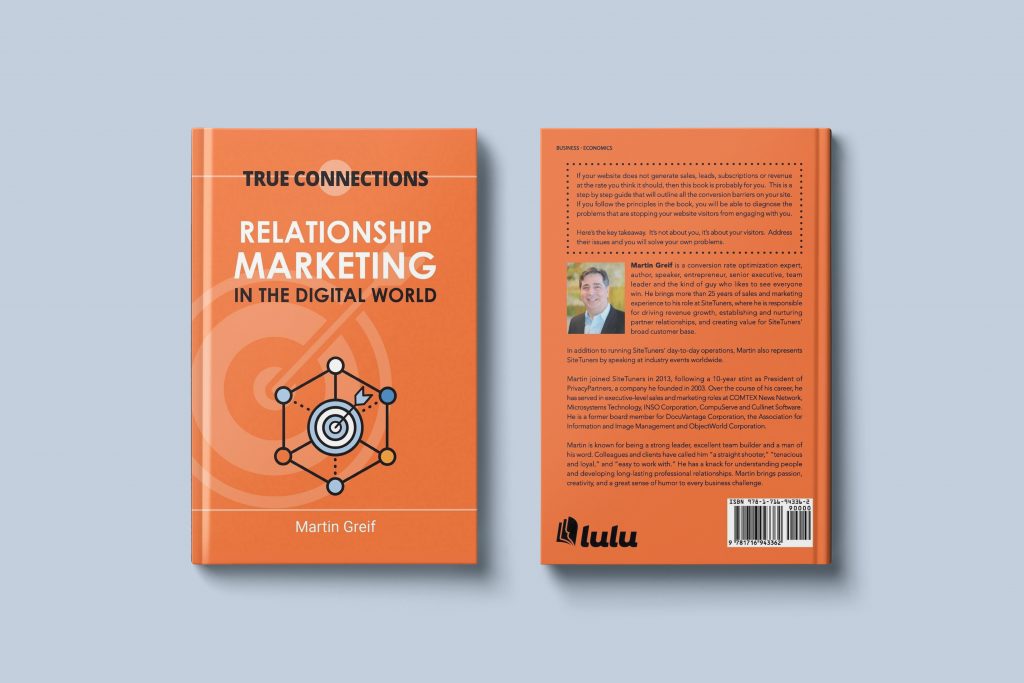
Zoe: Love to hear it. I’m really curious, what originally pushed you to write your book, True Connections, and was there a moment when you realized relationship marketing was being misunderstood or underused?
Marty: “Pushed” is absolutely the right word. SiteTuners has been around since 2002. I joined about 13 or 14 years ago because the owners were friends of mine, and they asked me to come on board to be the adult in charge, which I thought was pretty funny. When I joined, it was a mess, so we revamped everything.
The original founder, Tim, who’s a close friend of mine, wrote an incredible book about landing page optimization. For years he kept telling me I needed to write a book. I resisted for a long time, but eventually I gave in. It took four years to write, although if I’m being honest, about three of those years were spent figuring out what I even wanted to say. The actual writing probably took about six months.
The inspiration behind the book was simple. It’s about treating people the way they want to be treated. On a website, everything feels anonymous, and most websites treat visitors terribly. You would never talk to someone that way in person, so why would you do it online?
Zoe: That makes so much sense. A lot of successful projects come together quickly at the end because of all the planning and thinking that happens beforehand. So those first three years definitely count.
Marty: Thank you. The sad part is the book is a few years old now, and I really need to write a second edition. I need someone to push me again.
Zoe: Consider this your push. Second edition, let’s go. Just not four years this time.
Marty: Deal.
Zoe: For someone hearing the term relationship marketing for the first time today, how would you define it in one simple sentence?
Marty: It’s all about connecting with people. What we teach our clients is something I’ve practiced for years. It’s about making genuine connections.
I actually give an exercise to every one of my employees, and it drives them a little crazy. I encourage them to talk to everyone. If you’re at a restaurant, talk to the server. If you’re getting coffee, talk to the barista. I once met a taxi driver who wasn’t driving for the fare. He was driving for investment tips. People would casually talk about mergers, business deals, and market trends without thinking twice, and he would go home and make smart investments based on those conversations. It was brilliant.
Zoe: That’s amazing. Something so simple can turn into something incredibly powerful.
Marty: Exactly.
Zoe: Your career spans both traditional and digital marketing. What do you think changed most about relationships once everything moved online?
Marty: Unfortunately, people became more self-centered. Our instincts are rooted in survival, and those instincts don’t always serve us well in a modern society. When everything moved online, people started hiding behind screens. They stopped answering phones. They started ghosting people.
Ghosting didn’t exist when I was younger. If you ignored someone, you’d eventually have to face them. Now it’s become socially acceptable, and it shouldn’t be. No one wants to be treated that way.
Zoe: I totally agree. You often say technology should support relationships, not replace them. Where do companies get this wrong most often?
Marty: Their websites fall into what we jokingly call the Opera School of Marketing. Everything is me, me, me. We’re number one. We’re the best. But visitors are thinking, what are you going to do for me?
Websites should be about the visitor, not the company. This happens in real life too. You meet someone who talks nonstop about themselves and never asks you a question. That’s not a relationship.
Zoe: That’s such a good comparison.
Marty: Joy in life comes from connecting with people. At SiteTuners, everything we do is guided by four words. Every interaction should be caring, knowledgeable, helpful, and entertaining. If you hit at least three of those, you’re doing well.
Zoe: I love that. It’s such a strong guiding principle.
Marty: I learned it the hard way. I used to be incredibly selfish. I was once called into a CEO’s office after an interview where I made a candidate feel terrible. The CEO told me I might have been right about the hire, but I left someone with a bad feeling, and that matters. That conversation changed everything for me.
Zoe: People remember how you make them feel far more than what you say.
Marty: Exactly. You don’t always get it right, but you have to try.
“Every interaction should be caring, knowledgeable, helpful, and entertaining. If you can hit three out of four, you’re doing it right.” Marty Greif
Zoe: Do you think relationship marketing is more important for small businesses or large brands?
Marty: It matters for everyone, but large companies often abandon it. We’ve proven changes that could generate millions in revenue, and some big companies still won’t implement them. Smaller businesses care more. When you help them grow, it impacts real people.
Zoe: That’s incredibly insightful. What metrics should businesses track beyond conversions if they care about long-term relationships?
Marty: Lifetime value, net promoter score, engagement metrics, time on site, and where people drop off. Heat maps are one of my favorite tools because they show real behavior. Rage clicks tell you when people are frustrated. Scroll behavior tells you whether your messaging matches expectations.
Zoe: Heat maps are fascinating.
Marty: They really are. They show you whether you’re connecting with people or pushing them away.
Zoe: With AI and chatbots becoming more common, how do we keep relationships from feeling transactional?
Marty: AI isn’t new. The problem is people don’t train it properly. If it feels impersonal, people leave. Names matter. Personalization matters. But it has to be done thoughtfully, with fallbacks and empathy.
Zoe: That makes so much sense.
“Stop being selfish. The moment you make it about the other person, everything changes.” Marty Greif
Marty: At the end of the day, it always comes back to the same thing. Stop being selfish. Make it about the other person.
Zoe: If there’s one thing you want listeners to remember from this episode, what would it be?
Marty: As much as I love everyone listening, we’re all a little selfish. The easiest way to stop is to genuinely care about the people on the other side of the screen.
Zoe: That’s a powerful note to end on. Thank you so much for being here, Marty.
Marty: Thank you, Zoe. I really enjoyed this.
At its core, this conversation with Marty Grief is a reminder that marketing, whether digital or print, is ultimately about people. Through decades of experience, Marty has seen technology evolve, platforms change, and tactics come and go, but one principle remains constant: when businesses lead with empathy and connection, results follow.
Where Relationships Become Results
For marketers, small business owners, and creatives, this episode reinforces the value of slowing down and asking a simple question: how would I want to be treated? When that mindset guides website design, messaging, and customer experience, optimization becomes more than a numbers game. It becomes a way to build trust and long-term relationships.
Print, like digital, plays a powerful role in that process. Thoughtful design, clear messaging, and tangible experiences help reinforce authenticity in a noisy world. Whether you’re refining a website, launching a campaign, or rethinking how your brand shows up, Marty’s insights highlight why connection is still the most valuable conversion tool of all. Explore SiteTuners and start your book today!