












How to Pick the Right Booklet Size
Beauty comes in all shapes and sizes, especially when it comes to booklets! There are a ton of sizing options for booklets and it seems like it would be a no-brainer. The truth is it should be carefully chosen as it affects the overall content, cost, and first impression of the booklet. For example, if its too small, your content gets squeezed, images lose breathing space, and margins get thin. If it’s too big and the printing costs go up and the design can start to feel clumsy.
The choice really comes down to three things, content, how the audience will handle it, and budget. Depending on what you’re making, those constraints show up differently. Photo-heavy marketing pieces usually need more room than an event program; and a trade show handout works best when it’s light and easy to carry. Start there and the right size usually comes into view.
This guide covers the standard booklet sizes and what each one is best for.
What are the Standard Booklet Sizes?
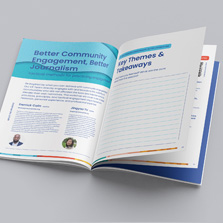
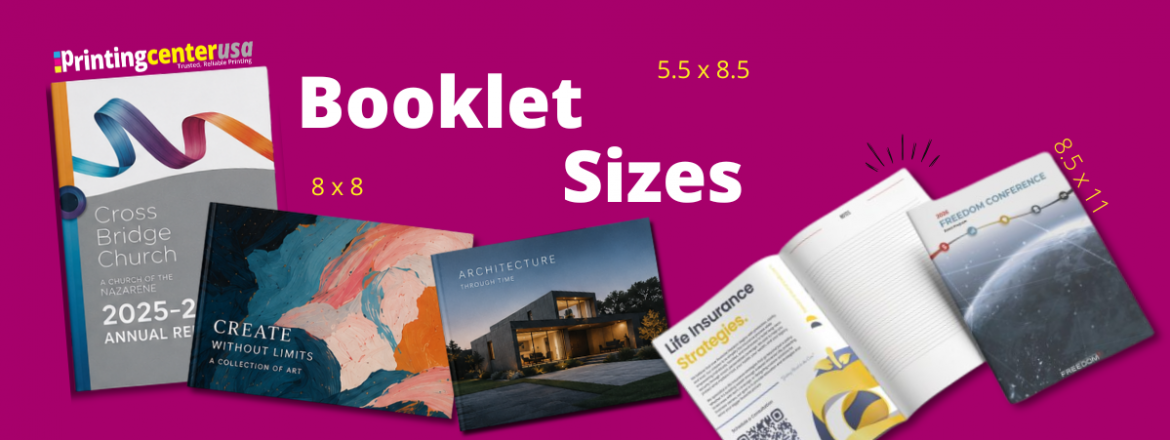
Standard booklet sizes are a list of booklet sizes that printers commonly offer based on their press run sheets. What do these look like? What are the most common booklet sizes? The most common booklet size is 5.5 x 8.5. It’s affordable, small but still has enough room for content, and most importantly: it’s versatile. After that, 8.5 x 11 is the next most popular option for content that needs more space.
Here’s a full standard sizing breakdown of what PrintingCenterUSA offers.
5.5 x 8.5 inches (Half Letter) Millimeters: 140 x 216 mm | Pixels: 1650 x 2550
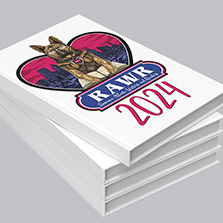
The most affordable and commonly used booklet size in the US. Easy to carry and pass out. It’s created by folding a standard 8.5 x 11 sheet in half.
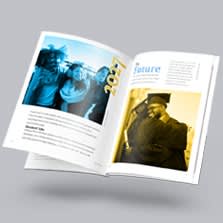
- Best for: event programs, product catalogs, marketing materials, church bulletins, real estate handouts, zines
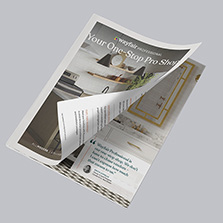
8.5 x 11 inches (Letter) Millimeters: 216 x 279 mm | Pixels: 2550 x 3300
The same dimensions as a standard sheet of printer paper. It gives you the most content space of any common booklet size.
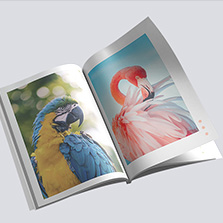
- Best for: manuals, annual reports, product lookbooks, magazines, educational workbooks, image-heavy books like art books, photography books
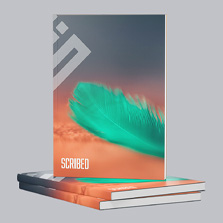
6 x 9 inches (Portrait) Millimeters: 152 x 229 mm | Pixels:1800 x 2700
A step up from 5.5 x 8.5. It provides more content space, without going up to the cost and size of the full 8.5 x 11. It’s not super common so it feels premium as well.
- Best for: journals, handbooks, guidebooks, self-published books, memoirs
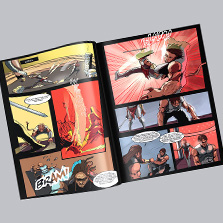
6.75 x 10.25 inches (Comic Book) Millimeters: 171 x 260 mm | Pixels: 2025 x 3075
The standard comic book size.
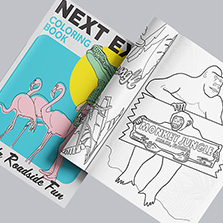
- Best for: comic books, graphic novels, illustrated guides, zines with full page art
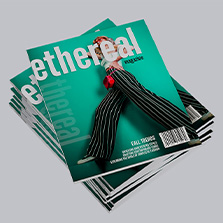
6 x 6 inches (Square) Millimeters: 152 x 152 mm | Pixels: 1800 x 1800
Easier to carry than the bigger square sizes while still standing out from standard portrait booklets.
- Best for: photo booklets, lookbooks, event programs, art book
8 x 8 inches (Square) Millimeters: 216 x 216 mm | Pixels: 2550 x 2550
Feels premium in hand and works well for photo-heavy content.
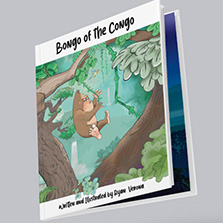
- Best for: photo books, art books, lookbooks, marketing pieces, coffee table books, and children’s books
12 x 12 inches (Square) Millimeters: 305 x 305 mm | Pixels: 3600 x 3600
The largest square booklet size available. This size provides maximum freedom and is the ideal unique format to command the attention you need in the creative world. Ideal for photographers, artists, and designers looking to up their coffee table books.
- Best for: photography books, high-end art portfolios, premium brand lookbooks, luxury marketing pieces
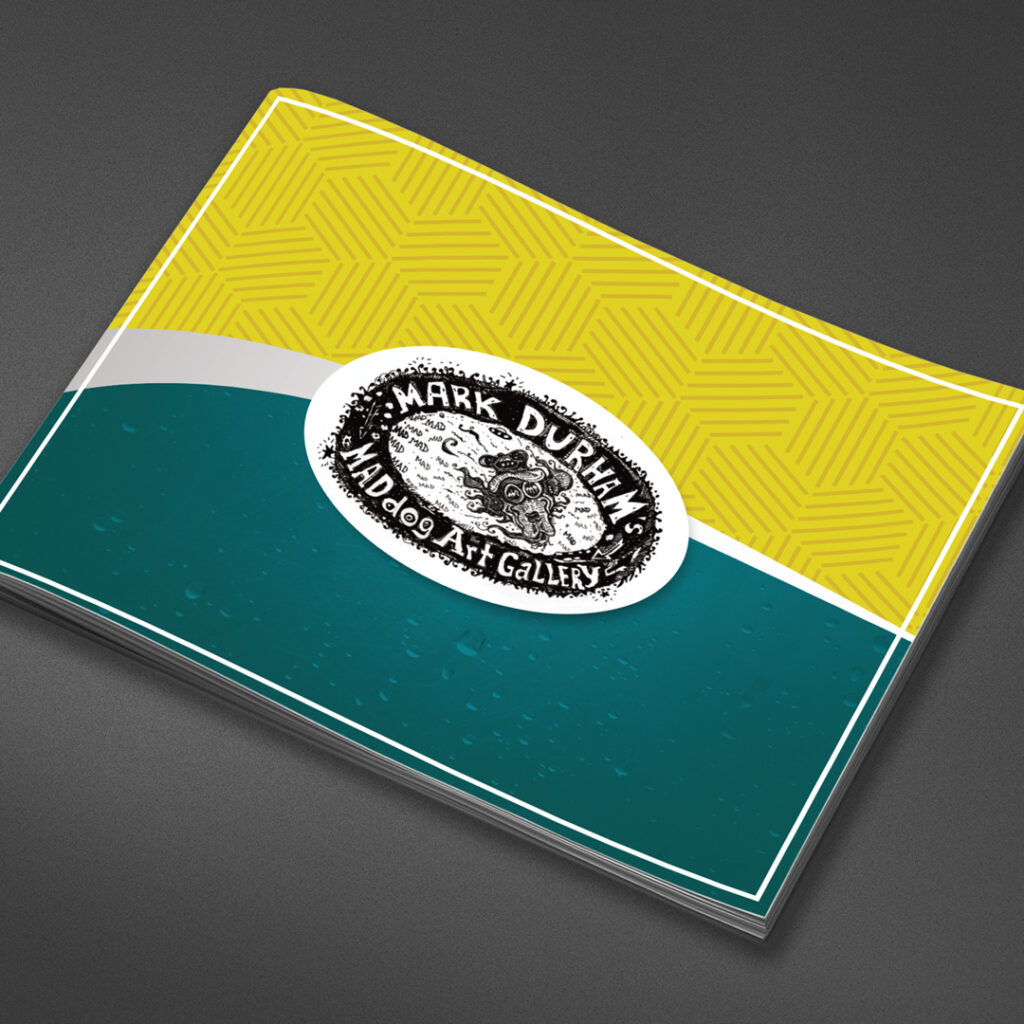
11 x 8.5 inches (Landscape) Millimeters: 279 x 216 mm | Pixels: 3300 x 2550
Full letter size turned on its side. Gives you the widest content area of any standard booklet format, works best for content that needs to spread across a wide canvas without going to a large format size.
- Best for: product catalogs, presentations, photo booklets, architecture books
8.5 x 5.5 inches (Landscape) Millimeters: 216 x 140 mm | Pixels: 2550 x 1650
The landscape version of the half letter, same dimensions, wider orientation.
- Best for: promotional handouts, event programs, marketing pieces
9 x 6 inches (Landscape) Millimeters: 229 x 152 mm | Pixels: 2700 x 1800
Sits between the half letter and full letter in scale.
- Best for: premium marketing booklets, photography showcases, product lookbooks

International Booklet Sizes
If your booklet is being distributed outside the US, A4 and A5 are the two sizes you’ll see the most.
A4 8.3 x 11.7 inches Millimeters: 210 x 297 mm
This is the international equivalent to what we know as 8.5 x 11 ( letter size.) If you distribute materials globally, A4 should the natural choice as it’s the default paper size for printers outside the US, and has the same professional, recognizable feel as letter size.
A5 5.8 x 8.3 inches Millimeter: 148 x 210 mm
This is the European equivalent to 5.5 x 8.5 ( half letter size) Slightly smaller than 5.5 x 8.5 but with the same portable feel. A format that works well for guides, programs, and any promotional booklets for a global audience.
Letter Size vs Half Letter Size Booklets
As we just learned, the two most popular booklet sizes are 5.5 x 8.5 and 8.5 x 11. They carry the majority of booklet and book projects. You’ll more than likely be in between these two sizes so understanding the difference between them makes the decision a lot easier.
5.5 x 8.5: Half Size
- Easy to carry and distribute
- More affordable to print and mail
- Great for short runs and event distribution
- Works best for small content with simple layouts
- Best for: event programs, small guides, zines, convention merchandise, promotional handouts
8.5 x 11: Full Size
- More layout space for text, images, and complex designs
- Better for detailed graphics, charts, and full bleed photography
- Professional presentation for corporate and editorial content
- Best for: magazines, training manuals, catalogs, educational workbooks, detailed company reports
A quick way to decide is if your audience is picking it up on the go, go with 5.5 x 8.5. If they are sitting down to read it, go 8.5 x 11.
What is the Difference Between Portrait, Landscape, and Square Booklets?
Portrait, landscape, and square describe the orientation of your booklet. It sets the first impression and change how the content gets read, and how your attention moves across the page. You should care about the orientation from the start.
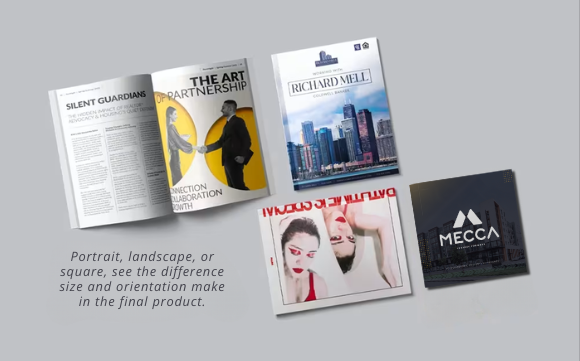
What is a portrait booklet? A portrait booklet is taller than it is wide. This is the standard orientation, works well for material meant to be read from top to bottom, and feels familiar to almost everyone. Guides, programs, manuals, and most everyday booklet projects fit naturally in portrait format.
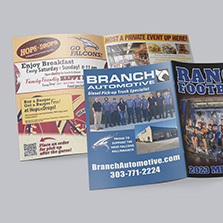
What is a landscape booklet? A landscape booklet is wider than it is tall. The most common sizes you’ll find are 11 x 8.5 and 8.5 x 5.5 landscape. That extra width gives more room for images and works best for content that needs a broader layout like presentations, product showcase and photo-heavy projects.
What is a square booklet? Square booklets have the same width and height. The most common sizes are 6 x 6, 8 x 8, and 12 x 12. They stand out right away and work well for photography and art-focused content, since images don’t have to be forced into either a vertical or horizontal frame.
The important things to know are that portrait sizes will be the most affordable. Landscape sizes require larger sheets of paper to print on and square sizes create more waste since sheet sizes are rectangle, so it comes at a slightly higher price. Remember to set your file up from the beginning. If you opt for a portrait size than switch to landscape, you’ll have a lot of reformatting and re-designing to do.
Does Booklet Size Affect Printing Cost?
Booklet sizes affect the printing cost and the difference between a standard size and a custom size can be huge.
Standard sizes like 5.5 x 8.5 and 8.5 x 11 are cut from common standard parent sheets on a press resulting in minimal paper waste and setting adjustments for the printer. Custom sizes require additional cuts, may not work with standard trimming & stitching equipment, and produce more waste, all of which gets added to the cost.
A few other ways size affects cost:
- Larger booklets use more paper and cost more to print
- Larger booklets cost more to mail
- Non-standard sizes may have longer turnaround times
- 5.5 x 8.5 is almost always the most cost-effective starting point
Custom sizes are worth considering when:
- You are producing high-end collateral and want the booklet to stand out physically
- Your design has unique proportions that do not work in a standard format
- The booklet needs to fit inside specific packaging or a display holder
- You are creating a luxury piece where the unusual size is part of the brand experience
Before getting your heart set on a custom size, talk to your printer first. They are the experts and will tell you what’s possible, what it will cost’s possible, the cost and whether a slight adjustment to a standard size would give you the same effect for less money.
How Does Booklet Sizes Affect Your Design?
Smaller booklets force you to prioritize. With less room and budget it inspires more creativity. Which might be just what you need for a standout design.
Larger booklets give you more freedom. Images can look more dramatic, and the overall design has more room to breathe.
Quick design tips by size:
- 5.5 x 8.5: Keep to simple images that will create an impact for the reader
- 8.5 x 11: Full bleed images are very effective
- Square: Let images be the hero here, cut down any text-heavy sections.
Booklet Printing at PrintingCenterUSA: Where to start
Not sure where to start or what options are right for your booklet project? This quick video walks you through the basics of booklet printing. From saddle stitch, the most popular choice for its affordability and fast turnaround, to 5.5 x 8.5 for an easy distribution size and short run capabilities, no matter what it is, we have everything you need to bring your vision to life!
Real-World Customer Examples
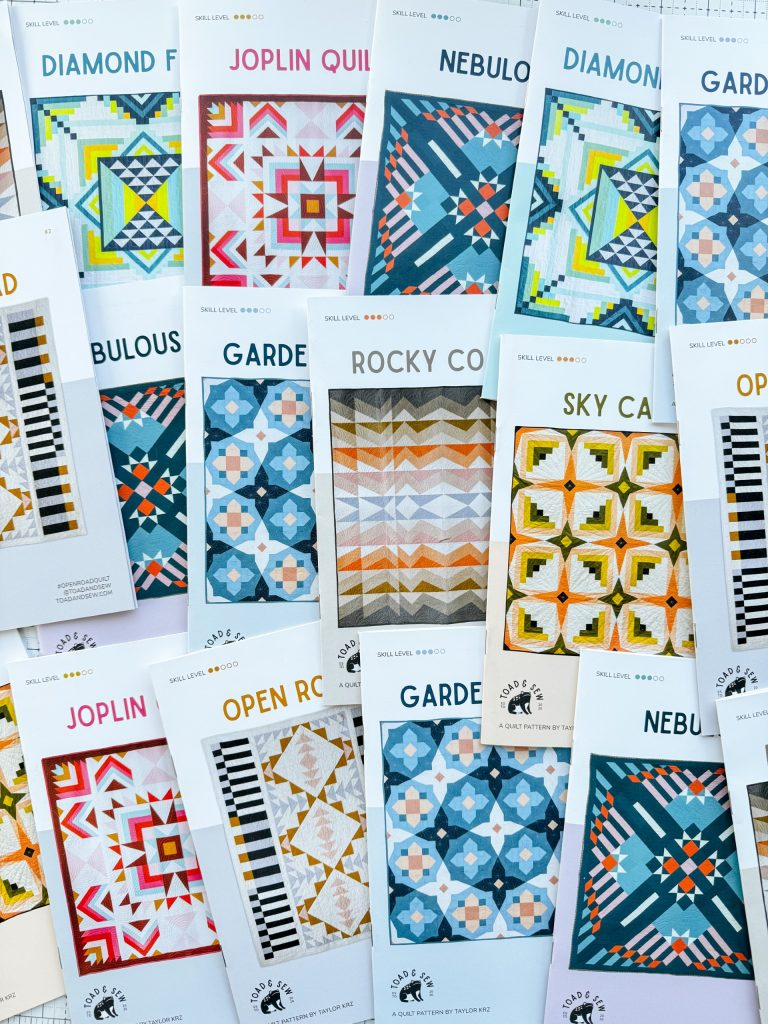
How to Increase Sales with Digital Downloads and Printed Products
Taylor of Toad & Sew, built a quilt pattern business built on thoughtful design and a deep love for the quilting community. She quickly realized she was missing an entire different customer base who prefer working from physical copies.
With a growing audience and strong demand, Taylor decided to expand her offerings beyond digital downloads and into professionally printed quilt pattern booklets.
Read about her journey and how this changed her business here.
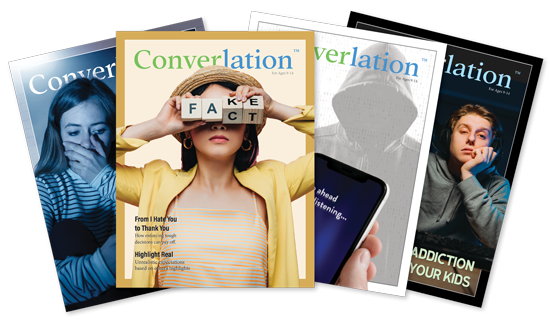
“Parenting Beyond the Screen” PrintingCenterUSA Podcast episode with Converlation
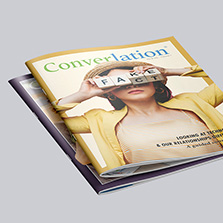
Kathy Van Benthuyson spent 30 years in the classroom watching kids lose the ability to make eye contact and hold a conversation. So she retired early and built Converlation, a curriculum helping kids and families develop a healthier relationship with technology.
In this episode she talks about what that shift looked like in real time, how booklets play a detrimental role in her programs, and why education beats restriction every time. Watch the full podcast episode here!
“I have dealt with many printing companies and Printing Center USA has it figured out. Pricing is upfront and competitive, sample packs were sent overnight, physical proof arrived SUPER fast, and all our beautiful booklets arrived in great condition. I called to speak with the company twice and both times the phone was answered by a real person in Montana who was able to answer questions about my order and provide the feedback I needed. I appreciated the personal suggestions included with our hard copy proof. Excellent experience.” -Aimee A
Frequently Asked Questions
What is the most common booklet size?
The most common booklet size is 5.5 x 8.5 inches. It is compact, affordable, and works for the widest range of projects including event programs, marketing materials, and product guides.
What is the difference between half size and full size booklets?
A half size booklet is 5.5 x 8.5 inches. A full size booklet is 8.5 x 11 inches. If your audience is picking it up on the go, go half size. If they are sitting down to read it, go full size.
What is landscape booklet printing?
Landscape booklet printing is when your booklet is wider than it is tall. The most popular landscape sizes are 11 x 8.5 and 5.5 x 8.5 landscape. It works well for photo-heavy booklets, product catalogs, and presentations.
What size booklet fits in a standard envelope?
A 5.5 x 8.5 inch booklet fits in a standard A9 envelope. A 4.25 x 5.5 inch booklet fits in an A2 envelope.
Does booklet size affect printing cost?
Yes. Larger booklets cost more to print and mail. Non-standard custom sizes add cost because they require special cuts and produce more paper waste. Standard sizes are almost always the most cost-effective option.
What is a square booklet?
A square booklet has equal width and height. The most popular square sizes are 5.5 x 5.5 and 8.5 x 8.5 inches. They work exceptionally well for photo books, lookbooks, and art portfolios.
What is the standard comic book size?
The standard comic book size is 6.75 x 10.25 inches. This is the most widely used format for comic books, manga-style publications, and illustrated story booklets.
What are A4 and A5 booklet sizes?
A4 is 8.3 x 11.7 inches — the international equivalent of US letter size, used widely outside North America. A5 is 5.8 x 8.3 inches — the international equivalent of US half letter. Both are standard sizes for global distribution.
How do I know what size to pick?
Start with your content. Text-heavy booklets work best at 5.5 x 8.5. Image-heavy booklets benefit from 8.5 x 11 or landscape. If you want something that stands out, square is worth considering. Order a free sample packet from PrintingCenterUSA and see the sizes in person before you commit.
Can I print a custom booklet size?
Yes. PrintingCenterUSA offers custom size booklet printing. Custom sizes cost more than standard sizes due to additional cuts and paper waste. Contact us for a custom quote
Ready To Start Your Project with Confidence?
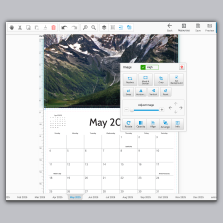
The right booklet size is just the beginning of your project. Once you have your size, orientation and binding, the rest follows easier and faster than you think. Use our free downloadable templates or drag-and-drop online design tool to create your booklet. Orders ship in 3 to 4 days after proof approval and are backed by our customer satisfaction guarantee.
Get an instant booklet printing quote today.