






Art Book Printing: How to Create & Self-Publish an Art Book
A printed art book is one of the best tools for building your audience and selling your work. As a photographer, illustrator, painter, graphic designer, or artist your physical art can be used, shared, gifted or sold and making an art book is one of the most meaningful things you can use to document your art beyond a flash drive. Here is everything you would want to know if you are creating, designing, and printing a gallery worthy art book worth selling for $30 or more! Start your project today!
What Is an Art Book?
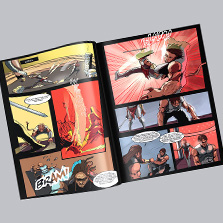
An art book is a printed publication built around visual artwork rather than text. These types of books show photography, art, design or any visual craft. The images should be primary and all other specs like layout, typography, paper, and design should support it. There are many different styles of art books. Monographs show one artists work. An exhibition is a catalog of work accompanying text info or pricing. A portfolio book is where an artist is presenting their work to a professional. A fine art photo book shows photography as stand alone art. All of them have one purpose and that is to show the visual work in a way digital won’t.
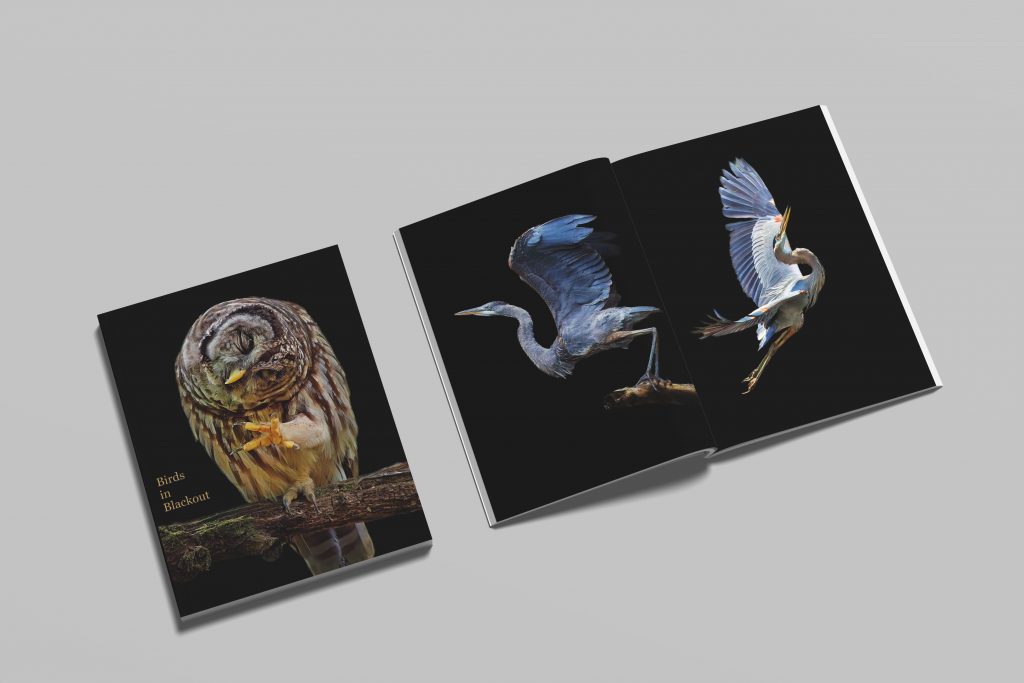
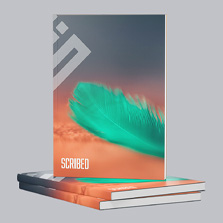
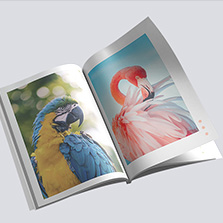
Like Jack Renshaw’s Birds in Blackout above, art books are used by artists to sell their work as a physical product, by galleries to document exhibitions, by designers to present portfolios to clients, or they can also be used by anyone who wants to preserve visual work in a more permanent and prestigious form than a digital file. Check out his blog article or his portfolio!
Layout Tips for Art Book Design
The layout of an art book is a design decision itself. Every choice you make about spacing, margins, typography, and page structure either supports the artwork or competes with it. Here are the best tips.
- Don’t overcrowd your book’s layout. Most fine art prints are clean and the work is prominently displayed without overtaking the page. Many have a good amount of generous white space around it to give the viewer somewhere to rest their eyes and direct their attention back to the work itself.
- Stay consistent with the layout. Keep the same logic visual feel throughout the whole book. No random pages, use patterned designs and templates. The same applies to typography, color, and spacing. Consistency is what makes a layout feel intentional rather than assembled.
- Use creative structure by adding table of contents, chapters, sections, titles, and page numbers to clearly outline and divide the book.
- The best layouts we see have 2 full bleed image pages followed by a blank text page for info. A book with 150 pages of the same layout gets old fast.
- Giving the viewers a behind the scenes look near the middle or end of the book makes for a very personal and relatable piece that viewers connect with even more!
Art Book Layout Ideas by Content Type
Photography books: full-bleed images on one page and breathing room on the facing page. Alternating between close crops and wide shots creates visual variety.
Illustration and concept art books: a finished piece facing sketches or process work gives viewers insight into the creative journey.
Painting and fine art books: white backgrounds with precise color reproduction as the priority. Accurate color is more important than dramatic layouts for this type of content.
Mixed-media and experimental books: freedom with layout
What to Include in Your Art Book
Knowing what to put in your art book is as important as knowing how to design it. Here is what most gallery-quality art books include and why each element matters.
Cover: Your strongest single image that represents the whole book without giving everything away.
Title page: Clean, minimal, with the title, your name, and publication year. No design needed, just keep it simple here.
Introduction or artist statement: A short text, typically one to three pages, that frames the work for the viewer. This is your chance to give context without over-explaining and to tell the reader why this body of work exists. But don’t forget to leave enough room for them to bring their own interpretation.
Table of contents: Essential for any book and helps the reader explore in an anticipated way.
Main body: The artwork itself. This is the majority of the book and everything else exists to support it. Organize images in a sequence that creates a journey like chronological, thematic, emotional, or conceptual progressions. Choose a sequence that rewards the viewer who reads the whole book rather than just flips through, building on each page to tell your story.
Captions: Optional but valuable. Short captions with title, medium, dimensions, and year add professional context.
Biography: A brief artist biography at the back of the book grounds the work in a person and a practice. One page is great or even use the back cover!
Acknowledgments and colophon: The colophon, the small text block at the end of the book listing paper, printer, edition size, and publication details, is a mark of professionalism that gallery-quality art books include as standard.
How to Photograph Your Artwork for Printing
The quality of your final printed art book is based solely on the quality of the image you take of the subject. It’s worth getting right and can be as good as a professional studio.
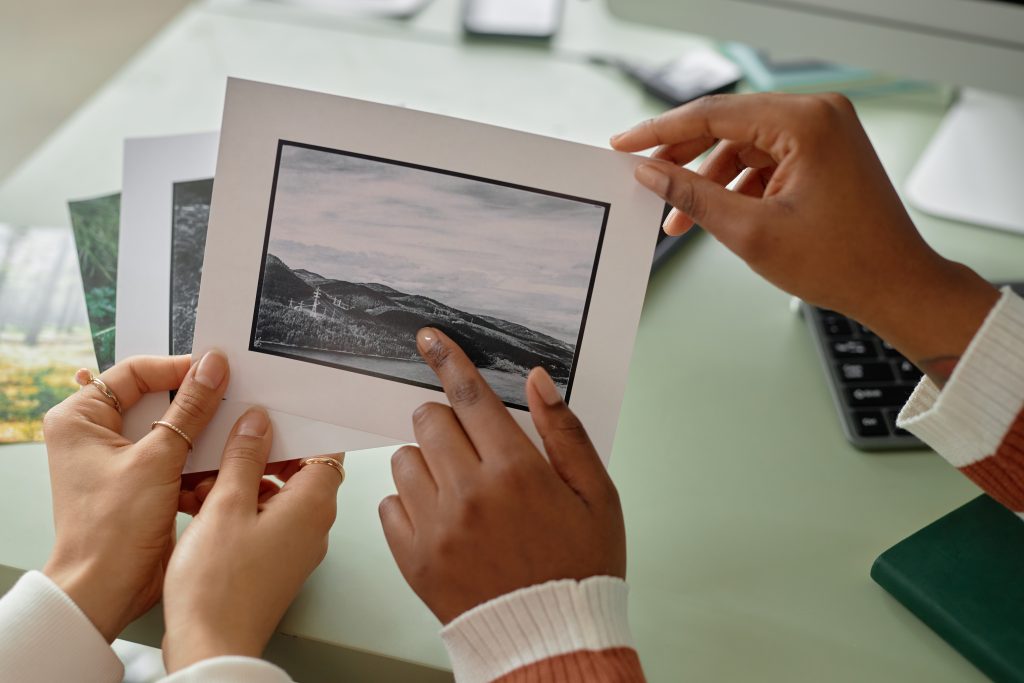
Use a camera. Phones do not work. Phones might look great but the printed quality will flop. A DSLR or mirrorless camera with a good lens will give you the control and resolution you need.
Shoot in consistent, even lighting. Cloudy and overcast natural light is one of the best options for art documentation because it is soft and evenly coats the art. But if you are shooting indoors, use two lights placed at 45-degree angles to the artwork to eliminate glare and shadows.
Shoot perpendicular to the work. Any angle on the camera relative to the artwork creates distortion. Use a tripod and a level to ensure your camera is perfectly parallel to the surface of the work.
Save at 300 DPI or higher. This is not negotiable for professional print quality. Images at 72 DPI or 96 DPI, which is the standard for web and screen display, will print blurry and pixelated regardless of how sharp they look on your monitor. Shoot in RAW if your camera supports it for maximum editing flexibility.
Color correct carefully and conservatively. Adjust exposure, white balance, and color accuracy so the digital image matches the original work as closely as possible. The goal is faithful reproduction, not enhancement. Avoid heavy filtering or processing that takes the image away from the original.
The Best Paper Stock for Art Books
Choosing paper that best fits your art book is important because it changes how the book feels and reads in the hands of your audience. Here are the best options and when to use each one.
100 lb gloss text is the most popular interior paper for art books at PrintingCenterUSA. For color photography, illustration, and vibrant artwork, gloss text is the standard choice because it makes colors on the page appear brighter.
100 lb matte text reduces glare is the better choice for black and white photography, fine art prints. Colors are less saturated but more nuanced. Many serious fine art books use matte interiors for this reason.
80 lb gloss or matte text is a slightly lighter version of each that reduces per-page cost at higher page counts. The quality difference between 80 lb and 100 lb is noticeable but both produce excellent results; to decide which is best consider the thickness and binding of your book.
For the cover, 100 lb gloss cover is the standard choice. It is strong, durable, and gives the book a professional, well-constructed feel.
UV high gloss coating on the cover adds a protective layer and a sheen that makes the cover image stand out in the lot. PrintingCenterUSA recommends UV coating for most art book covers.
Soft touch lamination is the premium cover finish. It gives the cover a velvety surface that shows luxury the moment someone picks it up. If you plan to sell your art book, soft touch lamination is worth the additional cost because it significantly elevates the perceived value of the book and supports a higher retail price. Many PrintingCenterUSA customers who use soft touch lamination sell their art books for $30 or more per copy.
The Best Binding Options for Art Books
Perfect binding is the best selection for art books at PrintingCenterUSA. Perfect bound creates a flat square spine that can accommodate printing with a title and author name. This give your book the classical look of bookstore-quality that holds up well to the handling or distribution and everyday use. Perfect binding requires a minimum of 28 pages. The PUR glue used in PrintingCenterUSA’s perfect binding is the highest quality adhesive available for softcover books, ensuring the binding lasts.
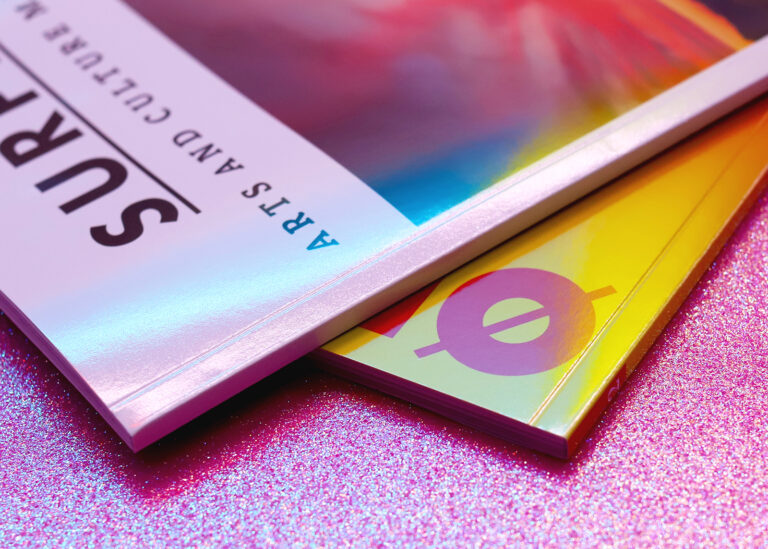
Saddle stitch works for shorter art books and zine-format publications under 92 pages. It is more affordable than perfect binding but does not provide a printable spine. For a formal gallery-quality presentation, perfect binding is the stronger choice.
PrintingCenterUSA offers hardcover book printing in portrait, landscape, and square orientations. Available sizes include 5.5 x 8.5, 6 x 9, and 8.5 x 11 inches. Page counts range from a minimum of 30 to a maximum of 400 inside pages, with quantities from 10 to 500 copies and custom quantity options available. Inside paper options include 80 lb matte and cover finish options include matte lamination. Full color printing is available for both inside pages and cover.
The Best Art Book Sizes
The right size for your art book depends on the scale of your work and how you want it to be experienced.
8.5 x 11 inches (21.6 x 27.9 cm) portrait is the most popular size for art books at PrintingCenterUSA. It gives you a generous canvas for vertical works and mixed layouts.
11 x 8.5 inches (27.9 x 21.6 cm) landscape is the natural choice for horizontal works, panoramic photography, and any artwork that benefits from a wide format.
8 x 8 inches (20.3 x 20.3 cm) square is a distinctive format that works particularly well for photography collections and books where the square format itself contributes to the aesthetic. Exceptionally small or large works tend to stand out with this format.
11 x 11 inches (27.9 x 27.9 cm) large square is the most commanding format and the one that most closely resembles a traditional gallery catalog or museum publication.
How to Self-Publish an Art Book
Self-publishing gives you the complete creative control over the entire project and direct access to the profit from every copy you sell. Here are the 8 steps in the process from start to finish.
- Define your project. Before you design anything, establish the creative direction. What is this book about from structure to audience. Have a clear experience for your viewer.
- Collect and prepare your images. Gather all the images you are planning to include, make sure each one is at least 300 DPI, and do your color correction and editing before you start designing.
- Choose your specs. Select your size, binding, paper stock, cover finish, and page count. Use PrintingCenterUSA’s instant pricing tool to see your cost.
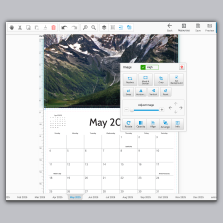
- Design your book. Use Adobe and use our free downloadable templates for every standard art book size with margins, bleed, and safe zones already configured. Even try our free online design tool at PrintingCenterUSA.com! It lets you build your book directly in the browser.
- Prepare your print-ready PDF. Set up bleed at 0.125 inches on all sides. Make sure all artwork extends to the bleed line wherever it is intended to run to the edge of the page. Download and install the PrintingCenterUSA color profile and PDF preset to ensure your colors will not shift in print. Save each page individually in sequential order. Do not upload spreads.
- Submit your file. Upload your print-ready PDF at checkout. Every file submitted to PrintingCenterUSA goes through an automated 43-point file inspection before production begins.
- Review your proof. You will receive an electronic PDF proof to review and approve before production begins. This is your last chance to catch anything before the book is printed.
- Receive your order. PrintingCenterUSA ships art book orders in three to four business days after proof approval with nationwide delivery.
How to Price and Sell Your Art Book
Many PrintingCenterUSA customers sell their art books for $30 or more per copy, and some sell for significantly higher depending on edition size, finish quality, and audience. Here is how to think about pricing and sales.
Your retail price should be at least three to four times your per-unit printing cost. At a quantity of 100 copies, most standard art books print for $5 to $15 per unit depending on page count, paper, and finish. A soft touch laminate perfect bound book at 150 pages might cost $10 to $12 per unit at 100 copies and retail comfortably at $35 to $45.
Watch, the edition size, it matters. A numbered limited edition of 50 or 100 copies commands a higher price than an open edition. Artists who treat their books as limited objects rather than mass-produced goods can price accordingly.
Sales channels include your own website, artist markets and art fairs, gallery consignment, online marketplaces like Etsy and Blurb, and direct sales to collectors and supporters. Instagram and social media are particularly effective for driving sales of artist publications because the audience is already visual and already following your work.

Reed Schick, a photographer who printed his art book through PrintingCenterUSA, sold his perfect bound art book for $30 per copy and more than returned his investment from his print run. For as little as $1.68 per book at higher quantities, the margin on a well-priced art book can be substantial.
Frequently Asked Questions
What is an art book?
An art book is a printed publication centered on visual artwork. It can showcase photography, illustration, painting, graphic design, or any other visual discipline. The images are the primary content and every design decision exists to serve them. Art books are used by artists to sell their work, document exhibitions, present portfolios, and preserve visual practice in a permanent physical format.
What is an artbook in design?
In design and concept art contexts, an artbook typically refers to a publication documenting the visual development of a creative project, featuring character designs, environment art, color studies, and behind-the-scenes creative process. These are sometimes produced for games, films, and animation projects as both documentation and collectible products.
How do I make an art book?
Collect your images at 300 DPI minimum, establish a clear concept and sequence, choose your size and specs, design your layout using Adobe software or PrintingCenterUSA’s free design tools, prepare a print-ready PDF with correct bleed and margins, submit for our automated 43-point file inspection, approve your proof, and receive your order in three to four business days.
How do I self-publish an art book?
Self-publishing an art book means handling the design, printing, and distribution yourself rather than working through a traditional publisher. Choose your specs and quantity using PrintingCenterUSA’s instant pricing tool, design your book, upload your files, approve your proof, and sell directly through your own channels. You keep full creative control and the full margin on every copy sold.
What paper is best for an art book?
100 lb gloss text is the best choice for art books with vibrant color photography and illustration because it makes colors appear richer and images sharper. 100 lb matte text is better for fine art, black and white photography, and books where a more refined, understated quality suits the content.
What resolution do art book images need to be?
All images must be at least 300 DPI for professional print quality. Images at 72 DPI or 96 DPI, which is standard for web and screen use, will print blurry and pixelated regardless of how sharp they appear on screen.
What binding is best for an art book?
Perfect binding is the standard for gallery-quality art books. It creates a flat square spine that can be printed with a title, gives the book a professional appearance, and holds up well over time. It requires a minimum of 28 pages.
How many pages should an art book have?
Most art books run between 50 and 200 pages. The minimum for perfect binding is 28 pages. For a book with enough depth to feel substantial and tell a complete visual story, 80 to 150 pages is a strong range. The spine becomes wide enough to print a title at approximately 80 pages depending on paper weight.
Can I sell my self-published art book?
Yes. Many PrintingCenterUSA customers sell their art books for $30 or more per copy. Pricing depends on your per-unit printing cost, your edition size, your finish quality, and your audience. A limited numbered edition with a soft touch laminate cover can justify a significantly higher price than an open edition with a standard finish.
Does PrintingCenterUSA print hardcover art books?
YES! PrintingCenterUSA can produce your hardcover art book. This option produces a result that is genuinely gallery-worthy and competitive with traditionally published art books.
What is the difference between matte and gloss for art book printing?
Gloss paper makes colors appear more vibrant and saturated, which works well for photography and color-rich illustration. Matte paper produces a softer, more nuanced look that many fine art photographers and painters prefer because it feels less commercial and more refined. Some artists use gloss for image-heavy sections and matte for text pages within the same book.
Create Your Art Book
Not sure how to get your file print-ready? Download a free Adobe template for your chosen size with margins, bleed, and safe zones already configured, use the free online design tool, submit your file for our automated 43-point file inspection, or connect with a professional through our Find a Designer service. However you like to work, we have an option that fits. Start your art book today!