










Booklet Printing Basics 2026
When a flyer is not enough and a book is just too much, a booklet shimmies its way as a sweet spot. It’s a timeless, digestible, medium to share information, promote your business or tell a story to stay with your audience. If you’re working on your next Booklet Printing project for 2026, then you likely have a few questions about your options.
With step-by-step advice from PrintingCenterUSA, you’ll have everything you need to create a stunning booklet from start to finish. Go to our booklet printing page to download our free booklet printing guide or start your project today.
Choosing the Right Binding and Page Count for Your Booklet
The first decisions you make before designing should be about paper and binding. This will shape everything after. Your booklet binding affects how many pages you can have, how the booklet lays, and the durability. Your paper choice affects how colors look, how heavy the booklet feels, and if someone can write in it. Get them right from the start and everything else falls into place.
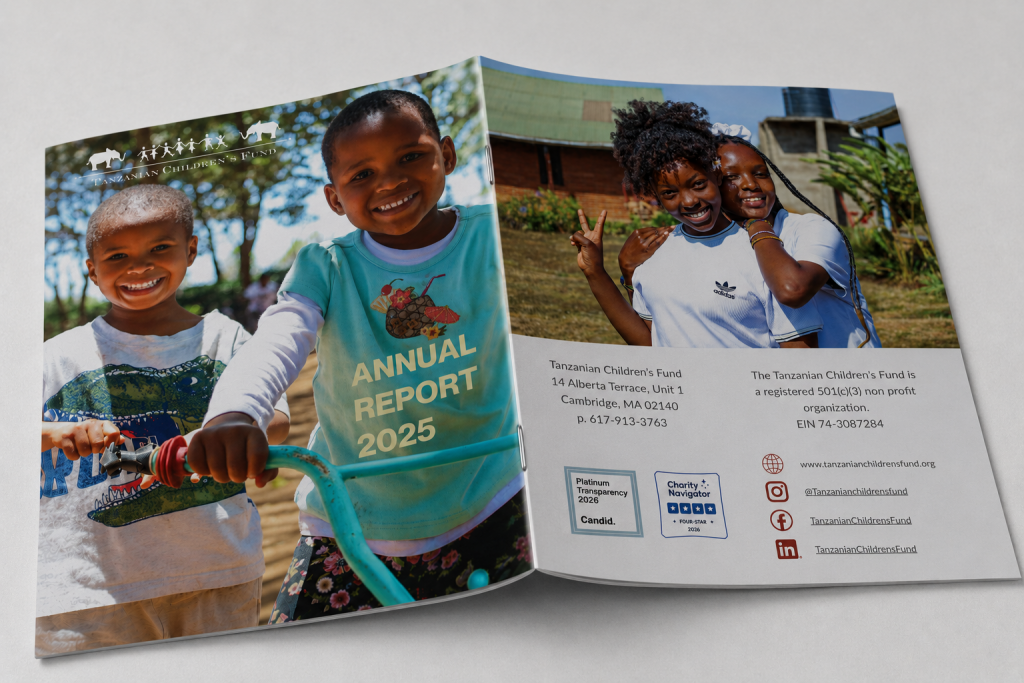
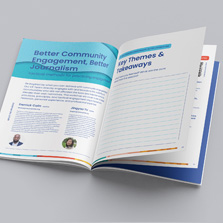
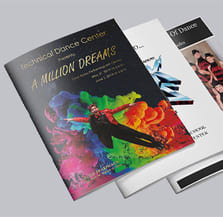
Saddle-Stitch Booklets
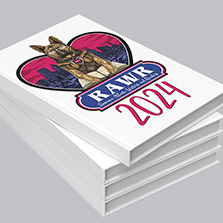
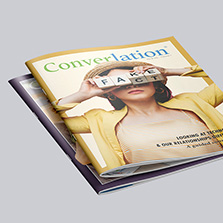
Pages are folded and stapled along the spine.
- Can accommodate 8-92 pages in multiples of 4 (8, 16, 20, 24…etc)
- Opens flat making it great for designs that span two pages.
- Lightweight
- Budget-Friendly
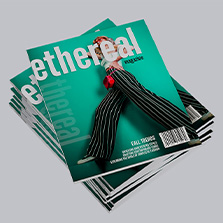
- Favored for event programs, magazines, product brochures, and catalogs
Perfect Bound Booklets
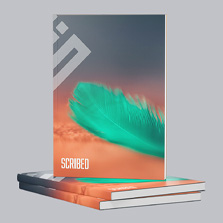
Pages are glued together with the cover wrapped around resulting in a square spine
- Can accommodate 28 to 800 pages in multiples of 2 (28, 30, 32, 34….etc)
- Most popular softcover paperback binding
- Budget-Friendly for small and large runs
- Book-store look
- Do not lie flat.
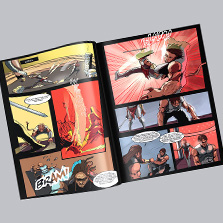
- Favored for graphic novels, high-page count magazines, Corporate Reports, Photography Books, Art Books.
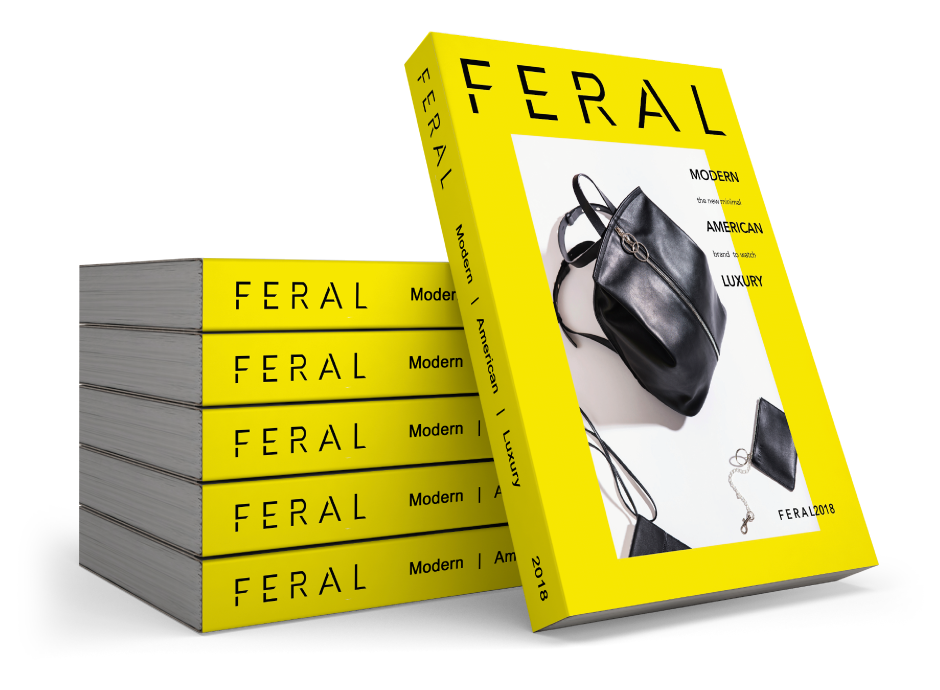
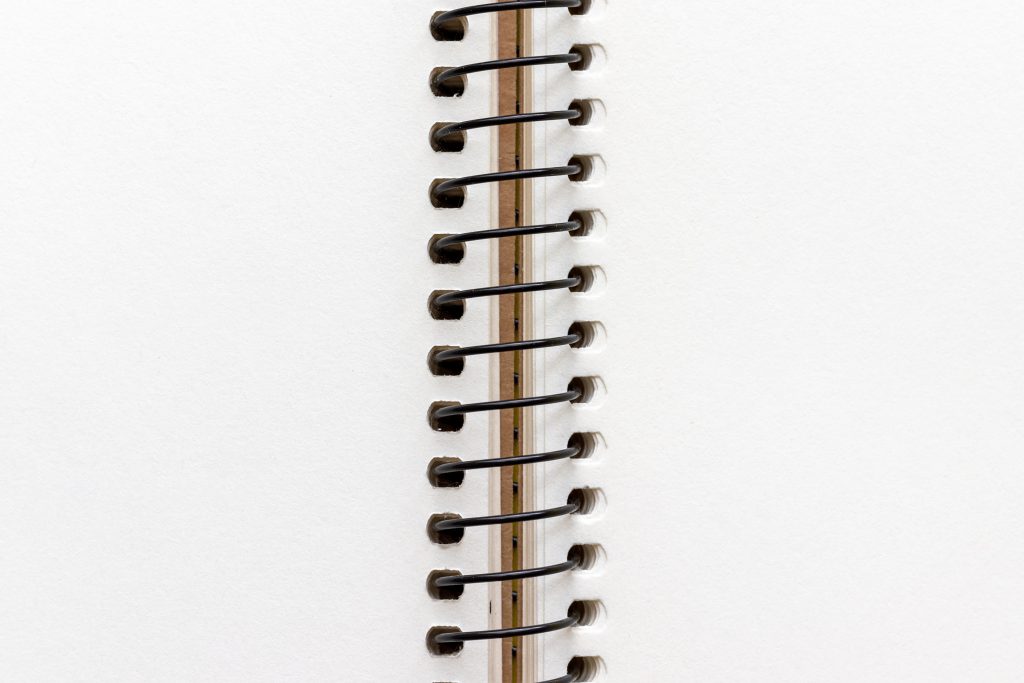
Spiral Booklets
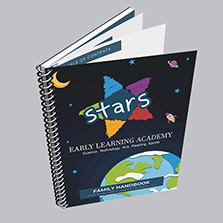
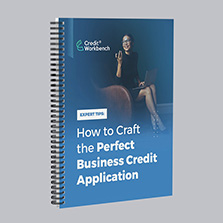
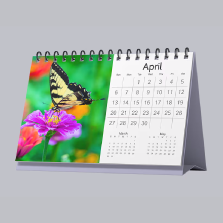
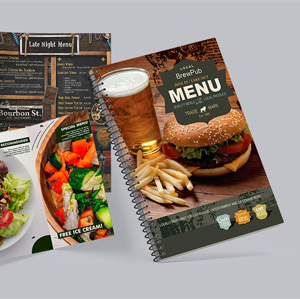
Pages have punched holes along the margins and are held together with a continuous plastic coil
- Can accommodate 8-800 pages in multiples of 2 (8, 10, 12, 14…. etc)
- Opens 360 degrees making the pages turn easily and stay in place
- Costly due to the handwork involved
- Favored for manuals, handbooks, workbooks, and training guides
Wire-O Booklets
Similar to spiral binding, pages have punched holes along the margins are held together with a metal loop wire
- Can accommodate 8-800 pages in multiples of 2 (8, 10, 12, 14…. etc)
- Opens 360 degrees making the pages turn easily and stay in place
- Costly due to the handwork involved
- Favored for more formal projects like reports and client presentations
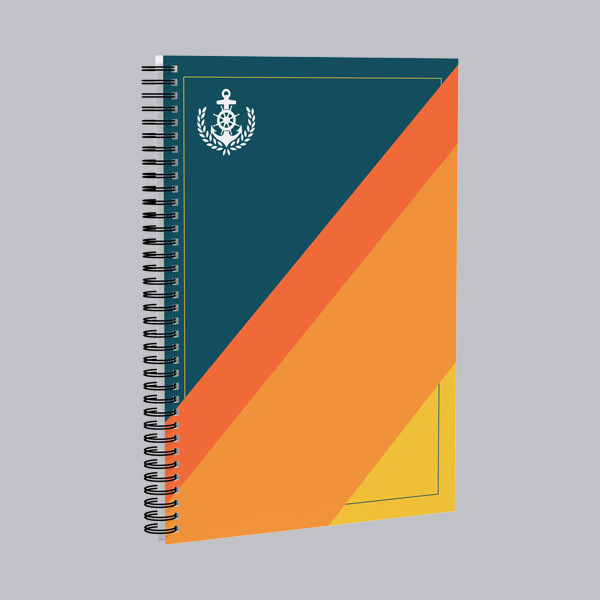
Booklet Sizes: How to Choose the Right One?
Once you have your binding picked out, size is the next thing to nail down. The size of your booklet is going to affect how it feels, how easy it is to carry, and how you’re going to get it into people’s hands for distribution. At PrintingCenterUSA, our standard booklet sizes are
- 8.5 x 11: The most common size and most familiar to the average Joe. There is lots of space for content, so it’s the best for detailed layouts, full bleed photos and anything that needs a lot of breathing room.
- 5.5 x 8.5: This is half the size of 8.5 x 11. It’s easy to carry, easy to pack and easy to hand out. (Imagine it paired with saddle-stitch binding, where it has the same pros)
- 6 x 9: This is the middleman to 8.5 x 11, and 5.5 x 8.5. It feels more like a book than a marketing piece. It’s more unique, which works in your favor if you want your project to feel more premium at an affordable price.
- 4.25 x 11: This is tall and narrow. A perfect fit for anything that just needs to stand upright.
- 6 x 6, 8 x 8: These are the most common square formats. You don’t see them as often, so they immediately stand out. These are popular for projects where the visual presentation is the whole point.
Portrait is the default for most project orientations. Landscape works well when your content needs to tell a story like panoramic imagery or side by side comparisons. Square makes a great strong first impression. Custom sizes are available at PrintingCenterUSA. If none of our standard options work for your project, just keep in mind that going off standard sizing is going to affect your turnaround and pricing.
Overall, when picking a size, think about how your booklet needs to be distributed. If it needs to be mailed, stay smaller to keep the postage manageable. Something going on a display rack needs to fit the rack. A conference handout should be light enough to carry around without being a nuisance.
Popular Booklet Paper Types: What paper do you need?
Now that you’ve chosen a binding and have page count sorted, it’s time to pick your paper. Booklets are commonly printed as self-cover, meaning the inside pages and outside pages are the same paper. This is usually used for projects that need to be practical and affordable rather than super long-lasting. They are ideal for newsletters and direct mail inserts because they’re quick to produce, easy to pack, and budget friendly. If you want your booklet to feel more substantial you can go with two different paper weights, one for the cover and one for the inside pages.
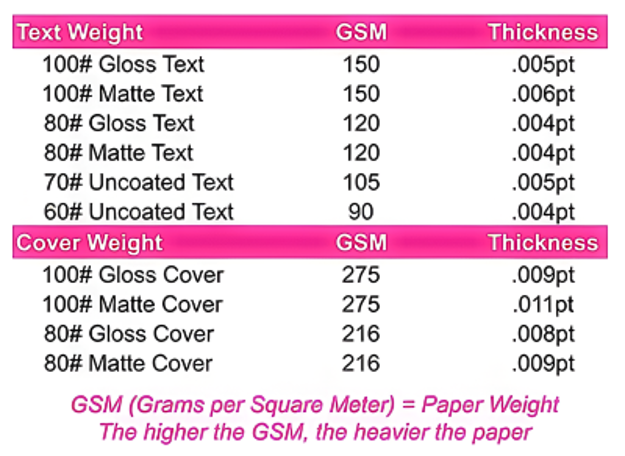
Each paper option will have a number next to it referring to the paper weight. All you need to know is: the higher the number, the thicker and heavier the paper
The two most common measurements you will see when ordering print are text weight and cover weight. Text weight papers are thinner and more flexible, used for interior pages. Cover weight papers are thicker and more rigid, used for covers, and marketing materials. A 100 lb text and a 100 lb cover are not the same thickness, so knowing which category you are looking at matters.
Paper Coating Options
- Gloss Finish: Enhances color and image sharpness and adds a punch that most promotional booklets are looking for. Popular with catalogs, workbooks, and any image-heavy booklet where presentation matters
- Matte Finish: A non-reflective finish that’s easy on the easy on the eyes and gives your project an understated look. Popular for text-heavy projects like programs, manuals, and guides.
- Uncoated Finish: A natural non-coated finish that’s easy to read and write on. Popular for workbooks, coloring books, activity books, and projects going for a vintage minimal aesthetic.
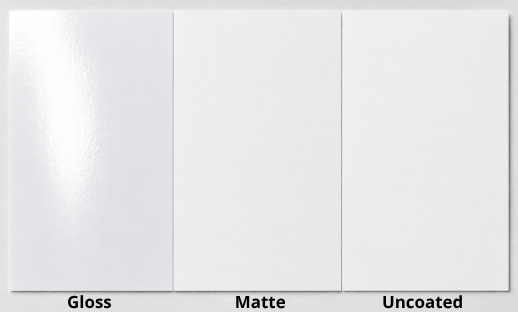
If you choose a cardstock cover, you also unlock cover finish options. Cover finishes are an extra coating applied to the outside of your cover that protects against scratching, bleeding, and fading, while also elevating how it looks.
- UV high gloss: a high shine coating that makes colors and images pop. Great for bold, eye-catching covers.
- Gloss lamination: A smooth, reflective film coating that adds an extra layer of durability alongside the shine.
- Soft touch lamination: A non-reflective velvet finish that you can feel. It looks and feels really upmarket and is our personal favorite for high-end projects.
Ultimately, your paper choice should match how the booklet is going to be used.
How to Make Your Booklet Print-Ready
Once your design is done, you need to make sure your file is set up correctly before you submit it. The most common reason orders get delayed is because of a file that does not match the specs of the order.
Set your document file size to match the size you ordered. If you’re wanting an 8.5 x 11 booklet, your pages need to be built at 8.5 x 11. Exactly 8.5 x11, then add 0.125” of bleed on all sides. This will bring your total document size to 8.75 X. 11.25.
Bleed is an extra area of space that gets trimmed off after printing and prevents any white edges from showing up on your finished project. Your print-ready file should have single pages in consecutive order, so front cover is page one, inside front cover is page 2, and so on all the way to the back cover. If you have pages you want to leave blank and include them anyway. Leaving them out throws off the entire page order.
All images should be at least 300 DPI. To have the highest resolution. Low resolution images can look fine on a screen but print blurry.
Here is a quick checklist before you submit your file.
- Page size matches your order plus 0.125” bleed on all sides
- Page count matches the binding chosen. (In multiples of 4 for saddle stitch. In multiples of 2 for all other bindings.)
- File exported as PDF
For a full detailed walkthrough on page and document set-up, check out our how to arrange pages for booklet printing guide
How Do You Order Booklets Online?
Ordering booklets online from PrintingCenterUSA is a simple process!
- Get a Quote: Use our instant pricing tool on our booklet printing page to select your binding, size, page count, paper and quantity.
- Upload Your File: Upload your print-ready PDF
- Place Your Order
- Approve Your Proof: Before anything goes to press, you will get a free PDF proof to review. Check everything carefully before you approve.
- Print and Ship: Once your proof is approved, your order enters production. Turnaround is as fast as 3-4 business days after proof approval.
How to Distribute your Booklet
Ok, so you figured out what you want your booklet to feel like, designed it, and received it in the mail. Printing your booklet is only half the job. Now you have to get it in front of the right people to make it worth it. The good news is that booklets are one of the easiest print products to distribute. A lot of our customers use them across different areas within their marketing strategy. Here are the most common:

Trade show and events: Give your attendees something to take home and come back to. There are always handouts, so make yours the standout.
Direct mail: Booklets can go straight to the doorstep of your existing client base or prospects. PrintingCenterUSA offers in-house mailing services so that you do not have to handle fulfillment yourself. All you need is a mailing list.
In store and in-office: This is the best starting point and great for businesses with regular foot traffic that is open to the public. You can have them sit at the front desk, reception area, or point of sale, where people will naturally pick them up or your employees can pass out. Having a stack in your meeting space can remind your salesman to give them out to clients as reference material
Package inserts: Throwing a booklet into a shipped order can turn every package into a marketing moment. Small businesses do a great job including package inserts. This is a good opportunity to pair your booklet with a postcard or business card for a cross-sale moment. Consider adding a discount for their next order. This is an underused option for a lot of product-based businesses.
With your booklet, don’t forget to add QR codes that will drive readers directly to your website or landing page. This is also a trackable form of engagement, so you can tell whether or not your booklet is working and being used.
Why Booklets Still Work
Print definitely still works and the numbers back it up. A study by Canada Post and True Impact, found that print marketing has a 70% higher recall rate than digital advertising. That means people are more likely to remember your business after holding something in their hands versus scrolling past it on the screen. On top of that, 8 out of 10 people say they trust print ads the most when making a purchase decision. A physical piece of marketing just cuts through all the digital noise. Booklets in particular are hard to ignore. They take up space on a desk, they get picked up, flipped through and passed along. So, the brand awareness is sublime.
The list of people who industries that use booklets is endless. Any business and brand can easily find a need for a booklet project to make an impact. Below are just a few of the many industries that use booklets on a daily basis, whether it be for marketing, education or sales. Here are some of the most common use cases by industry:
- Real Estate: Buyer, Seller, & Marketing, & Neighborhood Guides, Property Listings
- Education: Student & Parent Handbooks, Orientation Materials, Course Guides
- Non-Profit: Annual Reports, Donor Impact Booklets, Fundraising Campaign Booklets
- Health & Wellness: Patient Education Materials, Service Guides, Wellness Program Booklets
- Retail & Ecommerce: Product Catalogs, Lookbook catalogs, Wholesale booklets
- Religion: Ministry Guides, Directories, Event Programs, Worship Bulletins
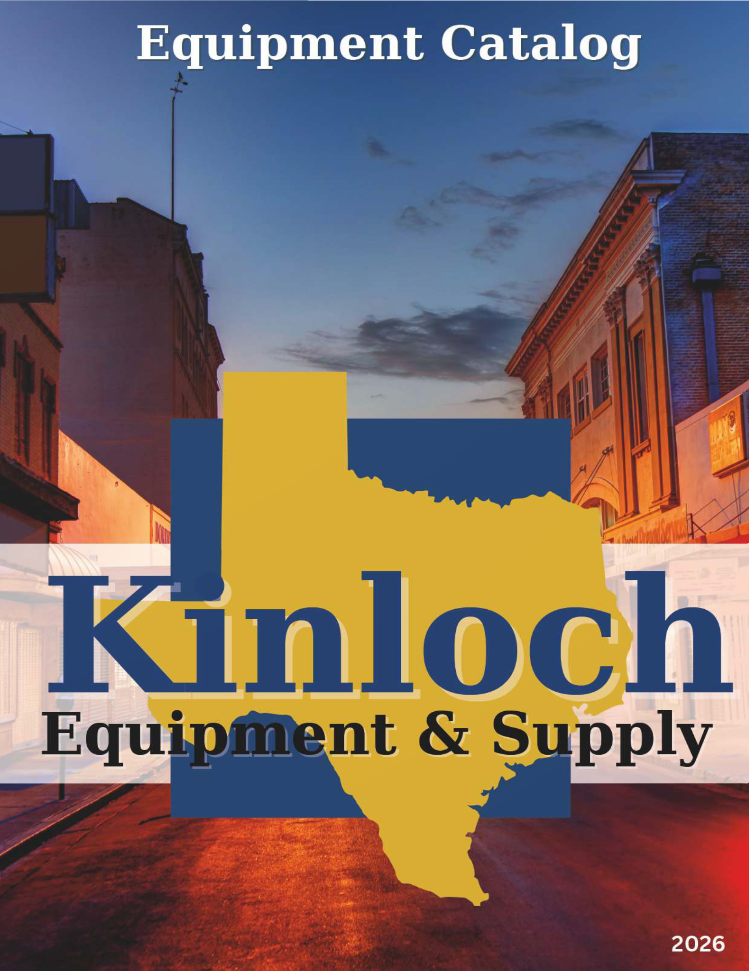
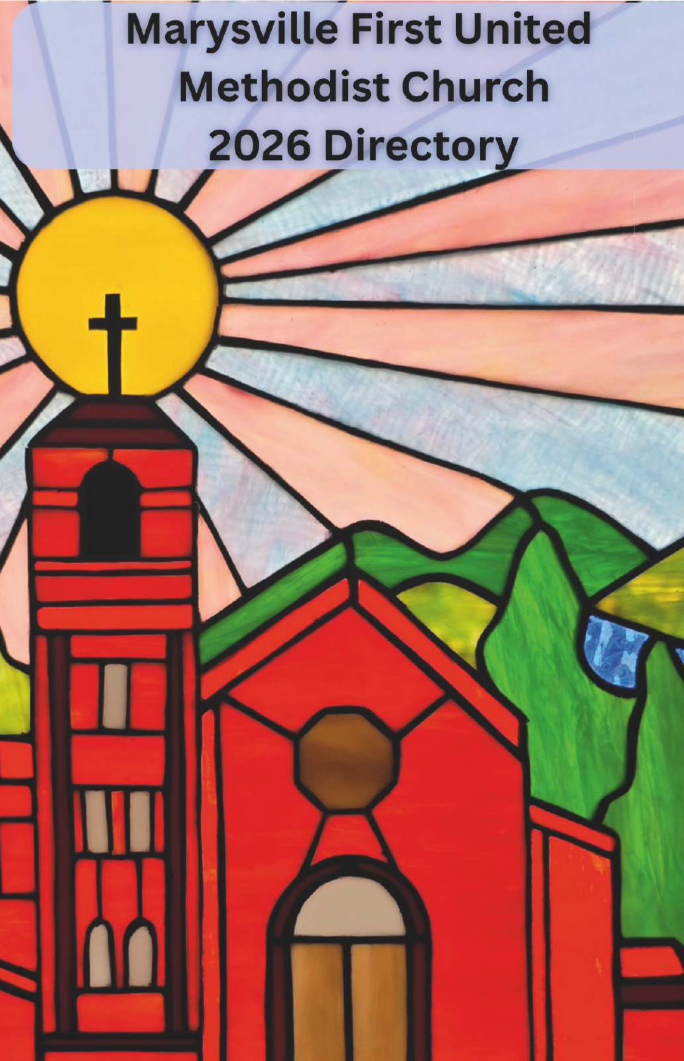

Real World Example: UpCircle Beauty
All of the decisions we just walked through — binding, paper, size — UpCircle Beauty nailed every single one. They are the UK’s number one upcycled skincare brand, stocked in Whole Foods, Credo, JCPenney, and retailers across 40 countries. When they needed to walk into wholesale meetings and win shelf space, they partnered with PrintingCenterUSA to produce a 28-page saddle stitched buyer booklet printed on 100# gloss text. Compact, professional, and on brand from cover to cover.
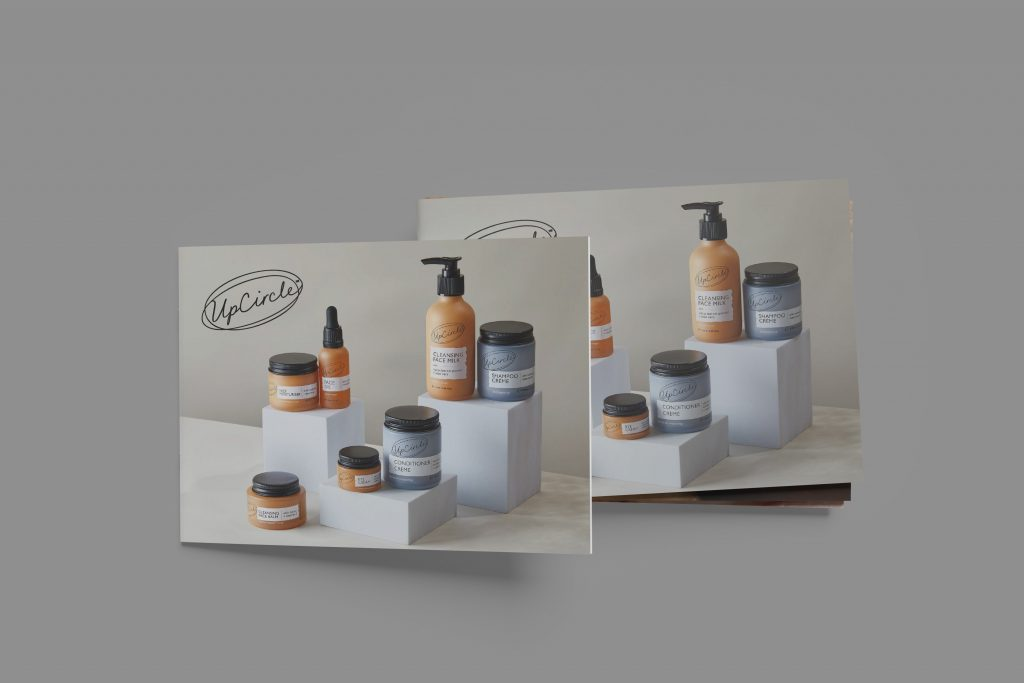
The booklet tells their story, showcases their product line, and gives buyers something to take home and come back to. That is exactly what a well-made booklet is supposed to do.
Create Your Booklet with PrintingCenterUSA
Your brand has a story worth telling too. PrintingCenterUSA makes it easy to produce a brand buyer booklet that matches the quality of your products:
- Free Online Design Tool
- Free Adobe Templates
- Free File Review
- Find a Designer
- Free Sample Pack
- Canva Editable Templates
Start your project early, invest in print quality that reflects your brand, and put something in buyers’ hands that they will still be thinking about long after the meeting ends.