


















































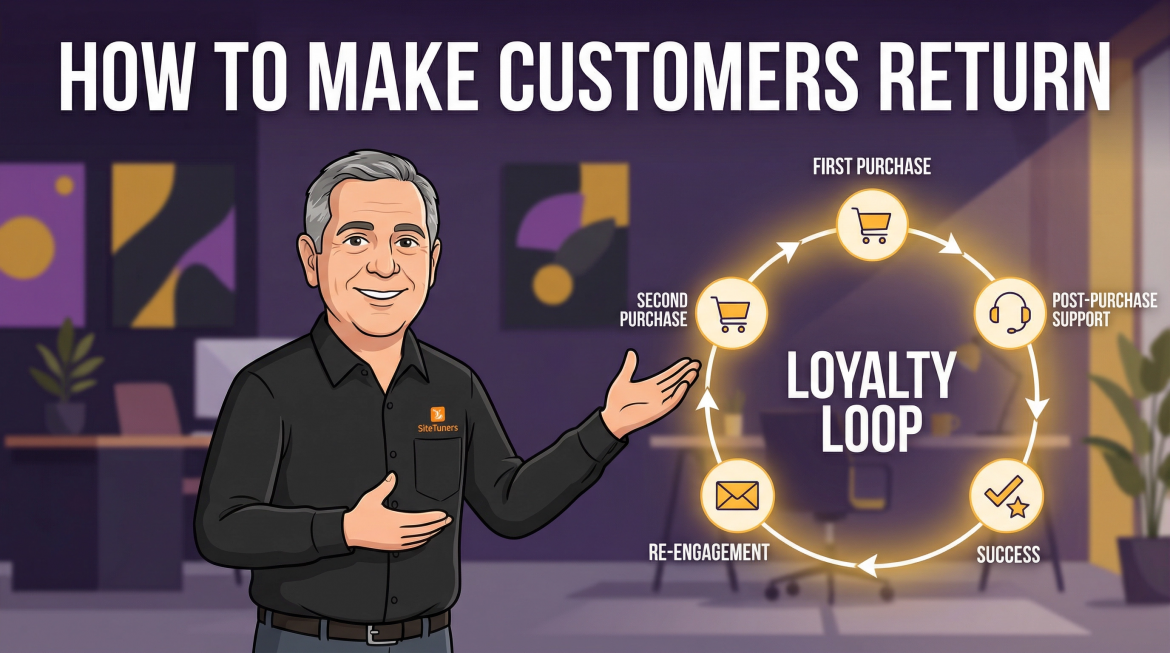
How to Make Customers Return: Turning One-Time Buyers into Long-Term Value
Most companies are optimized for the first conversion.
Campaigns. Landing pages. Offers. Funnels.
Everything is designed to get the initial “yes.”
But sustainable growth doesn’t come from first conversions.
It comes from what happens after.
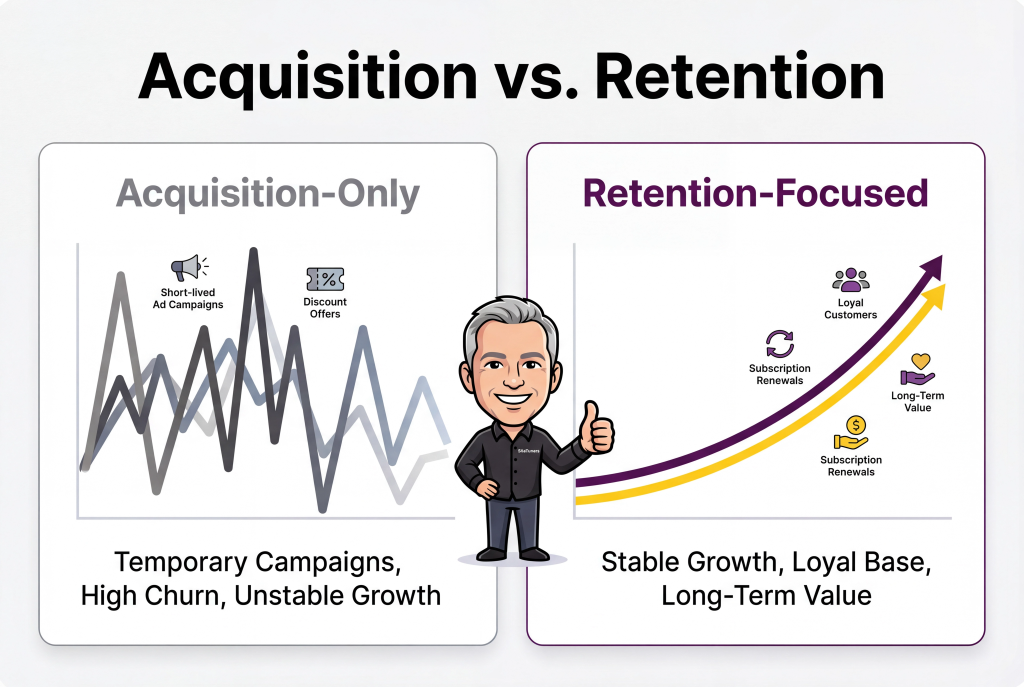
Customer acquisition gets attention.
Customer retention builds businesses.
The Second Conversion Is the Real Test
Anyone can generate a first sale with the right offer or timing.
A returning customer is different.
They’ve already experienced:
- Your product
- Your process
- Your communication
- Your follow-through
If they come back, it means trust survived reality.
The second conversion is proof, not persuasion.
Lifetime Value Is Built on Experience
Customers don’t return because you ask them to.
They return because:
- The experience met or exceeded expectations
- The process felt easy
- The outcome felt worth it
If any of those break, retention suffers.
Loyalty is not a program.
It’s a result.
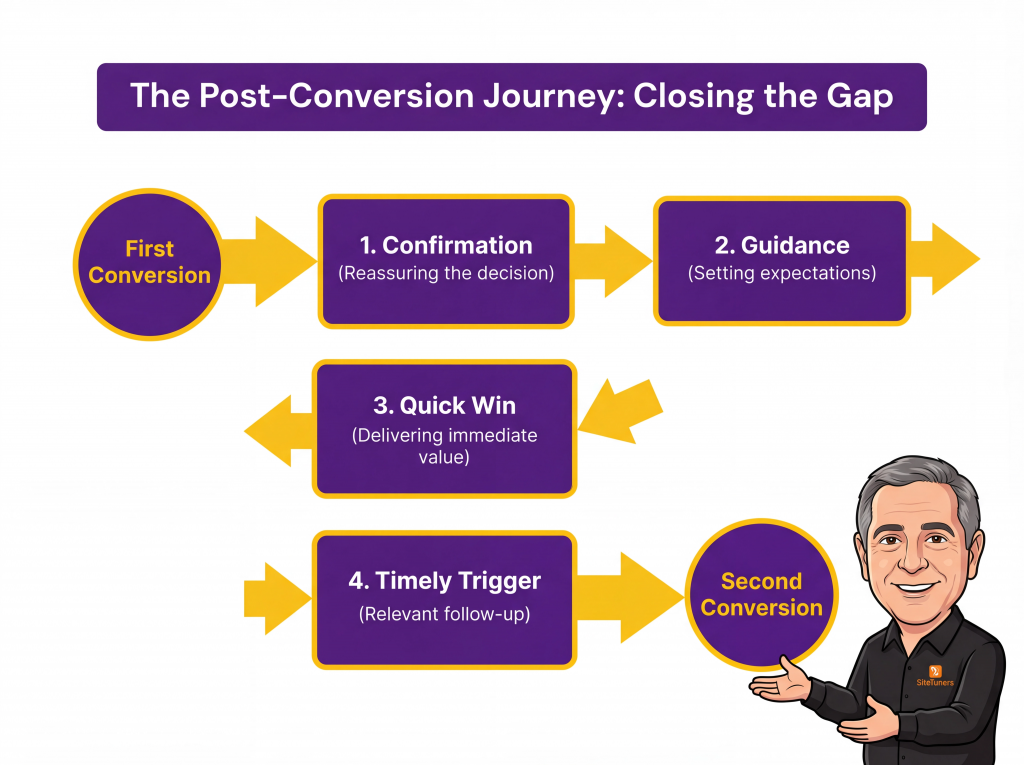
The Post-Conversion Gap
Many businesses unintentionally disappear after the first conversion.
No follow-up.
No guidance.
No reinforcement.
From the customer’s perspective, it feels like:
- “They wanted the sale, but not the relationship.”
This gap is where most retention opportunities are lost.
Reinforce the Decision Immediately
Right after a customer converts, they are most attentive, and most vulnerable to doubt.
They’re thinking:
- “Did I make the right choice?”
- “What happens next?”
The fastest way to increase retention is to remove that doubt early.
Effective post-conversion experiences:
- Confirm the value of the decision
- Set clear expectations
- Deliver quick wins
Confidence increases the likelihood of return.
Make the Next Step Obvious
Many businesses miss a simple opportunity:
Customers don’t return because they’re never shown how.
After the first interaction, ask:
- What’s the natural next step?
- When should it happen?
- Why does it matter?
If the path forward isn’t clear, momentum fades.
Retention requires direction.
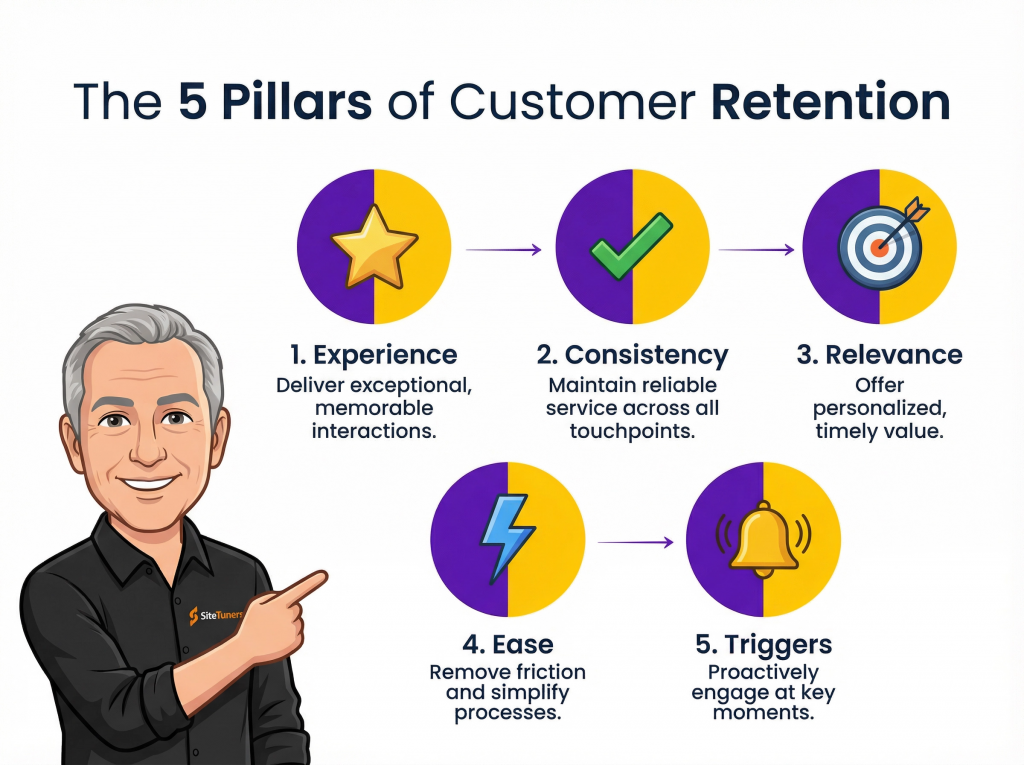
Consistency Builds Trust Over Time
Trust isn’t built once. It’s reinforced repeatedly.
Consistency across:
- Communication
- Experience
- Quality
- Timing
creates predictability and predictability builds comfort.
Customers return to what they feel is reliable.
Relevance Drives Re-Engagement
Generic follow-ups don’t bring customers back.
Relevant ones do.
Instead of:
- “Check out our latest updates”
Think:
- “Based on what you did before, here’s what comes next”
The more personalized the experience feels, the more likely customers are to engage again.
Remove Friction from Returning
Returning should feel easier than starting.
If customers have to:
- Re-enter information
- Re-learn your process
- Re-navigate confusion
they’re less likely to come back.
Retention improves when:
- Accounts are easy to access
- Past actions are remembered
- The experience feels familiar
Ease compounds.
Give Customers a Reason to Come Back
Returning doesn’t happen without a trigger.
Triggers can include:
- New value
- Continued progress
- Timely reminders
- Relevant updates
But they must feel helpful, not intrusive.
The goal is not to “pull” customers back.
It’s to make returning feel like the natural next step.
Frequency Without Value Feels Like Noise
More communication does not equal more retention.
Too many emails.
Too many notifications.
Too many generic messages.
This creates fatigue.
Every touch point should answer one question:
Is this helping the customer move forward?
If not, it’s just noise.
Retention Improves Acquisition
Returning customers don’t just generate more revenue.
They:
- Refer others
- Provide testimonials
- Reduce acquisition costs
Strong retention makes every other part of the business more efficient.
How to Evaluate Your Retention Honestly
Ask:
- What percentage of customers return?
- How long does it take them to come back?
- What happens between conversions?
Then ask the harder question:
- Would I come back after this experience?
The answer reveals where improvement is needed.
Final Thought: Relationships Scale Better Than Campaigns
Campaigns create spikes.
Relationships create stability.
When customers trust you, returning becomes easier than searching for alternatives.
You don’t need to constantly win new attention.
You need to earn continued attention.
Action Item
Choose one moment after conversion.
Improve it.
- Add a clearer follow-up
- Provide a better next step
- Deliver value sooner
Then measure return behavior. Retention rarely requires massive change.
It requires intentional follow-through.