













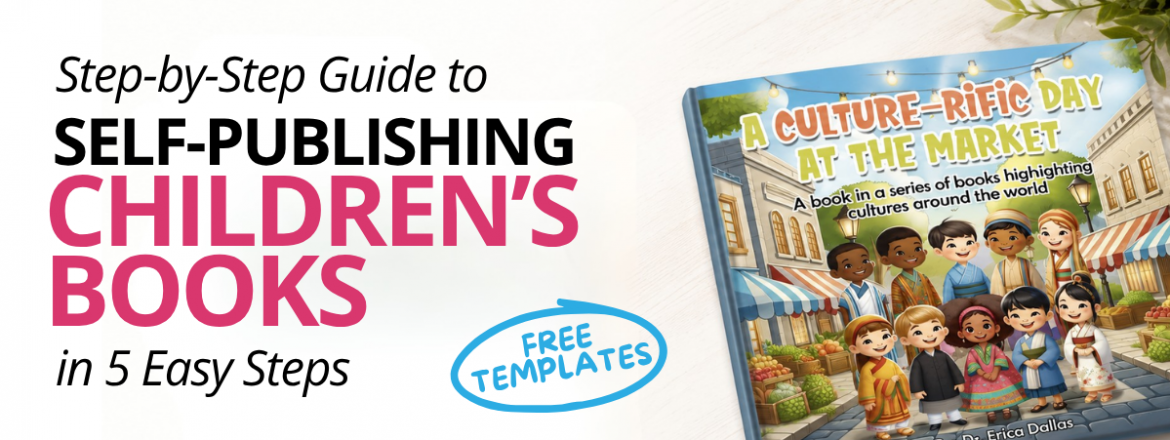
Step-by-Step Guide to Self-Publishing Children’s Books
You already have a million-dollar book idea written or maybe just the bones of the story you wish to tell is sitting in the closet. Either way the hard part is done. Now comes the part where most aspiring authors get left behind, publishing.
Self-publishing has never been easier! You don’t need years in the industry and an in with editor or agent to get you a deal. You simply need your manuscript and some good illustrations. Here is a step-by-step guide on how to self-publish your first children’s book today!
Quick Answer: How Do You Self-Publish a Children’s Book?
To self-publish a children’s book, write and edit your manuscript, then create designs or hire a designer. Next design your layout and get your ISBN. Outline a marketing strategy and order your book for print.
Traditional vs Self-Publishing
Here are the main differences between traditional publishing and self-publishing.
Traditional publishing is when a publisher offers you a contract, then they take care of printing, distribution, and getting your book into stores and online retailers. They purchase your rights and pay you royalties from the sales made from your book. This can take a long time and sometimes forever. You must also go through the submission process and should expect rejections. Traditional publishers are selective and the competition for children’s book slots is significant.
Self-publishing is when you create, print, distribute and market your own book without an external publisher or company. You own your rights and control all creative and business decisions made for your brand and book. This is way faster than traditional publishing. For content creators and first time authors, self-publishing is more practical and rewarding with higher ROI in the end on average.
Getting Started
After you landed on your initial idea for self-publishing children’s books, I bet you did a quick Google search. It’s easy to feel swamped with all that information, isn’t it?
- Clear your head: Don’t let the loads of information you read about overwhelm you. Take a moment. Breathe and clear your head. Take a walk or meditate to get in the right headspace for your project.
- Gather your ideas: Start with what you know- your main concept. Write down your initial thoughts. A brainstorming session can help. You can do this alone or with friends or family.
Step 1: Writing and Editing Your Children’s Book
Before you start writing you must know who your ideal reader is, their age, how will parents feel, what are the morals or lessons in the book, and what am I going to do to set it apart from thousands of other children’s books.
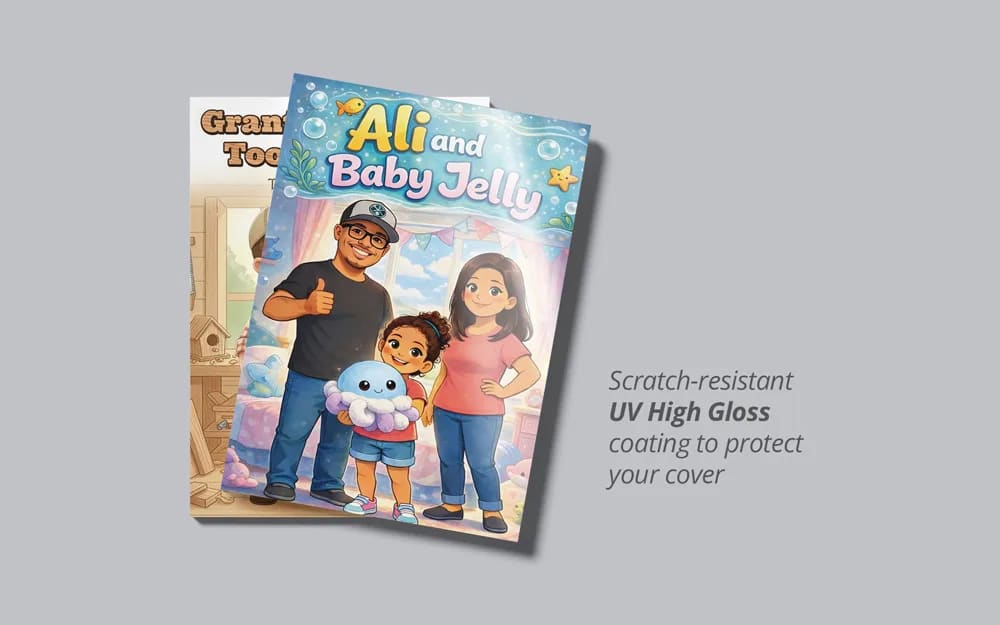
Children’s books are organized by age, here is general knowledge about each.
Early or simple picture books: ages 2 to 5. Very short text, heavily reliant on illustrations, often under 500 words.
Picture books: ages 5 to 8. The most popular children’s book format. Typically 500 to 1,000 words with full illustrations on every spread.
First chapter books and graphic novels: ages 6 to 10. Longer text, chapters, some illustrations but not on every page.
Middle school chapter books and graphic novels: ages 8 to 12. More complex narratives, fewer illustrations, longer word count.
Young adult books: ages 12 and up. Novel length, minimal illustration, complex themes.
Read your work out loud or share with others on places like Reddit to get solid criticism and feedback.
Illustrations and Layout
Pictures in a children’s books are more than half the story. Young minds use images to interpret the story in a more meaningful way. Quality and style of your illustrations will determine whether your book is a nightly bedtime repeat or one that’s forgotten on the shelf.
If you are using an illustrator, look for someone whose style and vision actually matches your tone and imagination. Be specific but open to collaboration with these artists.
Rushing the cover will be your biggest mistake. This is your selling page and will be a contributing factor in revenue sales.
Affordable writing & editing platforms:
- Google Docs
- Kindle Create
- Microsoft Word
- Reedsy. Note: This platform allows you to write, format, and has paid editors as an option.
- Canva
- Scrivener. Note: there is a learning curve; if you are a beginner, you might spend a lot of time learning how to navigate.
- Hemingwayapp
- Grammarly Note: This is for basic editing
- Prowritingaid
Tools for Layout and Design:
Do you need an ISBN?
An ISBN, or International Standard Book Number, is a unique ID for your book. This is what makes your book identifiable and trackable across bookstores and libraries worldwide. If you’re planning to sell your book through major retailers, whether online or offline, you’ll need an ISBN. This will also boost credibility with readers and sellers.
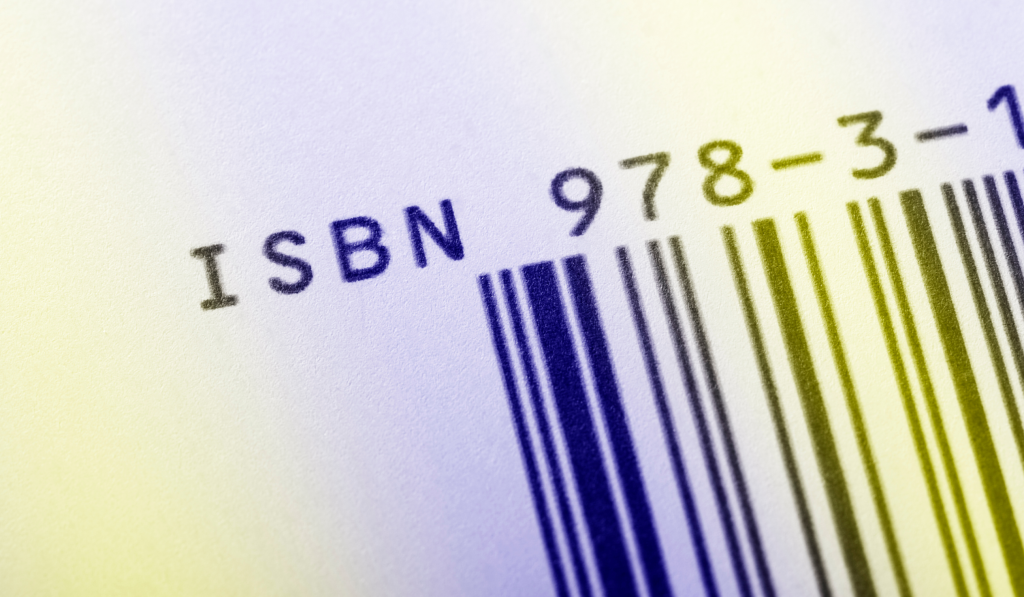
Each country has its own ISBN agency that is responsible for issuing ISBNs to publishers and self-publishers. In the United States, the agency is Bowker. When you register your ISBN, you’ll need to provide information about your book, such as the title, author, publisher (which can be yourself as a self-publisher), publication date, and format of the book. This number should be included on the copyright page of your book and in any promotional materials where your book is mentioned.
Some self-publishing platforms like amazon KDP offer free ones. If you opt for a free one, the ISBN might only be valid for distribution within that specific platform. This could limit your ability to distribute your book through other channels.
Printing for Children’s Books
The next big step is to bring your book to life through printing. This where your book really starts to take shape. Finding the right printer is crucial. This is where you have another big question to ask yourself: “Do I bulk print or print on demand?”
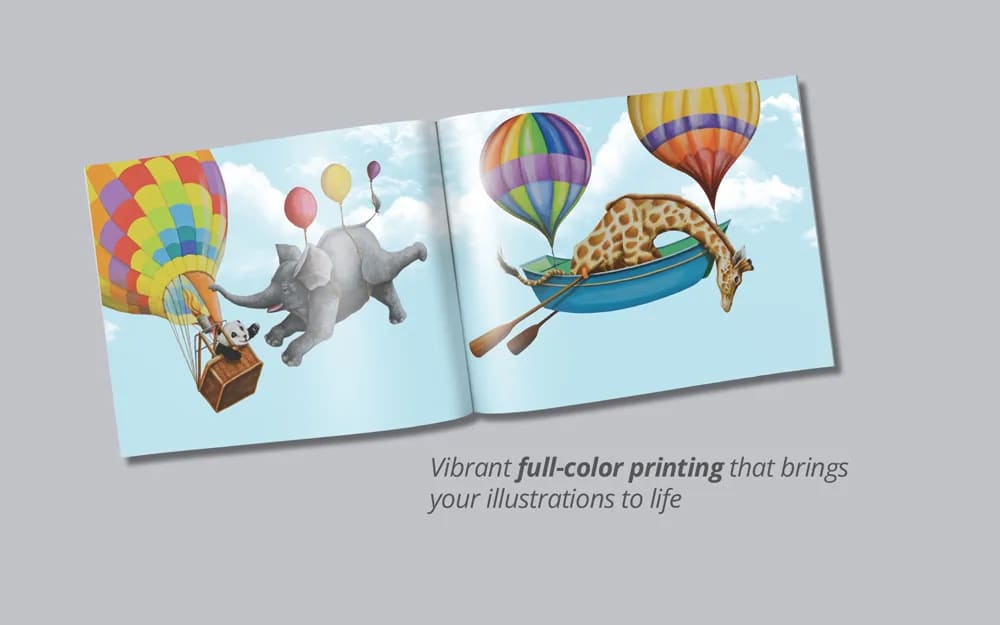
Print on demand allows you to print books as orders come in, minimizing upfront costs and storage needs. This option is smart if you’re unsure about the initial demand. Some P.O.D services offer to manage both printing and distribution. They will make it so your book automatically appears on some platforms to enhance it’s visibility.
Bulk printing might be a cost-effective choice if you expect high demand right away. Some printers even offer wholesale pricing so the higher the quantity, the lower the price per book. However, this requires upfront costs and you’ll need space for storage.
Print on Demand Services:
Bulk Printing Options:
If you plan to release an e-book version, make sure your layout works well on mobile devices. Kindle Create is is the best platform to turn your book into an e-book format.
Marketing for Children’s Books
After print, marketing will be your number one focus. This is how readers find you. Here is how to make the best marketing strategy from scratch.
Build your author presence
Create an author bio and start social media pages on 2-3 platforms. Build a simple website and start publishing digital content of your work. Join in on the trends on social media to boost engagement.
Start local
Speak with your local library and offer a reading of your book. Libraries are genuinely supportive of local authors and these events create word-of-mouth momentum that is hard to replicate digitally.
Expand online
Once you get some local sales start expanding online with paid ads on social media, google or your website.
First things first is creating your author persona. This is where the author-YOU- will be shown to the world.
- Author Bio: People want to know about the person who wrote what they are reading! This also gives you authority and credibility especially if your background aligns with your book.
- Website: Your book needs a home where readers, reviewers, and potential buyers can learn more about it. Include sections for your bio, book details, testimonials, and purchase links.
- Social Media Profiles. People love people. They want to keep up with the things they love. If they love your book they love you. Create author profiles for your marketing. Choose platforms where your target audience, such as parents and educators, are most active.
How Much Does It Cost to Self-Publish a Children’s Book?
As one of the most asked questions in the self-publishing industry, heres the breakdown. On the low end, your books could cost less than a dollar per book and upwords of 30$ per book on the high end. Use our free instate quote tool to get cost estimates for your project!
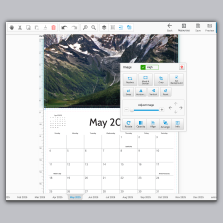
Marketing yourself will be a huge cost savings factor as well as self designing your project. At PrintingCenterUSA we offer free Adobe templates as well as our free online design tool. Not into design? Use our hire a designer program and find your designer today!
Self-Publishing Children’s Book Checklist
Use this checklist to track your progress from idea to published book:
Manuscript written and read aloud for flow
Age category confirmed and writing calibrated to audience
Professional or beta reader feedback incorporated
Final editing and proofreading complete
Illustrator selected and contracted
Illustration style confirmed and sample approved
All illustration files received at 300 DPI minimum
Layout and cover design complete
ISBN obtained if selling through retail channels
Printing method chosen (print-on-demand or bulk printing)
Printer selected and specs confirmed
Print-ready PDF prepared with correct bleed and margins
File submitted for review and proof approved
Author website live with book details and purchase link
Social media profiles set up
Local library and bookstore outreach planned
Launch event or campaign scheduled
Marketing content prepared for launch week
FAQs
Should I self-publish my children’s book?
In most cases yes, especially for first-time authors.
What is the cheapest way to publish a children’s book?
The cheapest approach is to write and edit the manuscript yourself, create your own illustrations using free tools, and publish.
How much does it cost to self-publish a children’s book?
Costs range from 1-10$ per book. Use PrintingCenterUSA’s instant pricing tool to get an exact printing cost for your specific specs before you commit.
How long does it take to self-publish a children’s book?
The process typically takes one to four months from final manuscript to printed book. Traditional publishing takes twelve to twenty-four months or longer.
Do I need an ISBN for my children’s book?
If you plan to sell through major retailers, libraries, or bookstores, yes. In the United States, ISBNs are available through Bowker. Amazon KDP and other platforms offer free ISBNs but these may limit your distribution to their platform only.
What size should a children’s book be?
Popular children’s book sizes include 8 x 8 square, 8.5 x 11 portrait, 11 x 8.5 landscape for picture books, and 5.5 x 8.5 for chapter books. The right size depends on your illustration style and how the story is meant to be experienced.
What is the best binding for a self-published children’s book?
Perfect binding is the standard for longer chapter books. Saddle stitch works well for shorter picture books under 92 pages. Hardcover is the premium option for gift editions and books designed to be kept and returned to over many years. Spiral binding works for activity books and workbook-style publications where pages need to lay flat.
What resolution do children’s book illustrations need to be for printing?
All illustrations must be at least 300 DPI for professional print quality. Files at 72 DPI or 96 DPI, which is standard for web and screen display, will print blurry and pixelated.
Can I print a hardcover children’s book at PrintingCenterUSA?
Yes. PrintingCenterUSA now offers hardcover printing in portrait, landscape, and square orientations with page counts from 30 to 400 pages and quantities from 10 to 500 copies. Hardcover is an excellent choice for premium gift editions and collector copies.
How do I market my children’s book after publishing?
Start local with library readings and independent bookstore outreach, then expand online through social media, book bloggers, and children’s book reviewer communities. Build an author website, develop your author persona on one or two social platforms, and create content around the themes of your book rather than just promoting it directly.
Should I self-publish my Children’s book?
In the long run, self-publishing is the easy part. The hardest part is making the sales to make your money back and/or a profit. This is where marketing ties in and will make or break your book. However, when it comes down to it, the pros of self-publishing far outweigh the cons.
What is the cheapest way to publish a children’s book?
The cheapest way is to self-publish your children’s book.
How much does it cost to self-publish a children’s book?
The costs can range anywhere between $0-5,000. This all depends on how much you can do yourself and how you market, print and distribute.
How long does it take to self-publish a children’s book?
This can vary on the printing but the process on average is 1-4 months vs the 18-24 months it can take with a publisher.
Ready to Publish? Let’s Make It Happen Together!
Ready to see your book in the hands of eager young readers? At PrintingCenterUSA, we’re all about making that happen. Whether it’s choosing the right print options or just getting some friendly advice, we’re here with you at every step.