













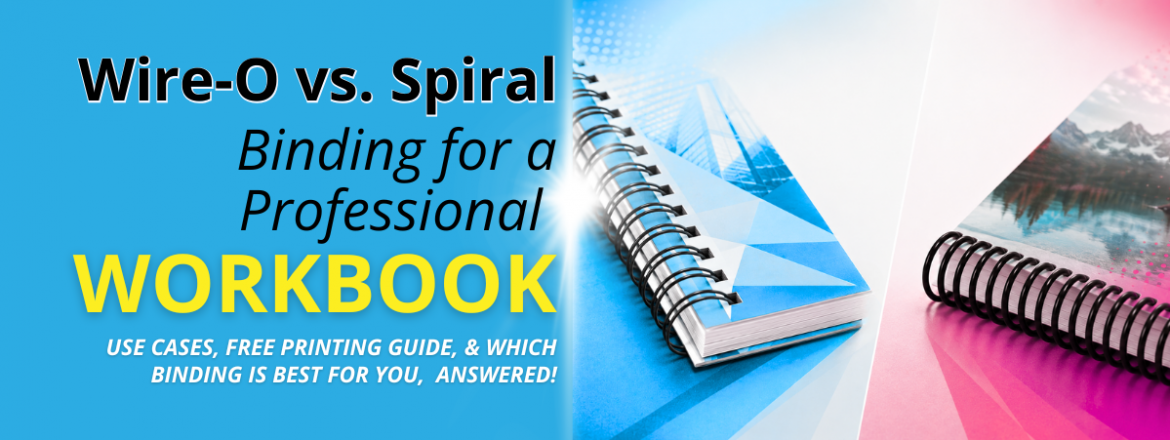
Wire-O vs Spiral Binding for a Professional Workbook
Choosing the right binding is important because it directly affects usability, longevity, and cost. For professional workbooks used in corporate training and education, the binding determines performance like page replacement options and the impression your material makes. Industry-standard Wire-O and spiral binding each have strengths: Wire-O offers a polished look and two-sided printing advantages, while spiral is economical and highly flexible. This article compares both with data-driven guidance and production notes for PrintingCenterUSA’s services. Start your workbook today!
Key takeaways
- Wire-O is a professional, squared finish and is the superior two-page spread.
- Spiral binding is economical, good for high page counts, and easy to fold back.
- Durability differs between the two: metal Wire-O resists deformation, PVC spiral can twist under heavy use.
- Production trade-offs between the two include tooling, minimums, lead times, and cost per unit.
- PrintingCenterUSA provides both options with fast turnaround, online proofs, and quality guarantees!
What is Wire-O Binding?
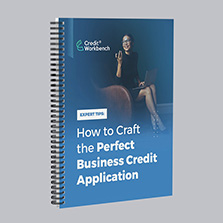
Wire-O binding uses double-looped metal wire that leads through holes near the spine of your project. Page counts go from 10-200 pages depending on paper thickness. The pages can turn 360 degrees around the binding and keeps a square spine for formality. Wire-O are best for professional documents because the double-loop profile prevents pages from catching.
Wire-O excels where presentation matters. Two-sided printing across a spread registers well if margins account for the wire pitch. For workbooks with perforated pages, Wire-O supports clean tearing while maintaining page order.
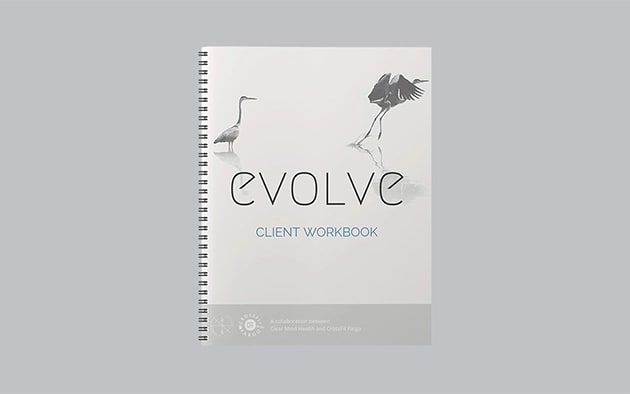
Mechanics of Wire-O binding
Wire-O inserts are made from formed wire bent into a double-loop profile. Holes are punched with a die that creates evenly spaced round or rectangular holes. The insert is crimped using a specialized closing machine that compresses the loops back to secure the book. Key specs:
- Common pitches: 3:1 (three holes per inch) and 2:1 (two holes per inch)
- Sizes: 1/4 to 1 inch most common, larger sizes available for thicker books
- Materials: steel core with colored coating or bare metal
Usability Features of Wire-O Binding
Wire-O lies flat with near-perfect page alignment, making it ideal for note-taking and work surfaces. It allows full 360-degree rotation without deforming the spine. Pages turn smoothly and stay in place when opened. For corporate workbooks that require margin notes, Wire-O keeps columns and gutters visible and consistent.
Binding supports optional cover wraps, clear PVC covers, and back boards for durability. Wire-O is also friendly to multi-section inserts and index tabs.
Durability of Wire-O binding for Workbook Printing
Metal Wire-O resists crushing and keeps its shape over long-term use. You can open these books hundreds to thousands of times before wire fatigue. Wire-O holds up better in repeated heavy use than PVC spiral, especially when handled roughly or stacked. Metal is stronger than PVC.
Longevity Factors:
- Metal finish quality prevents corrosion
- Proper punch alignment reduces page tear and elongation
- Reinforced covers extend service life for frequently used training manuals
What is Spiral Binding?
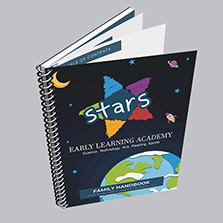
Spiral binding uses a single continuous coil, often plastic (PVC) or metal, threaded through round holes. Coil diameters range from about 1/4 inch up to 1 1/4 inch or larger. Spiral binding is highly flexible, allowing pages to fold back completely and lie flat on a single page.
It is popular for workbooks, cookbooks, and manuals where budget and flexibility matter. Spiral coils are inexpensive and well suited to variable page counts. The continuous nature of the coil reduces the chance of pages slipping out, provided end crimping is properly applied.
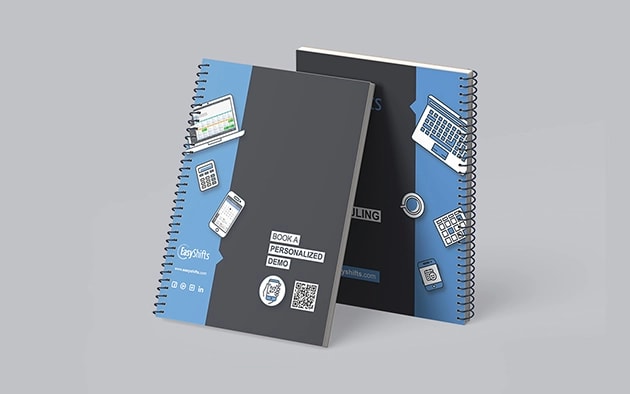
Mechanics of Spiral Binding
Spiral coils are manufactured in continuous lengths and cut to size. A coil inserter threads the coil
through punched holes and then crimps the ends to prevent unraveling. Hole punching typically
uses round holes spaced to match the coil pitch, commonly 4.8 mm centers for many machines.
Key specs:
- Coil materials: PVC, polypropylene, or wire
- Coil shapes: round for spiral, oval for twin-loop alternatives
- Hole spacing: typically 4.8 mm centers, must match coil pitch
Usability Features of Spiral Binding
Spiral-bound books fold back on themselves easily and offer great single-page reading. They are lightweight and tolerant of thicker stacks without the book bulking up at the spine. Spirals allow easy page removal and reinsertion if needed, useful for modular workbooks. For hands-on sessions and field use, spiral binding is practical. However, the coil can become misshapen if caught or compressed, and non-metal coils can deform under pressure.
Durability of Spiral Binding for Workbook Printing
Plastic coils resist rust and are flexible, but they come untwisted and get smooshed over time. While lifetime is shorter than wire-o, spiral can bend so the book isn’t ruined if it is crushed.
Comparison Between Wire-O and Spiral Binding
Deciding between Wire-O and spiral binding comes down to practicality, cost, and print quality needs. Use measurable criteria: lay-flat score, pages per binder size, per-unit cost at various quantities, and lifecycle durability. Below is a concise comparison table.
Practicality of Wire-O and Spiral Binding for Workbook Printing
Wire-O wins on presentation and two-page spread alignment. Spiral wins on flexibility and maximum page capacity. For collaborative training where multiple users write simultaneously, Wire-O’s flat stability and neat spine make it preferable. For field guides or large appendices, spiral is more forgiving.
Cost Analysis & Production Considerations
Cost variables include material (metal vs PVC), hole punching dies, machine time, and quantity. Spiral often costs less because coils are cheaper and machines are faster. Wire-O can require slightly higher setup but remains competitive at medium to large runs.
Estimated per-unit cost range for a 100-page, 8.5 x 11 workbook:
- Spiral: $6 – $12 per copy
- Wire-O: $9 – $18 per cop
PrintingCenterUSA provides detailed quotes with exact pricing, quantity breaks, and options for covers and finishes. Explore all our paper options by ordering a FREE sample packet!

Print Quality Between Wire-O and Spiral
Binding choice affects margin and bleed decisions. Wire-O needs a slightly larger inner margin to avoid losing content to the wire pitch. Spiral punch requires consistent round holes, so bleed must be controlled, and margins kept away from the hole line. Both bindings support full-bleed covers when using wrap-around or separate covers.
For two-page spreads and design-heavy layouts, Wire-O produces cleaner registration. For single-page layouts or activity sheets, spiral is forgiving and practical.
Practical Considerations for Professional Workbooks
Selecting your binding should reflect what you are using it for, the lifecycle, and project budget. Think about how many users will handle the workbook daily, whether pages will be removed or replaced, and how the workbooks will be stored. These operational questions determine whether to prioritize durability or cost and ultimately which binding type will be best for you.
Use-case fit: corporate and educational workbooks
- Corporate training manuals: Wire-O is best for a polished, durable product ideal for classroom tables and meeting rooms.
- Educational workbooks: Spiral is best for flexibility, high page counts, and lower cost per unit for large student sets.
- Manuals with frequent updates: Spiral simplifies page removal for revisions; Wire-O supports secure page replacement with professional finishing.
How PrintingCenterUSA Supports These Bindings for Workbook Printing
PrintingCenterUSA offers both Wire-O and spiral binding across its online ordering platform. Their processes include file preflight, online proofing, and binding options that match corporate specifications. They handle small batches and bulk orders nationwide with transparent pricing. Their service model emphasizes quick quotes, production tracking, and packaging tailored to distribution needs. For recurring training programs, PrintingCenterUSA supports reorders and inventory management.
Our customer service team helps match binding choice to use case, budget, and expected lifecycle so you get the best product possible.
Use our free online design tool, free Adobe templates, or skip the design and use our Find a Designer program and team up with one of our partnered graphic designers for a professional workbook!
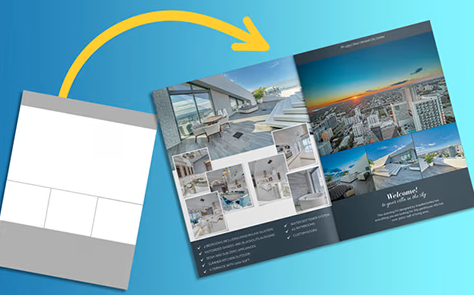
Quick Turnaround and Custom Solutions
PrintingCenterUSA guarantees fast turnaround, with many binding options available for rush jobs. They offer:
- multiple cover stocks and finishes
- color-matching and Pantone spot options
- bulk shipping and kitting services
These capabilities let companies meet tight training schedules without sacrificing quality.
Conclusion and Next Steps
Choose Wire-O for a strong workbook that presents well in corporate settings. Choose
spiral when flexibility, cost efficiency, and high page capacity are priorities. Both bindings support
professional quality outcomes when produced to spec. Start your project today!
Next steps:
- Define primary use case and expected lifecycle
- Prepare files with binding-specific margins and bleed settings
- Request a sample or quote from PrintingCenterUSA at printingcenterusa.com to compare
real-world proofs and pricing
Frequently Asked Questions for Workbook Printing
Which binding lies flatter for heavy note-taking?
Both lie flat, but Wire-O maintains a more stable, squared profile for writing across spreads. Spiral folds back fully for single-handed note-taking.
Can pages be replaced after binding?
Yes. Spiral allows easier page removal and reinsertion. Wire-O can have pages replaced by re-punching and re-threading, typically handled by a print shop like PrintingCenterUSA.
How do binding choices affect printing costs?
Spiral generally costs less per unit at small quantities. Wire-O can be more expensive due to metal inserts and closing time, but pricing converges at larger runs. Get quantity-based quotes from PrintingCenterUSA for exact numbers.
Are there environmental differences?
PVC spirals are less eco-friendly than metal coils, though recyclable metal and recycled cover stocks are options. PrintingCenterUSA can advise on recyclable materials and provide environmentally friendlier choices.
How do I prepare files for each binding?
Allow additional inner margin: generally 1/4 to 3/8 inch for Wire-O and 3/16 inch for spiral. Keep critical content 1/4 inch from hole line and ensure proper bleed for wrap covers. Upload PDFs to PrintingCenterUSA for preflight and guided proofs.