




















10 Advantages of Print Advertising
Think of all the stuff that makes it in your mailbox. Most of it might be things you don’t need, but some of it gets read. That’s one of the first advantages of print advertising. People still go through it, and they trust it. The benefits work even better when you pair print with your digital advertising. Here are ten benefits of print advertising backed by research, with a print product that fits, so you can easily tie it to your digital marketing to get a powerful combination.
Top Advantages of Print Advertising at a Glance
- Tangible and Lasting impact
- Highly Targeted
- Credibility and trust
- Increased engagement
- Brand recognition
- Less Competition
- The ads fit the content
- Works with digital
- Reaches people that digital advertising misses
- Consumers are open to print ads
What is Print Advertising?
Print advertising is any kind of promotion on a printed item like a postcard or a magazine. If you can hold it and its advertising something, that’s print advertising. Newspaper ads are a classic example of this. However, there are plenty of other avenues you can go down, like brochures and catalogs. Print pieces can also land directly in somebody’s mailbox through direct mail.
What Are the Types of Print Advertising?
The most common types of print advertising you’ll come across are newspaper ads, magazines, and direct mail. There’s not an official list, but there are many types. These are the ones you’ll see most often.
- Newspaper ads are obvious. They run in the paper next to the news. You just pay for the space, and the price depends on the size and where it lines up in the paper.
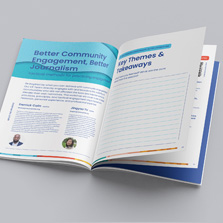
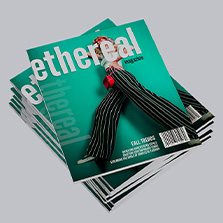
- Magazine ads run in magazines that people are already getting for a certain topic, like cooking. You can also create your own magazine to advertise your own business.
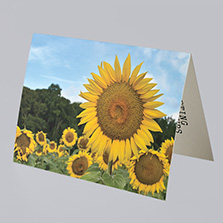
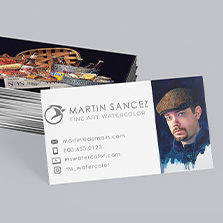
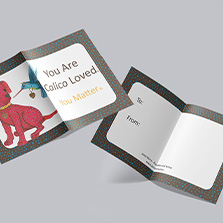
- Direct mail is anything you send straight to someone’s mailbox, like a postcard or a catalog.
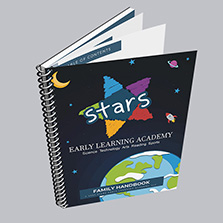
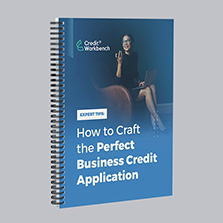
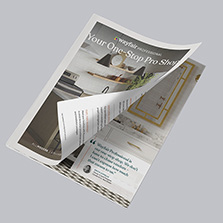
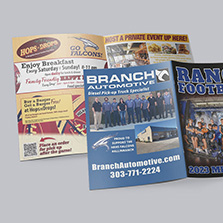
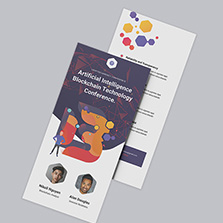
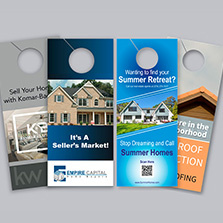
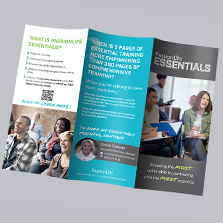
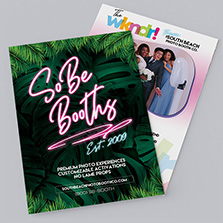
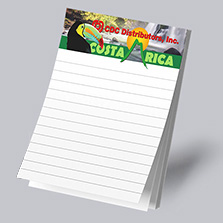
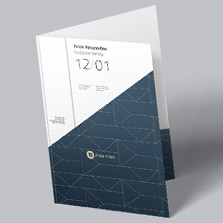
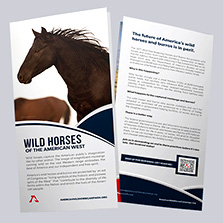
- Brochures and flyers are ones that you hand out or leave at a counter. Brochures hold more details, whereas flyers keep it very short and simple. For a more detailed explanation on the difference between these two, you can read our guide here.
- Catalogs are your whole product line in one single place, so people get your products right in their hands and can pick what they want.
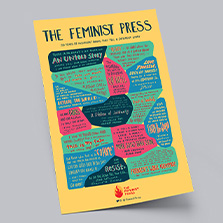
- Posters are in public places and keep the message short so people can see everything very quickly.
The Top 10 Advantages of Print Advertising

1. Tangible and Lasting Impact
You might hate some of that junk mail you bring in from your mailbox, but it gets a quick look. The U.S. Postal Service Household Mail Survey for fiscal year 2025 found that 51% of advertising mail is read by someone in the household, and 64% of ad mail sent to existing customers is read.
That’s the beauty of print advertising, especially if it’s lightweight, like with a brochure or flyer. It sits on the counter and could sometimes end up on the fridge, and it’s ready and there for when someone’s ready for it.
Recommended Print Product: Brochures
Get a firsthand look at how Fly Alliance turned a company brochure into an in-flight lifestyle magazine in this PrintingCenterUSA case study.
2. Highly Targeted
You’ve probably seen different magazines in a waiting room, like at the dentist or maybe on the airplane. You might have picked one up or taken a second glance at a magazine that has a topic that appeals to you. That’s the exact reason why magazine ads work: they’re targeted to a very specific person. The News/Media Alliance 2025 Market Report found that 86% of U.S. adults read a magazine in the past 6 months, and nearly 8 in 10 magazine readers who see an ad take action. The average magazine is also read by more than 7 people, and one ad gets passed around. In general, print media’s ability to target specific interests is unmatched.
To combine this with your digital advertising, make sure to embed QR codes in your printed booklets for any online resources you might have, to gain trust in both your print and digital content.
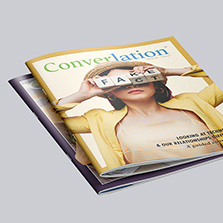
Recommended print product: Magazines
Get a look at how a creative turned his wife’s floral designs into a 60-page printed zine in this PrintingCenterUSA case study.


3. Credibility and Trust
Before you buy something, you want to know the source is legit, just like when you search for reviews for a first-time company you might be working with. In Kantar’s 2024 U.S. media reaction study, U.S. consumers ranked newspapers as number one for trust and number one for relevance. Ultimately, newspaper ads are in a media format that has trusted content, so when you add your ads in there, it gives what you’re promoting that same credibility.
To combine this with your digital advertising, make sure to embed QR codes in your printed booklets for any online resources you might have to gain trust in both your print and digital content.
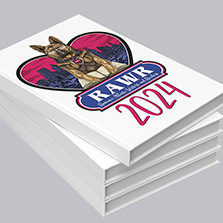
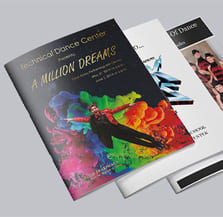
Recommended Print Product: Promotional Booklets
Learn how a transplant surgeon used a printed educational booklet to help patients understand their care in this PrintingCenterUSA case study.
4. Increased Engagement
Think about the last time you tried to read or look up something on your phone. You might have gotten a text or an important notification and ended up somewhere else entirely. With printed materials, the distraction window minimizes.
A Pew Research Center survey from October 2025 found that 64% of U.S. adults read a print book in the past year, compared to 31% who read an e-book and 26% who listened to an audiobook. When someone is physically holding something with your messaging, it has their full attention.
To combine this with your digital advertising efforts, print a QR code in your book that sends your readers to your website or email newsletter sign-up. This will provide a way for your readers to keep going online.
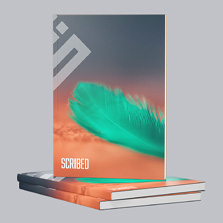
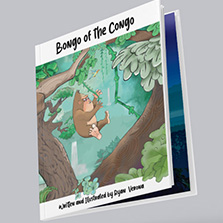
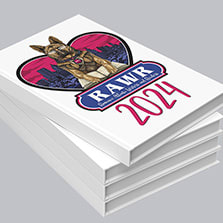
Recommended Print Product: Paperback Books
See how Corner Coffee turned its team and community into a 64-page printed photo book in this Printing Center USA case study.


5. Brand Recognition
Think about any logos you might be able to spot instantly. Maybe that’s the Starbucks logo or the logo on your favorite brand of cereal that you have every morning. It’s not intentional. You didn’t sit down and choose to memorize it, but you saw it enough times that it stuck with you.
Print helps with that. A June 2025 report from the U.S. Postal Service Office of Inspector General found that direct mail generally beats digital ads when it comes to recognition, brand recall, and remembering the details of an ad. When something sits in someone’s hands, it gets a longer look than it ever would with a quick scroll.
To combine this with your digital advertising, put your website or social media handles on the front cover. Add QR codes next to your product so people can jump straight to the page online.
Recommended Print Product: Branded Catalogs
See how Concrete Countertop Solutions uses a printed product catalog to stand out in a competitive market in this PrintingCenterUSA case study.
6. Less Competition
Think about how filled your email inbox is. It’s probably promo after promo, spam after spam. Now think about your mailbox. It’s probably a lot quieter than it used to be. That’s not just an assumption.
The USPS Office of Inspector General reported that direct mail’s share of total advertising spending dropped by about half between 2013 and 2023. Over the past 10 years, marketing mail, which is the Postal Service’s category for advertising mail, also fell 28% in volume. There are fewer and fewer advertisers going the direct mail route, which means there’s a lot less competition. People are open to receiving mail as well. Kantar’s 2025 Media Reaction Study asked 21,267 consumers in 30 different markets about ads, and Kantar found that consumers welcome ads in print, whereas marketers are more skeptical about going this route. That gap was widest for newspapers and magazines. That means there’s a wide-open space for print to win here,.
To combine this with your digital advertising: add a QR code to send people to your latest offers or events. You can also update that QR code link anytime without needing a reprint.
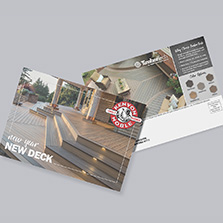
Recommended Print Product: Postcards
If you’re more curious about how direct mail can fit into your marketing plan, read our guide on why direct mail still belongs in your marketing strategy.


7. Ads That Fit The Content
Some ads annoy you, and there might be some you see that you barely even notice as ads. That comes down to whether the ad belongs to where you see it. Obviously, the ones that come to mind the most are TV ads, and they’re always going to feel like a speed bump. If it’s something that feels helpful and matches the content it’s in (for example, a mixer in a cooking magazine), it might be appealing to you.
The News/Media Alliance, using MRI Simmons Magazine Research, found that 57% of people say magazine ads fit the content around them. That’s compared to 39% for ad-supported TV and 40% for websites. An ad that feels like it belongs isn’t going to get the reaction of being like an interruption, and that’s what you want for your business content.
To combine this with your digital advertising, add a QR code to your magazine ad that sends readers to a web page about the same topic as the article. If they’re reading about kitchen remodels, take them to an article, a blog with more content, or to your kitchen products page, not your homepage. It just keeps the experience feeling the same online and in your print products.
Recommended Print Product: Magazines
See how an interior designer used a custom magazine to build trust and share real client stories in this PrintingCenterUSA case study.
8. Works With Digital
Think about an email from a store you like, and then a few days later, their catalog shows up in your mailbox. The email probably gets a super quick glance, but the catalog ends up on your coffee table.
The viewpoint here is to know that print and digital aren’t competing with each other here. They’re helping each other out. A Harvard Business Review article from July 2022 looked at about 8,600 customers of a luxury e-commerce retailer. Customers who got a catalog along with their emails made about 24% more purchases than customers who only got emails. The catalog gives people something to look at, and the email gives them an easy reminder.
To combine the two, put a QR code on your catalog that sends people straight to your online store. Add a promo code that’s specific to the catalog, so you can see how many sales it brought in.
Recommended print product: Catalog
See how Palladio Beauty prints a catalog every year for trade shows in this PrintingCenterUSA case study


9. Reaches People Digital Misses
More than likely, you’ll skip an ad, or you might have an ad blocker running. This means some of your audience is never going to see your digital ads, which means you’re wasting part of your marketing budget.
A poster on the wall of a local coffee shop or school hallway can’t be blocked. Data Reportal’s Digital 2025 Global Overview Report, using GWI data, found that 73% of internet users still regularly discover new brands through traditional channels like TV, print, and radio. Even people who are online all day are still finding new businesses out in the real world.
To combine this with your digital advertising, add a QR code to your poster that sends people straight to your event page, ticket sign-up, or whatever offer you’re promoting.
Recommended Print Product: Poster
See how Heritage High School Theater made bold Footloose posters to get people in the same seats in this PrintingCenterUSA case study.
10. Consumers Are Open to Print Ads
Everyone can agree a little bit that advertising can get really annoying, but people don’t hate all advertising. They hate ads that, overall, feel pushy or out of place.
Kantar’s 2025 Media Reaction Study found that consumers are becoming more receptive to advertising, up to 58%, from 47% in 2024. In the U.S., the New York Times ranked number one among media brands for ad receptivity. People are open to ads when they trust the place they see them, and print has a long history of being that kind of place.
For example, newspapers have been running ads forever, and people expect to see them there. Some people still use the classifieds. For example, a lot of people give kids their holiday catalogs to look through and circle their items. With those two examples, nobody’s getting tricked into looking at those two formats. People went looking for them, and print ads don’t interrupt your space and give you the choice to look at them.
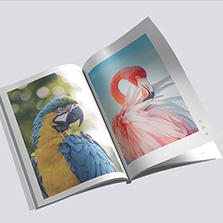
Recommended Print Product: Perfect Bound Books
See how photographer Jack Renshaw markets his photography book, Birds in Blackout, in this PrintingCenterUSA case study.

Is Print Advertising Still Effective?
Print advertising is still effective, especially when paired with your digital advertising. One’s not better than the other. You must know where and how to use each, and how to use them together. Kantor’s 2025 Media Reactions Study found that campaigns are 7 times more impactful among audiences who are receptive to the ads they see. In the Harvard Business Review study on catalogs, customers who got a catalog along with emails made about 24% more purchases than customers who only got emails.
Print vs Digital Advertising
Print is tangible, targeted, trusted, keeps people engaged, helps them remember your brand, faces less competition, fits the content around it, works with your digital, reaches people digital misses, and is something consumers are open to. Digital advertising wins on costs, tracking, and reaching Gen Z and millennials.
What Are the Disadvantages of Print Advertising?
The biggest disadvantages of print advertising are that it’s harder to track, takes more planning, has high upfront costs, and can’t be changed once it’s printed.
- You need to build the tracking into your print somehow, typically with a promo code or QR code, so you can see what it brought in.
- Print has more steps involved and requires more planning. You’ll need to set time for designing, proofing, printing, and mailing.
- You need to pay for the full printing up front. A small run keeps it manageable.
- Once it’s printed, you can’t make any changes. Printing Center USA’s free file review. Three free PDF proofs help you catch mistakes before you print.
FAQ
What is print advertising? Print advertising is any kind of promotion on a printed item like a postcard, magazine, or brochure. If you can hold it and it’s advertising something, it counts.
What are the advantages of print advertising? Print advertising is tangible, targeted, trusted, and engaging, and it helps people remember your brand. It also faces less competition than digital, fits the content around it, and reaches people who skip digital ads. It works even better when you pair it with digital advertising, like adding a QR code to a printed piece.
Is print advertising still effective? Yes, especially when you use it alongside your digital advertising. Print and digital get at different things. For the best approaches, knowing where to use each one and how to tie them together is key. A QR code or promo code on your printed piece connects the two.
What are some examples of print advertising? The most common examples are newspaper ads, magazine ads, direct mail like postcards and catalogs, brochures, flyers, and posters
What are the elements of a print ad? A print ad usually has a headline, an image, short body copy, your logo, a call to action, and your contact information. If you’re printing it with a digital, add a QR code or website address to keep it simple so people can understand it in a few seconds.
How do you track print advertising results? Build the tracking into the printed piece. Add a QR code or promo code that’s only on that print product, and use a different one for each product so you know which one brought people in.
What are the disadvantages of print advertising? Print is harder to track, takes more planning, has higher upfront costs, and can’t be changed. Once it’s printed, each one has a workaround, like using promo codes for tracking, starting your design early, and ordering a small first run.
Is print advertising better than digital advertising? Neither is better across the board. Print is stronger on memory and trust, and has less competition, while digital is cheaper, easier to track, and better at reaching Gen Z and millennials. Using both together is the strongest approach.
Start Your Print Advertising With PrintingCenterUSA
Pick the print product that fits your goal and add a QR code or promo code to tie it to your digital advertising with PrintingCenterUSA. Not sure how to get your file print-ready? Use the free online design tool, download a free Adobe template for your size, submit your file for our automated 43-point file inspection, or connect with a professional through our Find a Designer service. However you like to work, we have an option that fits. Start your project today!